AI Appraisal Estimate

AI-generated estimates · not official valuations

From the user

What was submitted

Photo and notes provided by the user — not generated by AI

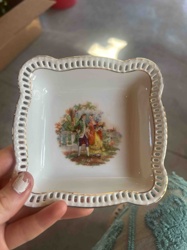
Submitted item photo
Submitted photo · June 6, 2026

User's notes

No additional notes provided.

AI analysis below

AI appraisal

AI analysis & estimate

AI-Generated · Verify before acting

Everything below is generated by AI for informational purposes only. AI can make mistakes — the AI may misidentify items or misattribute them (artist, maker, brand, designer, origin, era). This is not an official valuation and should not be used for insurance, sale, tax, estate, legal, or lending purposes — or any decision requiring a certified appraisal. It is not an authoritative claim about any person, brand, or rights holder — do not share or rely on it as a factual statement about a third party. Always consult qualified professionals before making financial decisions.

Read the full disclaimer

AI Identification

·Not independently authenticated·Verify before acting

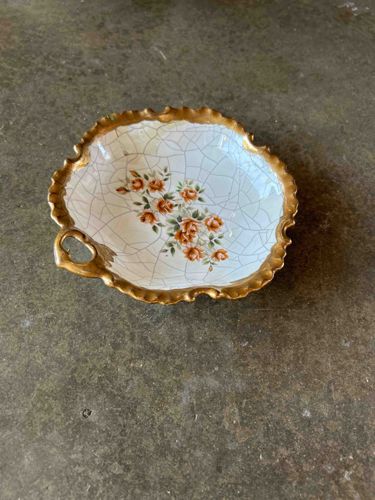
Gilded Scalloped Ceramic Dish with Rose Motif and Crackle Glaze

Decorative Arts

AI Estimated Value

·Not an official valuation·Verify before acting

$25-50

As of June 6, 2026

AI Item Analysis

·AI can make mistakes·Verify before acting
This is a small, decorative ceramic or porcelain dish, designed in a leaf-like or organic shape with a scalloped edge. The material appears to be glazed ceramic or porcelain, exhibiting a creamy white base color. A prominent feature is the intentional crackle glaze (crazing) covering the entire surface of the dish, giving it an antique or aged aesthetic. The rim of the dish, including a small handle or thumb-rest on one side, is lavishly gilded in a rich, metallic gold, which shows some visible wear and rubbing in areas, revealing the base material underneath. The interior of the dish is adorned with a hand-painted floral motif, depicting several clusters of small, orange-red roses or similar flowers with green leaves. The painting style suggests a delicate, possibly impressionistic approach. The overall condition shows signs of age, primarily the crackle glaze and minor gold loss. There are no visible chips, cracks, or repairs, suggesting relatively good preservation despite its age. The craftsmanship indicates a decorative, possibly mass-produced but still appealing item, likely from the early to mid-20th century, consistent with Victorian or Edwardian revival styles, or perhaps mid-century cottage core aesthetics. The irregular form and gilded accents highlight its ornamental purpose.
AI Appraisal Report

·AI can make mistakes·Verify before acting
Based on my visual examination of the provided image, this Gilded Scalloped Ceramic Dish with Rose Motif and Crackle Glaze is a charming decorative item. The condition appears good, with no visible chips, cracks, or repairs, which is excellent for an item of its likely age. The intentional crackle glaze enhances its antique aesthetic, and the gold loss on the rim suggests genuine age rather than artificial distressing. Authenticity, based solely on the image, points to a decorative piece from the early to mid-20th century. Market conditions for such decorative ceramic dishes are generally soft. While appealing, these items are relatively common. Comparables on online marketplaces and at antique shops typically range from $20 to $60 for similar mass-produced, Victorian/Edwardian revival or cottage-core style ceramics. There isn't significant rarity or extraordinary demand for these pieces unless they are from a highly sought-after manufacturer or artist, which cannot be determined from the image. The hand-painted rose motif adds to its appeal but doesn't necessarily elevate its rarity significantly. Factors impacting value negatively include the mass-produced nature and the general abundance of similar items in the market. Limitations in authenticity verification are significant from images alone. I can't confirm the precise ceramic body (porcelain vs. earthenware), nor can I inspect the reverse for maker's marks, which would be crucial for establishing provenance and potential collectibility beyond decorative value. A physical examination would allow me to assess the weight, feel of the glaze, and scrutinize the hand-painting more closely for artistic merit. Provenance documentation, if available, could also reveal its origin and previous ownership, potentially enhancing its value. Scientific testing is not typically cost-effective or necessary for items of this type and value range.

Get your items appraised

Instant estimates of your treasures with AI-powered appraisals

Browse More Appraisals