AI estimate as of November 1, 2025 · verify with a professional before acting
AI-Generated · Verify before acting
Everything on this page is generated by AI for informational purposes only. AI can make mistakes — the AI may misidentify items or misattribute them (artist, maker, brand, designer, origin, era). This is not an official valuation and should not be used for insurance, sale, tax, estate, legal, or lending purposes — or any decision requiring a certified appraisal. It is not an authoritative claim about any person, brand, or rights holder — do not share or rely on it as a factual statement about a third party. Always consult qualified professionals before making financial decisions.
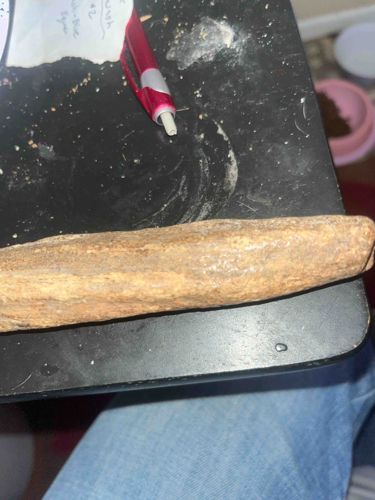
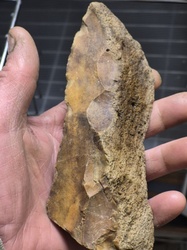
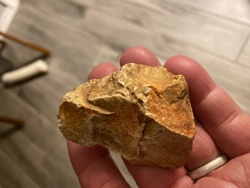
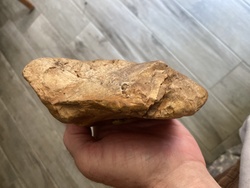
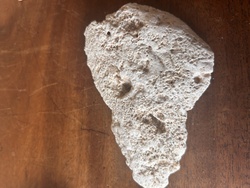
The item depicted is an elongated, roughly cylindrical object with a textured, earthy-toned surface. Its color palette consists primarily of various shades of brown, ranging from lighter beige to deeper reddish-brown, suggesting natural geological materials or significant oxidation/patina on a man-made item. The shape is not perfectly uniform, exhibiting a slight tapering or unevenness along its length, and some areas appear flatter or more rounded than others. There are no clear indications of precise manufacturing marks, carvings, or deliberate shaping with tools visible in the image, leading to two primary interpretations: either it is a naturally occurring rock formation, or a rudimentary grinding implement or pestle crafted from stone. The surface shows a granular, somewhat pitted texture, consistent with sandstone, conglomerate, or a heavily weathered igneous rock. There are no obvious signs of recent damage, but the overall appearance suggests age and exposure to elements, contributing to its rustic, weathered patina. Its size can be inferred to be substantial enough to hold comfortably in one's hand, given the surrounding context which includes what appears to be a pen for scale, though exact dimensions are not provided. The crude form and lack of refined finishing suggest either a very early period of hand-tool making or a natural origin. The object appears solid and heavy.
AI Appraisal Report
Upon examining the provided image, I assess this item to be either a natural rock formation or a rudimentary stone implement. Its elongated, cylindrical form, paired with the earthy, granular texture and varied brown hues, is consistent with natural geological processes or a very early, unrefined tool. The lack of precise manufacturing marks or decorative elements strongly points away from sophisticated craftsmanship. Its condition appears stable, with significant weathering and patina indicative of age and exposure, not recent damage.
Authenticity as a prehistoric tool, specifically a grinding implement or pestle, is very difficult to definitively verify from images alone. While its shape lends itself to such a function, natural erosion can create similar forms. Without archaeological context, use-wear analysis under magnification, or scientific material analysis, it's impossible to confirm it was intentionally shaped and used by humans. The market for natural rock formations is generally low unless they possess unique aesthetic qualities or come from a specific, renowned geological site. For prehistoric tools of this rudimentary nature, demand is also limited unless strong provenance or conclusive scientific evidence confirms their artificial origin and cultural significance.
Comparables for unauthenticated 'possible' prehistoric tools or aesthetically unremarkable natural rocks are typically found in the $10-$100 range. If conclusively identified as a genuine, unrefined prehistoric grinding implement through in-person examination (looking for pecking, grinding facets, or polish), and if dating could be established, its value could rise, potentially to $150-$300. Key factors impacting value are definitive authentication of human modification, evidence of use, and specific cultural attribution. Without these, it remains a geological curiosity. Limitations: A hands-on inspection to feel its weight, examine surface details under magnification for use-wear, and potentially a petrographic analysis of the stone would be critical for full authentication.