Paleolithic Lithic Scraper / Portable Rock Art
Archaeological Artifacts / Prehistoric Lithics

Paleolithic Lithic Scraper / Portable Rock Art

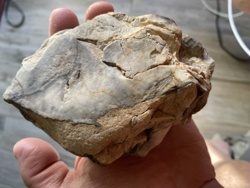
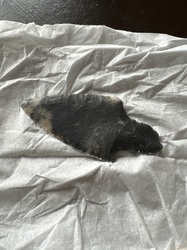
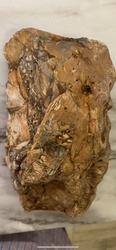
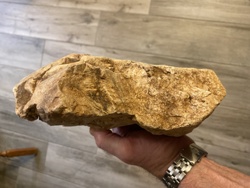
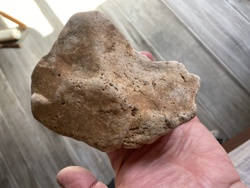
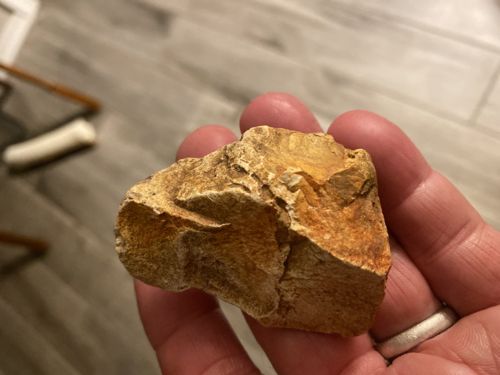
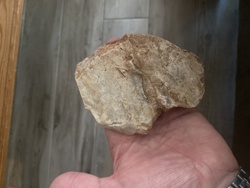
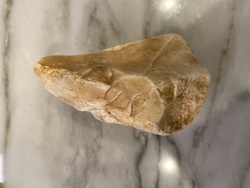
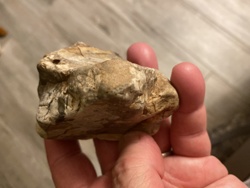
This specimen is a lithic artifact measuring approximately 1.75 inches by 1.25 inches, identified as a scraper tool with features consistent with 'portable rock art' from the Paleolithic era. Collected in Guthrie, Oklahoma, the object is composed of a dense, microcrystalline stone, likely chert or a high-silica limestone, exhibiting a rich palette of ochre, tan, and burnt orange hues. The stone shows evidence of intentional percussion flaking along its margins to create a functional working edge, characteristic of prehistoric scrapers used for hide preparation or woodworking. The surface texture is rugged with significant mineralization and a natural desert varnish or patina that suggests long-term environmental exposure. Notable are the recessed areas and protrusions that some observers interpret as zoomorphic or anthropomorphic imagery, a hallmark of portable rock art where the natural shape of the stone is enhanced or selected for its resemblance to living forms. The condition is stable with blunted edges consistent with ancient use-wear and natural weathering rather than modern fracture. There are no visible maker's marks, as is typical for artifacts of this immense age, but the craftsmanship is evident in the strategic removal of flakes to fit the ergonomics of a human hand. The item represents a significant cultural intersection of utilitarian tool-making and early symbolic expression.
Estimated Value

$40 - $85

Basic Information

Category

Archaeological Artifacts / Prehistoric Lithics

Appraised On

February 18, 2026

Estimated Value

$40 - $85

Additional Details Provided By Owner

User Provided Information

Paleolithic era lithic stone scraper tool portable rock art found in Guthrie OK Dimensions are 1.75" x 1.25"

Item Description

This specimen is a lithic artifact measuring approximately 1.75 inches by 1.25 inches, identified as a scraper tool with features consistent with 'portable rock art' from the Paleolithic era. Collected in Guthrie, Oklahoma, the object is composed of a dense, microcrystalline stone, likely chert or a high-silica limestone, exhibiting a rich palette of ochre, tan, and burnt orange hues. The stone shows evidence of intentional percussion flaking along its margins to create a functional working edge, characteristic of prehistoric scrapers used for hide preparation or woodworking. The surface texture is rugged with significant mineralization and a natural desert varnish or patina that suggests long-term environmental exposure. Notable are the recessed areas and protrusions that some observers interpret as zoomorphic or anthropomorphic imagery, a hallmark of portable rock art where the natural shape of the stone is enhanced or selected for its resemblance to living forms. The condition is stable with blunted edges consistent with ancient use-wear and natural weathering rather than modern fracture. There are no visible maker's marks, as is typical for artifacts of this immense age, but the craftsmanship is evident in the strategic removal of flakes to fit the ergonomics of a human hand. The item represents a significant cultural intersection of utilitarian tool-making and early symbolic expression.
Get Your Items Appraised

Instant estimates of your treasures with AI-powered instant appraisals

Browse More Appraisals