AI Appraisal Estimate

AI-generated estimates · not official valuations

From the user

What was submitted

Photo and notes provided by the user — not generated by AI

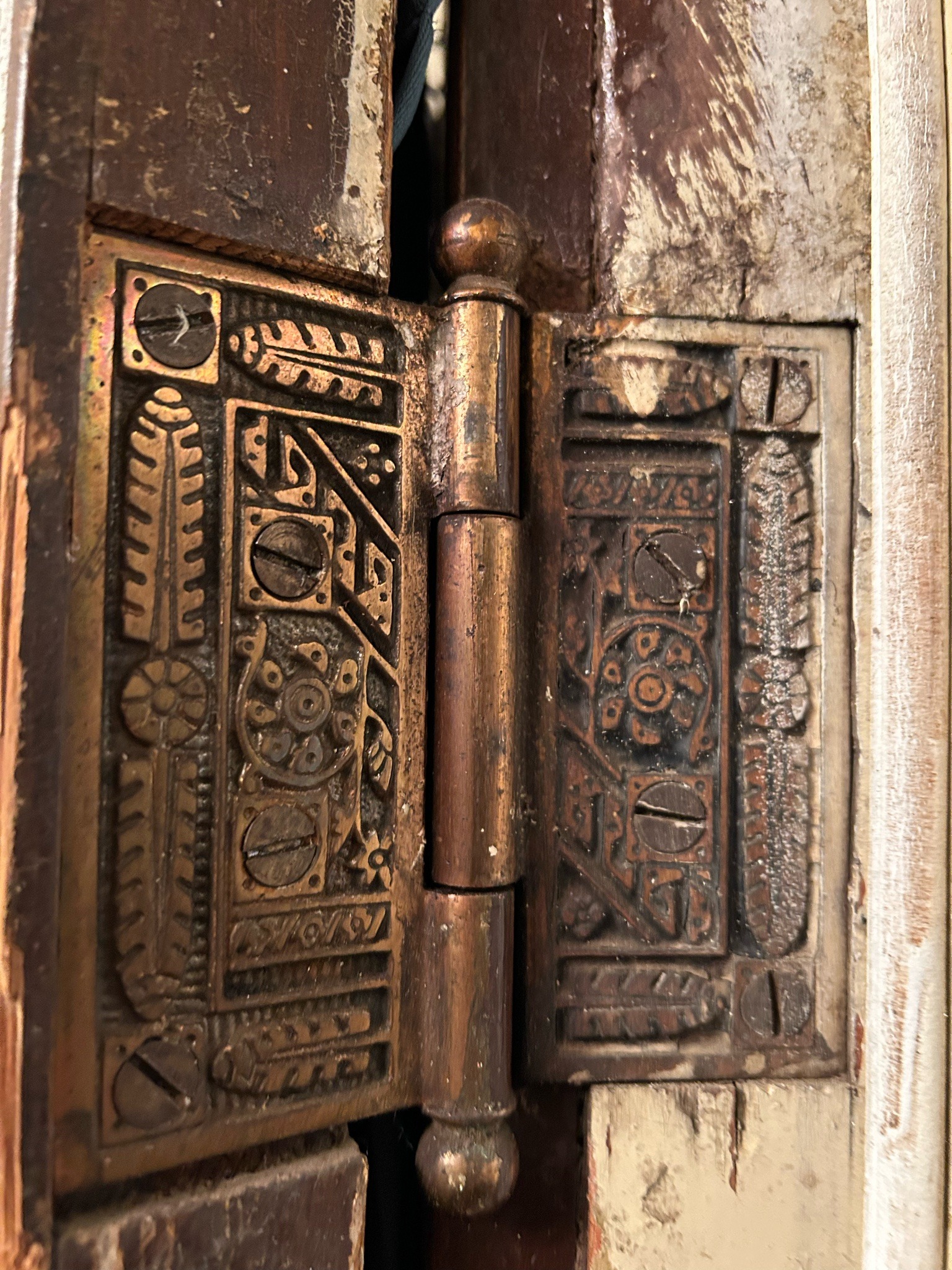
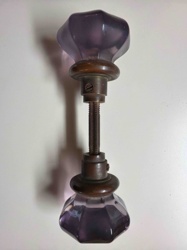
Submitted item photo
Submitted photo · June 6, 2026

User's notes

No additional notes provided.

AI analysis below

AI appraisal

AI analysis & estimate

AI-Generated · Verify before acting

Everything below is generated by AI for informational purposes only. AI can make mistakes — the AI may misidentify items or misattribute them (artist, maker, brand, designer, origin, era). This is not an official valuation and should not be used for insurance, sale, tax, estate, legal, or lending purposes — or any decision requiring a certified appraisal. It is not an authoritative claim about any person, brand, or rights holder — do not share or rely on it as a factual statement about a third party. Always consult qualified professionals before making financial decisions.

Read the full disclaimer

AI Identification

·Not independently authenticated·Verify before acting

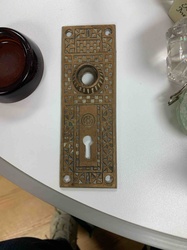
Ornate cast metal door hinge in the Eastlake or Victorian Aesthetic Movement style

Antique Architectural Hardware

AI Estimated Value

·Not an official valuation·Verify before acting

$75 - $150

As of June 6, 2026

AI Item Analysis

·AI can make mistakes·Verify before acting
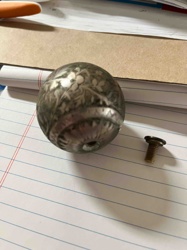
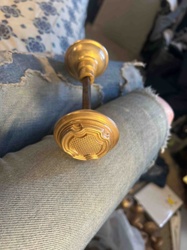
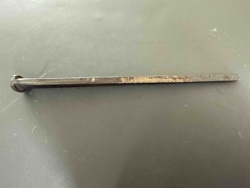
This image depicts an ornate, recessed door hinge, likely made of cast brass or bronze, featuring highly detailed relief patterns. The decorative motifs include stylized floral rosettes, repeating leaf forms (reminiscent of laurel or feathers), and geometric line patterns, all of which are stylistically consistent with the Eastlake or Aesthetic Movement of the late 19th century (circa 1870-1890). The hinge consists of two leaves joined by a central pin barrel topped with spherical finials on both ends. Each leaf is secured with multiple flat-head screws, some of which appear to be later replacements given the varying degrees of oxidation. The metal exhibits a deep, multi-toned patina with highlights of golden brass where high points have been polished by contact, and darker, near-black oxidation in the recessed areas of the casting. The surrounding woodwork shows significant age, with worn dark brown finish, splintering edges, and remnants of white or cream-colored paint visible on the frame side. No manufacturer's mark or patent date is clearly visible in the photograph, though hinges of this style were frequently produced by notable American hardware companies of the 19th century, such as Russell & Erwin or P. & F. Corbin. The identification remains a stylistic hypothesis based on visual motifs, as physical metal testing and removal to check for hidden marks would be necessary for a more precise attribution.
AI Appraisal Report

·AI can make mistakes·Verify before acting
Based on the provided image, I have examined this ornate cast metal hinge, which displays stylistic motifs characteristic of the Eastlake or Aesthetic Movement, roughly dating to the late 19th century. From what I can see, the complex relief patterns and spherical finials suggest a higher-quality casting, possibly by notable firms like Russell & Erwin or P. & F. Corbin, though I cannot verify this attribution without finding a physical manufacturer's mark, often hidden on the back of the leaves or near the pin. The patina appears consistent with age, showing a deep oxidation in recessed areas and highlights on high points, though a physical inspection would be required to determine if this is a natural aged finish or a modern chemical application. The value estimate of $75–$150 is based on the assumption that this is a period-authentic late-Victorian piece in good working order. Demand for decorative architectural hardware remains steady among restorers of historic homes; however, value is heavily influenced by whether the item is a single piece or part of a matching set. I cannot confirm the metal composition from a photo; while it appears to be brass or bronze, it could be plated cast iron, which would sit at the lower end of the value range. To confirm this hypothesis, an in-person examination is necessary to check for magnetic properties, verify casting techniques, and locate any patent dates or hallmarks. If this item were determined to be a modern reproduction rather than a period piece, the market value would likely decrease to the $20–$40 range, reflecting its utility as a functional hardware item rather than a collectible antique.

Get your items appraised

Instant estimates of your treasures with AI-powered appraisals

Browse More Appraisals