Hand-Forged Square Cut Iron Nail
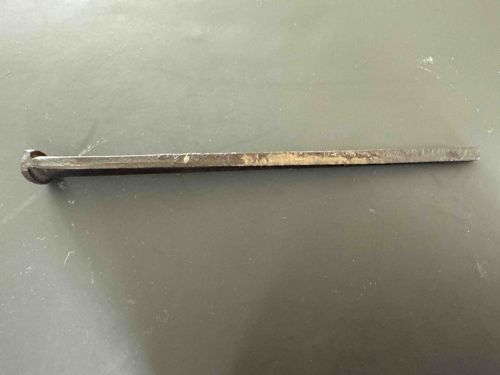
This item is a hand-forged square cut iron nail, likely dating from the late 18th to mid-19th century. Physically, the nail is constructed from wrought iron, characterized by its distinctive hand-hammered head and four-sided, tapered shank. The head is irregularly shaped, showing the 'rose head' or flat-hammered style typical of manual blacksmithing rather than modern machine production. The color is a deep mottled grey-brown, indicating a significant age-related patina and moderate surface oxidation or iron rust. There is a visible texture across the surface reflecting the striking of the hammer during its creation. The nail appears to be several inches in length, retaining its structural integrity despite historical use. No specific maker's marks are visible, which is standard for utilitarian hardware of this period. The condition shows signs of honest wear, with slight blunting at the tip and significant oxidation, yet it remains unbent, suggesting it was carefully salvaged or never driven into hardwood. This type of fastener is a hallmark of colonial and early industrial construction and is highly valued in historical restoration projects for architectural authenticity.
AI-Generated Appraisal Disclaimer
Estimated Value
$5 - $15 per individual nail
Basic Information
Category
Antique Architectural Hardware
Appraised On
January 29, 2026
Estimated Value
$5 - $15 per individual nail
Item Description
This item is a hand-forged square cut iron nail, likely dating from the late 18th to mid-19th century. Physically, the nail is constructed from wrought iron, characterized by its distinctive hand-hammered head and four-sided, tapered shank. The head is irregularly shaped, showing the 'rose head' or flat-hammered style typical of manual blacksmithing rather than modern machine production. The color is a deep mottled grey-brown, indicating a significant age-related patina and moderate surface oxidation or iron rust. There is a visible texture across the surface reflecting the striking of the hammer during its creation. The nail appears to be several inches in length, retaining its structural integrity despite historical use. No specific maker's marks are visible, which is standard for utilitarian hardware of this period. The condition shows signs of honest wear, with slight blunting at the tip and significant oxidation, yet it remains unbent, suggesting it was carefully salvaged or never driven into hardwood. This type of fastener is a hallmark of colonial and early industrial construction and is highly valued in historical restoration projects for architectural authenticity.
Related Tags
Get Your Items Appraised
Instant estimates of your treasures with AI-powered instant appraisals