AI Appraisal Estimate

AI-generated estimates · not official valuations

From the user

What was submitted

Photo and notes provided by the user — not generated by AI

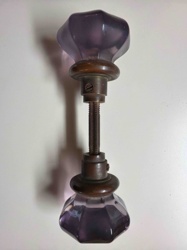
Submitted item photo
Submitted photo · June 8, 2026

User's notes

No additional notes provided.

AI analysis below

AI appraisal

AI analysis & estimate

AI-Generated · Verify before acting

Everything below is generated by AI for informational purposes only. AI can make mistakes — the AI may misidentify items or misattribute them (artist, maker, brand, designer, origin, era). This is not an official valuation and should not be used for insurance, sale, tax, estate, legal, or lending purposes — or any decision requiring a certified appraisal. It is not an authoritative claim about any person, brand, or rights holder — do not share or rely on it as a factual statement about a third party. Always consult qualified professionals before making financial decisions.

Read the full disclaimer

AI Identification

·Not independently authenticated·Verify before acting

Collection of Antique Victorian Aesthetic Movement Doorknobs and Backplates

Antique Architectural Hardware

AI Estimated Value

·Not an official valuation·Verify before acting

$1,200 - $1,800

As of June 8, 2026

AI Item Analysis

·AI can make mistakes·Verify before acting
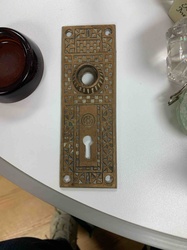
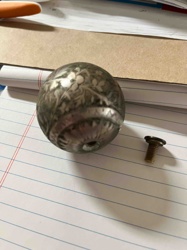
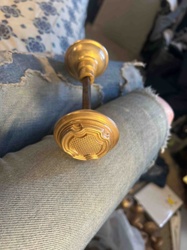
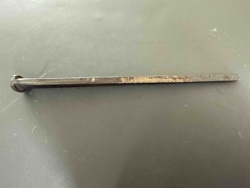
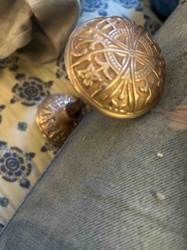
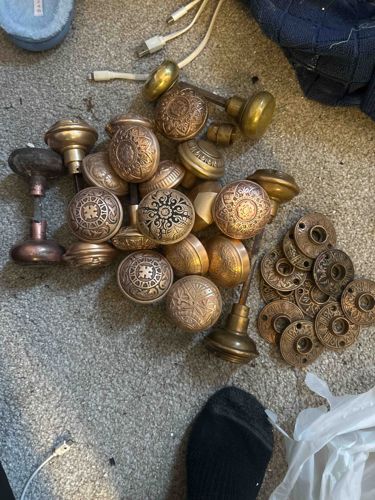
This is a diverse collection of antique architectural hardware, primarily consisting of ornate brass and bronze doorknobs alongside matching circular escutcheon backplates. The set features prominent designs from the late Victorian 'Aesthetic Movement' era, characterized by intricate, cast geometric and floral patterns. Visible are several distinct motifs, including a high-relief 'sunburst' or radiant flower pattern and a more structured 'cross-and-shield' circular design. The materials appear to be cast solid brass and possibly bronze, showing a varying range of patinas from bright gold-toned brass to deep, oxidized chocolate brown. Many of the knobs are still attached to their square iron or steel connecting spindles. The craftsmanship of the casting is high, showing fine detail in the filigree and recessed areas. Regarding condition, the pieces show evidence of age and use, including surface scratches, tarnishing, and some verdigris buildup in the deeper grooves of the patterns. Some knobs exhibit minor denting on the edges. There are approximately 20-25 doorknob halves and about a dozen matching backplates. These pieces likely date from between 1880 and 1905 and were common in upper-middle-class residential architecture of the period. No specific manufacturer marks are visible from the top view, though such pieces were frequently produced by notable firms like Yale & Towne, Reading Hardware, or Sargent.
AI Appraisal Report

·AI can make mistakes·Verify before acting
I have examined the collection of approximately 35 pieces of Aesthetic Movement architectural hardware. Based on my visual analysis, the items are authentic late Victorian era (c. 1880–1895) sets, likely produced by prestigious firms such as Sargent or Reading Hardware Co. The 'sunburst' and 'cross-and-shield' patterns are quintessential examples of Eastlake influence, highly sought after by historical restorationists. The cast brass and bronze show a genuine range of patinas; the deep 'chocolate' oxidation on several pieces suggests original finishes rather than modern chemical aging. While surface scratches and verdigris are present, the high-relief details remain crisp, which preserves their market value. The market for original architectural hardware is currently robust, driven by the 'brownstone restoration' boom in urban centers. Comparables for single paired sets (two knobs, spindle, and two plates) in these specific patterns typically fetch $150 to $250. This collection's value is bolstered by its volume, though it is slightly tempered by the lack of a complete 1:1 ratio of plates to knobs. Limitations: My assessment is based solely on high-resolution imagery. Without a physical inspection, I cannot verify the integrity of the spindle threading or detect structural repairs such as brazing on the shanks. A 'hands-on' examination would be required to identify recessed maker's marks on the collars or spindles which could elevate the provenance. Scientific testing is generally not required for this class of item, but I recommend verifying that the metal is solid cast rather than plated stamped steel, as the latter would decrease the valuation by approximately 60%.

Get your items appraised

Instant estimates of your treasures with AI-powered appraisals

Browse More Appraisals