AI estimate as of November 8, 2025 · verify with a professional before acting
AI-Generated · Verify before acting
Everything on this page is generated by AI for informational purposes only. AI can make mistakes — the AI may misidentify items or misattribute them (artist, maker, brand, designer, origin, era). This is not an official valuation and should not be used for insurance, sale, tax, estate, legal, or lending purposes — or any decision requiring a certified appraisal. It is not an authoritative claim about any person, brand, or rights holder — do not share or rely on it as a factual statement about a third party. Always consult qualified professionals before making financial decisions.
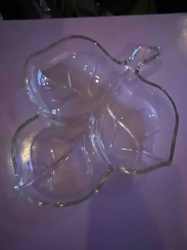
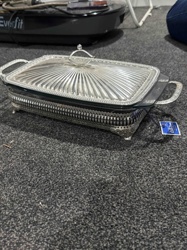
The item is a clear pressed glass serving tray, featuring a rectangular shape with distinct divisions. It appears to be made of transparent glass, likely soda-lime glass, commonly used in table and serving ware. The tray is divided into three sections: one large central compartment running lengthwise, and two smaller, square-shaped compartments positioned side-by-side at one end, perpendicular to the central division. All divisions are integrated into the molded glass structure. The edges of the tray are adorned with a decorative ribbed pattern, which creates a textured border. The bottom surface of the tray also exhibits a radiating, fan-like molded pattern, extending from the center outwards to the rim, adding visual interest and likely improving grip. The overall construction suggests a mass-produced item from the mid-20th century, a period when pressed glass was widely popular for its affordability and decorative qualities. There are no visible chips, cracks, or significant wear marks that can be discerned from the image, suggesting it is in good, used condition. No specific maker's marks or signatures are visible. The design is functional for serving multiple food items simultaneously, such as snacks, appetizers, or condiments. The clear glass allows the contents to be prominently displayed.
AI Appraisal Report
Based on my visual examination of the provided image, this clear pressed glass divided serving tray appears to be in good, used condition. I observe no obvious chips, cracks, or significant wear, which is a positive factor. The design, characterized by the three divisions and decorative ribbed and fan patterns, is consistent with mass-produced pressed glass items from the mid-20th century. Authenticity as a mid-century pressed glass item is likely given the manufacturing style and design elements.
In terms of market conditions, pressed glass serving ware from this era is relatively common. While functional and aesthetically pleasing for its style, it does not typically command high prices unless associated with a particularly rare pattern, a well-known manufacturer like Fostoria or Duncan & Miller (which often have discernible marks), or unique historical provenance. This specific piece lacks any visible maker's marks, making it difficult to attribute to a specific, potentially more valuable, manufacturer. Comparables on online marketplaces and antique shops for similar unmarked, clear pressed glass serving trays suggest a modest value.
Demand for these items is steady but not high, primarily appealing to collectors of vintage kitchenware or individuals seeking functional, decorative pieces. Its rarity is low due to the mass production techniques of the period. The main factors impacting value are its commonality, lack of identifying maker's marks, and the general abundance of similar items in the market.
It is important to note the limitations of image-based appraisal. While the condition appears good, precise identification of minor flaws, subtle manufacturing variations, or specific glass composition (e.g., lead content) would require a direct, in-person examination. For full authentication of manufacturer or specific pattern, a physical inspection for maker's marks, a review of comparable pattern books, or potentially scientific testing (though unlikely for an item of this value) would be necessary.