AI Appraisal Estimate

AI-generated estimates · not official valuations

From the user

What was submitted

Photo and notes provided by the user — not generated by AI

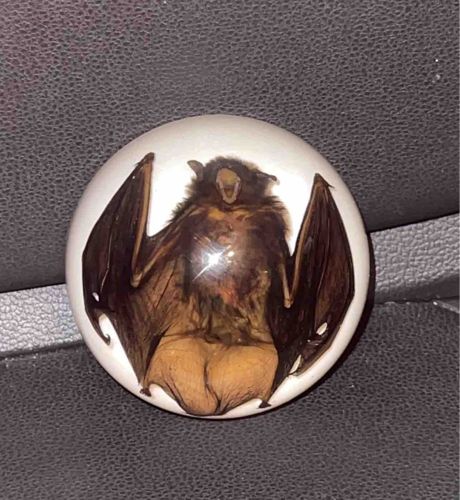
Submitted item photo
Submitted photo · June 22, 2026

User's notes

Preserved Bat

AI analysis below

AI appraisal

AI analysis & estimate

AI-Generated · Verify before acting

Everything below is generated by AI for informational purposes only. AI can make mistakes — the AI may misidentify items or misattribute them (artist, maker, brand, designer, origin, era). This is not an official valuation and should not be used for insurance, sale, tax, estate, legal, or lending purposes — or any decision requiring a certified appraisal. It is not an authoritative claim about any person, brand, or rights holder — do not share or rely on it as a factual statement about a third party. Always consult qualified professionals before making financial decisions.

Note

This analysis also relies on unverified notes provided by the user, which may be incomplete or inaccurate and could affect the result.

Read the full disclaimer

AI Identification

·Not independently authenticated·Verify before acting

Taxidermy Bat Encased in Clear Resin Paperweight

Natural History / Oddities and Curiosities

AI Estimated Value

·Not an official valuation·Verify before acting

$45.00 - $65.00

As of June 22, 2026

AI Item Analysis

·AI can make mistakes·Verify before acting
This item is a biological taxidermy specimen of a small bat, likely from the Pipistrellus or similar family, meticulously preserved and suspended within a circular, clear resin medium. The resin block has a domed or cabochon shape with a white opaque circular backing, measuring approximately 2.5 to 3 inches in diameter. The specimen is displayed in an upright, wings-spread pose with the mouth open, revealing dental structures. The fur is a rich medium brown with lighter ginger-toned fur visible on the underbelly. The skeletal structure of the wings is clearly visible through the thin, dark brown patagium (wing membrane). No visible maker's marks or signatures are present in the image. The condition appears to be excellent with high clarity in the resin and no visible silvering or bubbles around the specimen, which indicates professional-grade casting. There are minor surface scuffs on the dome consistent with light handling. This contemporary piece represents a modern style of 'oddities' and 'curiosities' decor popular in the late 20th to early 21st century.
AI Appraisal Report

·AI can make mistakes·Verify before acting
I have examined the digital representation of the taxidermy bat (likely a species of the Pipistrellus genus) encased in a resin paperweight. The specimen exhibits high-quality preservation; the fur color remains vibrant, and the skeletal structure of the patagium is well-defined. The casting is professional, showing no significant internal silvering or 'ghosting,' which often plagues lower-quality resin displays. The minor surface scuffs observed are consistent with light shelf wear and do not significantly detract from the piece's aesthetic value. Market conditions for 'Modern Oddities' remain stable, though items of this nature are now mass-produced, which limits rarity. Common analogs sold through scientific supply houses and specialty curiosity retailers typically range from $30 to $80 depending on the species and the size of the resin block. This specific example, featuring an open-mouth pose, represents a slightly higher level of taxidermic detail than standard flat-mount specimens. The item's value is primarily decorative rather than scientific. The primary limitation of this appraisal is the inability to verify the legality of the specimen's origin from images alone. Many international bat species are protected under CITES or local environmental laws. While this appears to be a common, non-endangered species, full authentication or higher-tier valuation would require provenance documentation or CITES import permits to ensure legal compliance. In-person inspection would also be required to confirm the resin type (polyester vs. epoxy), as certain plastics yellow over time, affecting long-term investment value. Without physical handling, I cannot assess the presence of fine-line fractures that may develop deep within the resin core.

Get your items appraised

Instant estimates of your treasures with AI-powered appraisals

Browse More Appraisals