These notes were written by the person who submitted this item. Appraiser.AI has not verified them, and the AI's identification and estimate may rely on them.
AI Estimated Value
Not an official valuation
$25-45
AI estimate as of December 6, 2025 · verify with a professional before acting
AI-Generated · Verify before acting
Everything on this page is generated by AI for informational purposes only. AI can make mistakes — the AI may misidentify items or misattribute them (artist, maker, brand, designer, origin, era). This is not an official valuation and should not be used for insurance, sale, tax, estate, legal, or lending purposes — or any decision requiring a certified appraisal. It is not an authoritative claim about any person, brand, or rights holder — do not share or rely on it as a factual statement about a third party. Always consult qualified professionals before making financial decisions.
This analysis also relies on unverified notes provided by the user, which may be incomplete or inaccurate and could affect the result.
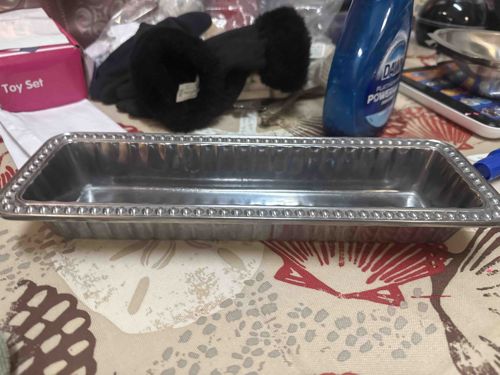
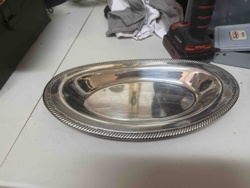
This is a rectangular serving dish, likely made from a polished metal, possibly stainless steel or an aluminum alloy, given its silvery, reflective appearance and the context supplied by the user as a 'serving dish'. The dish measures approximately 10-14 inches in length and 4-6 inches in width, with a depth of about 2-3 inches, consistent with common sizes for bread-loaf pans or small serving trays. Its primary distinguishing feature is the continuous row of small, raised beads or spheres that adorn the entire outer edge of the rim. The interior surface appears smooth and polished, while the exterior sides feature vertical fluting or shallow indentations, adding textural interest and possibly strength to the structure. The overall color is a bright, uniform silver. There are no obvious visible signs of significant wear, deep scratches, dents, or corrosion. The reflective surface suggests it has been reasonably well-maintained, though minor surface scuffs or fingerprints are possible, as is common with polished metal items. No specific maker's marks, signatures, or stamps are discernible from the provided image. The design, particularly the beaded rim and fluted sides, suggests a classic or somewhat traditional style, possibly dating from the mid-20th century to contemporary production, as such designs tend to be timeless. The craftsmanship appears to be of good quality, with consistent beading and a smoothly finished interior, indicating a commercially produced item designed for both utility and aesthetic appeal in food presentation.
AI Appraisal Report
Upon examining the Rectangular Beaded Serving Dish, I have determined it to be a commercially produced piece of good quality. The item, likely made of stainless steel or a polished aluminum alloy, features a classic design with a beaded rim and fluted sides. It appears to be in excellent condition, with no significant visible damage, dents, or corrosion, indicating it has been well-maintained. The style is timeless, suggesting production could range from the mid-20th century to contemporary. Without discernible maker's marks or stamps, attribution to a specific high-end brand like Nambé, Michael Aram, or Mariposa is not possible, which significantly impacts its value. The market for such unmarked metalware is broad but generally commands modest prices. Comparable unbranded, high-quality, polished metal serving dishes of similar size and design typically sell in the secondary market for between $25 and $45. The primary value drivers are its decorative appeal and functional utility rather than rarity or brand recognition. My appraisal is based on the visual information provided. A definitive authentication would require an in-person examination to identify any hidden maker's marks, test the metal composition to rule out sterling silver or silverplate, and confirm the manufacturing quality. Lacking such verification, the piece is valued as a high-quality decorative and functional item.