AI estimate as of August 11, 2025 · verify with a professional before acting
AI-Generated · Verify before acting
Everything on this page is generated by AI for informational purposes only. AI can make mistakes — the AI may misidentify items or misattribute them (artist, maker, brand, designer, origin, era). This is not an official valuation and should not be used for insurance, sale, tax, estate, legal, or lending purposes — or any decision requiring a certified appraisal. It is not an authoritative claim about any person, brand, or rights holder — do not share or rely on it as a factual statement about a third party. Always consult qualified professionals before making financial decisions.
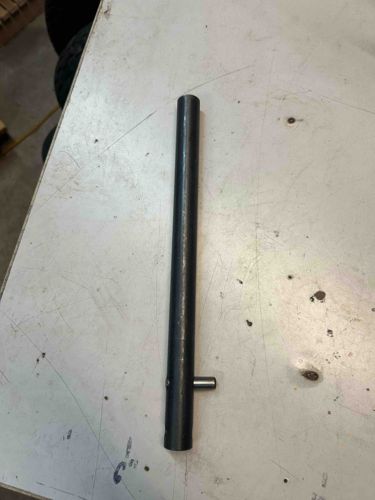
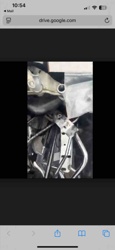
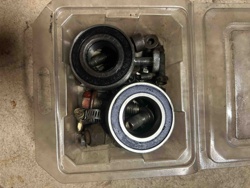
This item is a slender, cylindrical metal rod, appearing to be made of steel or a similar dark, metallic alloy. Its primary body is a smooth, solid cylinder, suggesting it's likely a shaft or a support part. Protruding perpendicularly from one side, near the bottom end, is a smaller, shorter cylindrical pin or dowel. This pin is fixed, possibly welded or pressed into a hole in the main shaft, indicating a permanent attachment. There is a small, subtle indentation or mark on the main shaft directly opposite the protruding pin, which might be a manufacturing mark or a result of previous use. The entire piece has a dark, somewhat matte finish, typical of unpolished or lightly corroded ferrous metals. There are no prominent signs of severe damage such as bends or breaks, but there are minor surface abrasions and spots of what appears to be superficial oxidation or dirt, consistent with an item that has been used in a workshop or industrial setting. The craftsmanship appears functional and robust, designed for utility rather than aesthetic appeal. Given the absence of elaborate decoration or fine finishing, it is likely a functional component from machinery, a jig, or part of an assembly tool. Its estimated age is difficult to determine without further context, but its utilitarian nature suggests it could be a contemporary part or an older, still-functional component from the mid-20th century onwards.
AI Appraisal Report
Upon examining the image of the 'Metal Rod with Perpendicular Pin,' I assess its condition as good, consistent with a utilitarian component. The primary body, a slender cylindrical rod, exhibits no severe damage like bends or breaks. Minor surface abrasions and superficial oxidation spots are present, indicating prior use in a workshop or industrial setting. The perpendicular pin appears solidly attached, likely welded or pressed, suggesting robust craftsmanship. The dark, somewhat matte finish is typical of unpolished ferrous metals. Authenticity, based solely on visual inspection of the image, appears to be that of a genuine used mechanical component.
Market conditions for such generic mechanical components are generally low due to high availability of similar parts, both new and used. Comparables would include industrial surplus parts, machine tool accessories, or fabricated shafts. Demand for this specific item is likely niche, typically from individuals or businesses seeking a replacement part for existing machinery, or for custom fabrication projects. It lacks rarity; similar rod-and-pin configurations can be readily custom-fabricated or sourced from industrial suppliers.
Factors significantly impacting value include its generic nature, lack of specific branding or part numbers, and the absence of any unique design features. The utility is its primary value driver, assuming it fits a specific functional need. Its age is difficult to pinpoint from the image, but its robust design suggests it could be contemporary or mid-20th century.
Limitations in authenticity verification from images alone are significant. I cannot definitively confirm the material composition (e.g., specific steel alloy), the method of pin attachment (welding vs. pressed fit), the absence of micro-fractures, or the precise manufacturing tolerances. For full authentication and a more precise valuation, an in-person examination would be critical to assess material properties (e.g., hardness testing), precise dimensions for fitment, and to visually inspect for any hidden defects or wear patterns. Provenance documentation, such as original machinery blueprints or parts lists, would be invaluable in determining its original application and potential specific machine compatibility, which could marginally increase its value if it's a critical component for a rare or specialized piece of equipment.