AI estimate as of August 30, 2025 · verify with a professional before acting
AI-Generated · Verify before acting
Everything on this page is generated by AI for informational purposes only. AI can make mistakes — the AI may misidentify items or misattribute them (artist, maker, brand, designer, origin, era). This is not an official valuation and should not be used for insurance, sale, tax, estate, legal, or lending purposes — or any decision requiring a certified appraisal. It is not an authoritative claim about any person, brand, or rights holder — do not share or rely on it as a factual statement about a third party. Always consult qualified professionals before making financial decisions.
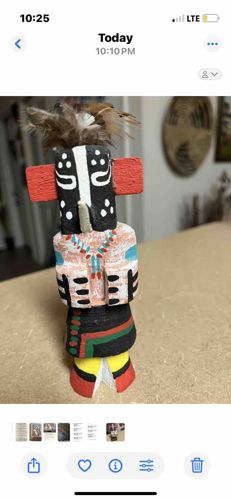
This item is a hand-carved and painted wooden figurine, likely depicting a Native American kachina or similar spiritual figure. It stands upright, appearing to be crafted from a single piece of wood, possibly cottonwood root, which is traditional for kachina dolls. The figure is characterized by its elongated, cylindrical body and a distinct headpiece. The coloration is vibrant, utilizing a palette of black, white, red, peach/skin tone, yellow, blue, and green. The head is predominantly black with white linear and dot patterns, and prominent red, rectangular ears or decorative elements extending horizontally. A small, central protrusion, possibly a nose or beak, is visible on the face. The torso is painted in a light peach or skin tone, featuring intricate blue, red, and white bead-like patterns across the chest, resembling a necklace. The arms are indicated by carved extensions on either side of the torso, painted black with rows of white dots. The lower body transitions to a black skirt-like garment adorned with horizontal bands of red, black, and green. The base of the figure is painted yellow with segments of white and red, giving the impression of legs or footwear. The most striking feature atop the head is a cluster of natural feathers, predominantly brown and light brown, adding to its ceremonial appearance. The craftsmanship appears to be folk art or traditional, with brushstrokes and carved details that suggest a handmade origin. The surface shows some slight wear consistent with age or handling, but generally appears to be in good condition without significant damage or repairs. This piece likely dates from the mid to late 20th century given its style and typical materials.
AI Appraisal Report
Upon my virtual examination of the provided image, this Native American Style Carved Wooden Figurine with Feathers presents as a charming example of folk art. The craftsmanship suggests a handmade origin, with visible brushstrokes and carved details. The condition appears good, with only slight wear consistent with age or handling, no obvious significant damage or repairs are noted. While the description refers to it as a 'Kachina', based solely on the visual, it appears to be a decorative item inspired by Native American art, rather than an authentic, ritually made Hopi or Zuni kachina figure. True kachina dolls have specific, traditional iconography that is absent here, and an actual kachina would command a much higher value.
Market conditions for Native American-inspired decorative figurines vary widely. Comparables for similar decorative pieces suggest a value in this range. The demand for such items is consistent but not exceptionally high, and they are not considered rare. Factors impacting value include its decorative appeal and apparent good condition. Without an in-person examination, I cannot definitively assess the wood type, the precise age, or the nature of the paint. The most significant limitation to authenticity verification from images alone is distinguishing between genuine traditional ceremonial pieces and later decorative reproductions or inspired art. Full authentication would require a physical inspection to analyze materials, assess carving techniques, examine paint chemistry, and a thorough review of provenance documents to establish its origin and maker. Scientific testing like wood dating could also confirm its age.