AI estimate as of July 19, 2025 · verify with a professional before acting
AI-Generated · Verify before acting
Everything on this page is generated by AI for informational purposes only. AI can make mistakes — the AI may misidentify items or misattribute them (artist, maker, brand, designer, origin, era). This is not an official valuation and should not be used for insurance, sale, tax, estate, legal, or lending purposes — or any decision requiring a certified appraisal. It is not an authoritative claim about any person, brand, or rights holder — do not share or rely on it as a factual statement about a third party. Always consult qualified professionals before making financial decisions.
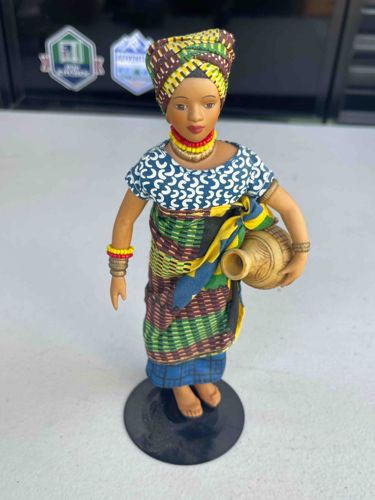
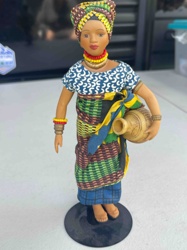
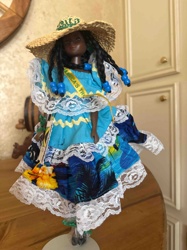
This item is a decorative doll or figurine depicting an African woman, likely intended to represent a specific culture or region, such as Ghana, given the Kente-like patterns and colors of the clothing. The doll stands on a circular, flat black base, suggesting it is a stationary display piece. The figure is meticulously dressed in fabric clothing, including a vibrant headwrap with yellow, brown, and green geometric patterns, and a multicolored dress or wrapper with horizontal bands of green, yellow, brown, and blue, reminiscent of Kente cloth. An additional piece of fabric, possibly a sash, in yellow with blue patterns, is draped around her waist. She wears a blue patterned top with white crescent-shaped motifs. Her skin tone is a warm, unglazed brown. The facial features are delicate, with small painted eyes, nose, and lips. She is adorned with several pieces of jewelry: a multi-strand necklace of red and yellow beads around her neck, and yellow and gold-colored bangles on her left wrist. In her right arm, she cradles a small, light brown, urn-shaped clay pot with incised geometric decoration, indicative of a water or carrying vessel. The overall craftsmanship appears to be folk art or handcrafted. There are no readily visible manufacturer's marks or signatures from the image. The doll's condition appears good, with no obvious signs of significant damage like chips, cracks, or repairs, though some minor dust accumulation might be present on the base. The fabric shows good color retention. The style suggests it could be a souvenir item or an artisanal piece from the mid-to-late 20th century or early 21st century.
AI Appraisal Report
I have examined the provided image of the African Woman Figurine with Water Pot. Based on this visual inspection, the item appears to be in good overall condition. The fabric elements, including the headwrap and dress, exhibit good color retention and show no obvious signs of significant wear or tears. The figurine itself, beyond the fabric components, appears largely intact, with no visible chips, cracks, or repairs to the main body or the ceramic/pottery elements like the water pot. Minor dust accumulation on the base is noted but does not impact structural integrity or aesthetic appeal significantly.
Authenticity, based solely on images, is limited. The piece strongly suggests folk art or handcrafted origins, likely intended as a souvenir or decorative item reflecting African cultural motifs, particularly elements reminiscent of Kente cloth. Without a physical examination, I cannot definitively ascertain the materials used for the figurine's body (e.g., wood, resin, composite material) or the exact age. Manufacturer's marks or signatures, which would aid in pinpointing origin and maker, are not visible in the provided image. Potential comparables in the market include other handcrafted decorative figurines of African origin, often found in artisan markets, specialized cultural shops, or online platforms. These range widely in price depending on the artist's renown, materials, and complexity.
Demand for such decorative cultural items generally exists among collectors of ethnic art, travelers seeking souvenirs, and individuals decorating with global aesthetics. Rarity for a piece of this nature is typically low unless associated with a known artist or specific historical context. Its value is primarily driven by its decorative appeal and perceived craftsmanship rather than intrinsic materials or historical significance. Factors significantly impacting value would include the identity of the artisan, confirmed age, and the specifics of its material composition. For full authentication and a more precise valuation, I would require an in-person examination to assess material composition, inspect for hidden defects, and search for obscured markings. Provenance documentation, if available, linking it to a specific artist, region, or time period, would also significantly enhance its verifiable authenticity and value.