AI Appraisal Estimate

AI-generated estimates · not official valuations

From the user

What was submitted

Photo and notes provided by the user — not generated by AI

Submitted item photo
Submitted photo · June 27, 2026

User's notes

No additional notes provided.

AI analysis below

AI appraisal

AI analysis & estimate

AI-Generated · Verify before acting

Everything below is generated by AI for informational purposes only. AI can make mistakes — the AI may misidentify items or misattribute them (artist, maker, brand, designer, origin, era). This is not an official valuation and should not be used for insurance, sale, tax, estate, legal, or lending purposes — or any decision requiring a certified appraisal. It is not an authoritative claim about any person, brand, or rights holder — do not share or rely on it as a factual statement about a third party. Always consult qualified professionals before making financial decisions.

Read the full disclaimer

AI Identification

·Not independently authenticated·Verify before acting

Vintage Majolica-Style Polychrome Ceramic Rooster Figurine

Antique and Vintage Ceramics

AI Estimated Value

·Not an official valuation·Verify before acting

$125 - $175

As of June 27, 2026

AI Item Analysis

·AI can make mistakes·Verify before acting
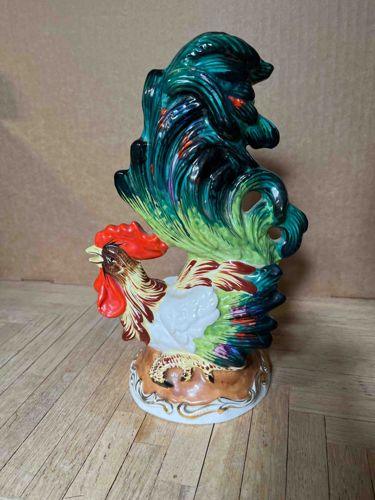
This item is a decorative ceramic figurine depicting a stylized crowing rooster, likely produced in the mid-20th century. The piece features a vibrant polychrome glaze palette, characterized by a large, upright emerald green tail with highlights of teal and bursts of orange. The body of the bird is white with relief-defined feathers, accented by brown and yellow brushwork along the neck and back. It possesses a bright red comb and wattles, with an open beak suggesting a vocal pose. The rooster is set upon a rocky, earthenware-colored base that transitions into a white circular pedestal decorated with a gilded scrollwork pattern. Measuring approximately 10 to 12 inches in height, the construction appears to be molded ceramic with a high-gloss lead or tin-based glaze consistent with Italian or Japanese export pottery of the 1950s-1960s. The detail in the molded plumage indicates a moderate level of mid-century commercial craftsmanship. Visible condition issues include some minor surface wear and potential light crazing in the glaze, which is standard for ceramic pieces of this age. There are no immediate signs of chips or major structural repairs visible in the primary viewing angle, though the gilding on the base shows slight thinning. The overall aesthetic is consistent with the Hollywood Regency or Mid-Century Kitsch styles popular for kitchen and dining decor.
AI Appraisal Report

·AI can make mistakes·Verify before acting
I have completed a visual examination of the Vintage Majolica-Style Polychrome Ceramic Rooster Figurine. This piece, likely an Italian or Japanese import from the 1950s-1960s, exemplifies the mid-century 'Hollywood Regency' kitchen aesthetic. The polychrome glazing is particularly vibrant, notably the emerald green tail and the high-gloss white body. The condition appears consistent with its age; I observe minor surface wear and slight thinning of the gilded scrollwork on the pedestal. The crazing noted is typical for earthenware of this period and does not detract significantly from the structural integrity. The market for mid-century ceramic animal figures remains steady, driven by collectors of 'kitsch' and vintage kitchenware. Comparable pieces from makers like Bassano or various Japanese export brands typically realize prices in the low-to-mid hundred dollar range. This item's value is bolstered by its larger scale (10-12 inches) and the relative lack of visible chips on high-point areas like the comb. However, it is a mass-produced commercial item rather than a unique studio piece, which caps its rarity. Limitations: This appraisal is based solely on digital imagery. For definitive authentication, I would require an in-person inspection to examine the underside for manufacturer marks or signatures, check for internal hairline fractures using UV light, and assess the weight and clay body composition. Documentation such as original import stickers or purchase receipts would further solidify its provenance.

Get your items appraised

Instant estimates of your treasures with AI-powered appraisals

Browse More Appraisals