AI Appraisal Estimate

AI-generated estimates · not official valuations

From the user

What was submitted

Photo and notes provided by the user — not generated by AI

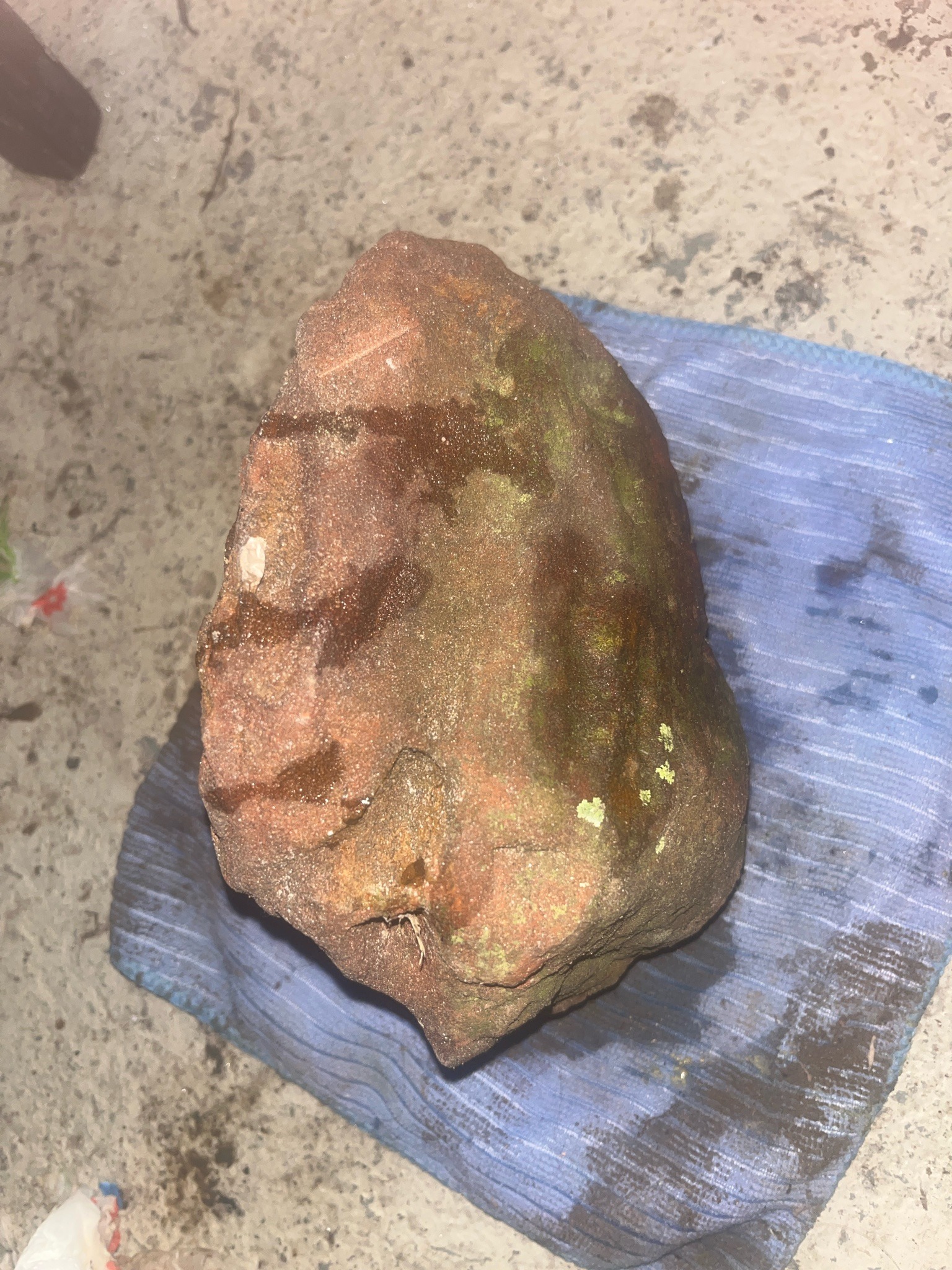
Submitted item photo
Submitted photo · June 28, 2026

User's notes

No additional notes provided.

AI analysis below

AI appraisal

AI analysis & estimate

AI-Generated · Verify before acting

Everything below is generated by AI for informational purposes only. AI can make mistakes — the AI may misidentify items or misattribute them (artist, maker, brand, designer, origin, era). This is not an official valuation and should not be used for insurance, sale, tax, estate, legal, or lending purposes — or any decision requiring a certified appraisal. It is not an authoritative claim about any person, brand, or rights holder — do not share or rely on it as a factual statement about a third party. Always consult qualified professionals before making financial decisions.

Read the full disclaimer

AI Identification

·Not independently authenticated·Verify before acting

Naturally occurring mineral specimen, consistent with ferruginous sandstone or iron-rich siltstone

Natural History Specimens

AI Estimated Value

·Not an official valuation·Verify before acting

$10 - $35

As of June 28, 2026

AI Item Analysis

·AI can make mistakes·Verify before acting
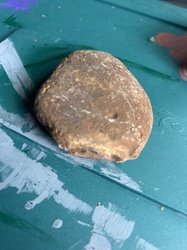
This item is a large, irregularly shaped rock specimen resting on a blue microfiber cloth. The surface displays a predominant reddish-brown to earthy-orange coloration, which is stylistically consistent with the presence of iron oxides like hematite or goethite. The texture appears grainy and moderately coarse, suggesting a sedimentary composition similar to ferruginous sandstone. There are visible patches of green and yellow-green biological growth, likely moss or lichen, indicating the specimen has likely been exposed to an outdoor environment for a significant period. The stone features several indentations and fracture lines; notably, there are dark, damp-looking horizontal streaks across the upper-left quadrant and a small amounts of organic debris caught in a lower crevice. Some areas exhibit a subtle sparkle or granular sheen when caught by the light, possibly representing quartz grains or small crystalline inclusions. No maker's marks, carvings, or human alterations are visible, leading to the hypothesis that this is a raw natural mineral specimen. The identification is based on visual characteristics as no physical testing for hardness or chemical composition can be performed from the image alone.
AI Appraisal Report

·AI can make mistakes·Verify before acting
Based on my visual analysis of the provided image, I have examined a specimen that appears consistent with ferruginous sandstone or iron-rich siltstone. My assessment is based on the visible reddish-brown oxidation, likely representing hematite or goethite, and the grainy sedimentary texture. I cannot verify the specific mineral density, hardness, or chemical composition through a photograph alone; a physical inspection using a streak test or acid reaction would be required to confirm these geological hypotheses. The presence of organic lichen and moss suggests the piece was likely harvested from a local natural environment rather than a professional mineralogical collection. From what I can see, the item lacks the rare crystallization or aesthetic geometry typically sought by high-end natural history collectors. Specimens of this common sedimentary type are generally valued as garden accents, educational samples, or decorative curiosities. The estimated value reflects typical market behavior for unpolished, raw lithic materials of this approximate size. If this specimen were found to contain rare inclusions or fossils not visible in these images, the valuation could increase; conversely, if it is merely common discarded construction fill or low-grade debris, its market value would be negligible. Because it lacks a documented provenance or specialized geological classification, it is positioned at the lower end of the decorative stone market. To establish a more precise value, an in-person examination by a geologist or mineralogist would be necessary to rule out common look-alikes and assess structural integrity.

Get your items appraised

Instant estimates of your treasures with AI-powered appraisals

Browse More Appraisals