AI Appraisal Estimate

AI-generated estimates · not official valuations

From the user

What was submitted

Photo and notes provided by the user — not generated by AI

Submitted item photo
Submitted photo · June 25, 2026

User's notes

No additional notes provided.

AI analysis below

AI appraisal

AI analysis & estimate

AI-Generated · Verify before acting

Everything below is generated by AI for informational purposes only. AI can make mistakes — the AI may misidentify items or misattribute them (artist, maker, brand, designer, origin, era). This is not an official valuation and should not be used for insurance, sale, tax, estate, legal, or lending purposes — or any decision requiring a certified appraisal. It is not an authoritative claim about any person, brand, or rights holder — do not share or rely on it as a factual statement about a third party. Always consult qualified professionals before making financial decisions.

Read the full disclaimer

AI Identification

·Not independently authenticated·Verify before acting

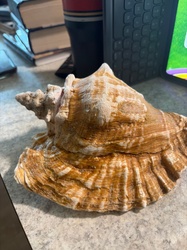
Iridescent molluscan shell fragment, possibly abalone

Natural History Specimens

AI Estimated Value

·Not an official valuation·Verify before acting

$5 - $15

As of June 25, 2026

AI Item Analysis

·AI can make mistakes·Verify before acting
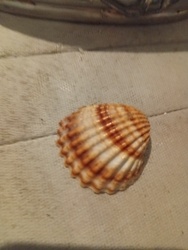
This item is a fragment of a molluscan shell, exhibiting a high degree of iridescence consistent with nacre (mother-of-pearl). The specimen features a complex, undulating surface with rhythmic growth lines and ridges. Its color palette is dominated by silvery-grey and pearlescent tones, with visible prismatic shifts toward pink, green, and pale blue as light reflects off the crystalline structure. The organic geometry and iridescent interior are stylistically consistent with the genus Haliotis (commonly known as abalone), though without the presence of the respiratory pores characteristic of an intact shell, this remains a hypothesis subject to physical examination. The fragment appears to have a naturally weathered, irregular shape with rough, fractured edges, suggesting it may have been tumbled by water or mechanically separated from a larger shell. There are no maker's marks, signatures, or inscriptions visible, which is expected for a natural specimen. The item is displayed within a translucent green plastic container, submerged in a shallow layer of clear liquid, possibly water, which enhances the visual luster of the surface. Condition is consistent with a raw or found natural object, showing various surface abrasions and sharp breakage points.
AI Appraisal Report

·AI can make mistakes·Verify before acting
Based on my visual analysis of the provided image, I have examined a small fragment of an iridescent molluscan shell, hypothesized to be from the Haliotis (abalone) genus. The specimen displays characteristic nacreous luster and rhythmic growth ridges. However, I cannot verify from a photo whether this is a natural shell or a synthetic composite designed to mimic mother-of-pearl, though the fracture patterns are consistent with biological material. The value is based on the assumption that this is a raw, found natural specimen of modest size and incomplete form. In the current market for natural history curiosities, small, weathered fragments of common shells like abalone generally hold minimal commercial value, often being sold in bulk lots for craft or educational purposes. The item is displayed in a plastic container with liquid, which technically enhances its luster but does not increase its rarity or botanical significance. If this were a rare or endangered species of mollusk, its possession might be regulated, but as a generic iridescent fragment, it is treated as a low-value specimen. A physical inspection would be required to confirm the species and rule out synthetic imitations. Should the piece be identified as a more common oyster shell or a mass-produced resin replica, the value would likely drop below $2. Conversely, a larger, more complete shell with distinct respiratory pores or documented provenance to a specific historical collection would command a higher premium. Without such factors, the fragment remains a decorative natural object with nominal market demand.

Get your items appraised

Instant estimates of your treasures with AI-powered appraisals

Browse More Appraisals