AI identification & appraisal estimate

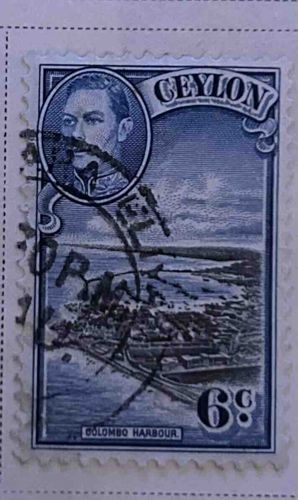
Ceylon 6 Cents Stamp, Colombo Harbour and King George VI

Submitted photo of Ceylon 6 Cents Stamp, Colombo Harbour and King George VI
Photo submitted by the user — not generated by AI

AI Estimated Value

Not an official valuation

$2 - $5

AI estimate as of November 9, 2025 · verify with a professional before acting

AI-Generated · Verify before acting

Everything on this page is generated by AI for informational purposes only. AI can make mistakes — the AI may misidentify items or misattribute them (artist, maker, brand, designer, origin, era). This is not an official valuation and should not be used for insurance, sale, tax, estate, legal, or lending purposes — or any decision requiring a certified appraisal. It is not an authoritative claim about any person, brand, or rights holder — do not share or rely on it as a factual statement about a third party. Always consult qualified professionals before making financial decisions.

Read the full disclaimer

AI Item Analysis

This item is a vintage postage stamp from Ceylon (modern-day Sri Lanka), featuring a portrait of King George VI and a scenic depiction of Colombo Harbour. The stamp is predominantly blue and white, executed in a monochromatic style. It has typical perforated edges, indicating it was part of a larger sheet. In the upper left corner, there is a circular portrait of King George VI, facing right, with details of his uniform visible. Above the main scene, a banner proudly displays the word "CEYLON" in a stylized font. The central and dominant feature of the stamp is an aerial or elevated view of Colombo Harbour, showing a bustling port with buildings, ships, and the surrounding landscape, including what appears to be a major city or town. Below this scene, in small text, the location is identified as "COLOMBO HARBOUR." The denomination, "6 Cents" (indicated as "6c"), is prominently displayed in the bottom right corner within a small rectangular frame. The stamp exhibits signs of use, as evidenced by a clear cancellation mark which appears to be a partial 'R' or 'P' with other indistinct letters, suggesting it has fulfilled its postal purpose. The paper shows minor discoloration consistent with age, but no apparent tears or major creases are visible, apart from the cancellation. The printing quality appears good, with fine details discernible in both the portrait and the landscape. Its style suggests it belongs to the mid-20th century, specifically the period of King George VI's reign (1936-1952), making it a collectible item from British colonial-era Ceylon.
AI Appraisal Report

I have examined the image of the Ceylon 6 Cents stamp featuring Colombo Harbour and King George VI. From a visual perspective, the stamp appears authentic, consistent with issues from Ceylon during King George VI's reign (1937-1952). The design, denomination, and iconography align with known philatelic records for this period. The monochromatic blue and white print, perforated edges, and 'CEYLON' inscription are all characteristic. The condition, based on the image, is 'used' due to the clear cancellation mark, which appears to be a partial postal cancellation, indicating it fulfilled its purpose. The paper shows minor discoloration consistent with age, but no obvious tears or significant creases are visible. This suggests a relatively good used condition, though a physical inspection would be needed to detect subtle thinning, hidden creases, or repairs not discernible in the image. Regarding market conditions, this particular stamp (Scott #288) is a common issue. Although it features a notable monarch and a scenic view, its widespread availability means it is not considered rare. Demand is moderate, primarily from collectors of British Commonwealth stamps or Ceylon philately. Factors impacting its value negatively are its 'used' status and commonality. A pristine, unmounted mint example would command a higher price. Given its common status and used condition, my estimate for its fair market value is between $2 and $5. This assumes no hidden flaws discoverable only through physical examination. For full authentication and to detect potential alterations or repairs, I would require an in-person examination under magnification, as well as a check against known watermarks and paper types for this specific issue. Without physical access, definitive statements about gum condition (if mint) or subtle paper defects remain speculative.

Keep exploring

More postage stamp appraisals

Get your items appraised

Instant AI-powered appraisal estimates from a photo

Browse More Appraisals