AI Appraisal Estimate

AI-generated estimates · not official valuations

From the user

What was submitted

Photo and notes provided by the user — not generated by AI

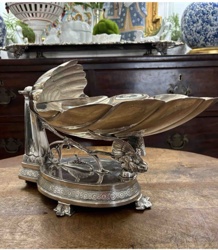
Submitted item photo
Submitted photo · June 8, 2026

User's notes

No additional notes provided.

AI analysis below

AI appraisal

AI analysis & estimate

AI-Generated · Verify before acting

Everything below is generated by AI for informational purposes only. AI can make mistakes — the AI may misidentify items or misattribute them (artist, maker, brand, designer, origin, era). This is not an official valuation and should not be used for insurance, sale, tax, estate, legal, or lending purposes — or any decision requiring a certified appraisal. It is not an authoritative claim about any person, brand, or rights holder — do not share or rely on it as a factual statement about a third party. Always consult qualified professionals before making financial decisions.

Read the full disclaimer

AI Identification

·Not independently authenticated·Verify before acting

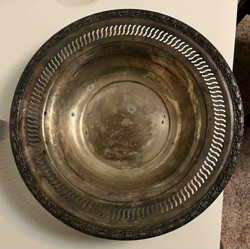
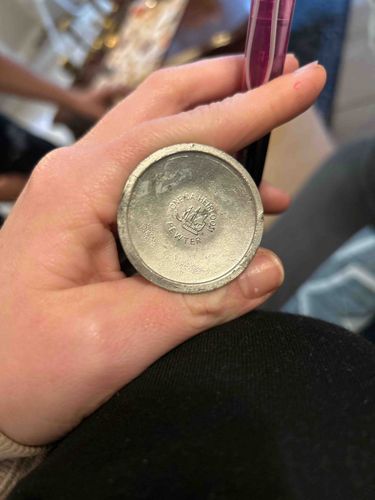
Oneida Heirloom Pewter Item (Base)

Decorative Arts/Tableware

AI Estimated Value

·Not an official valuation·Verify before acting

$5-10

As of June 8, 2026

AI Item Analysis

·AI can make mistakes·Verify before acting
The item depicted is the base or bottom of a small, circular object, likely a cup, mug, or perhaps a small dish, crafted from pewter. The material exhibits the characteristic matte, grayish-silver appearance of pewter, suggesting an alloy of tin, often mixed with copper, antimony, or bismuth. Its surface shows a moderate amount of wear consistent with age and handling, including minor scuffs and a natural, uneven patina that darkens some areas and highlights the raised elements of the maker's mark. The construction appears solid and sturdy, with a slightly raised edge forming the rim of the base. The most distinguishing feature is the embossed maker's mark centrally located on the underside. This mark clearly reads "ONEIDA HEIRLOOM PEWTER" in an arc around a stylized emblem of a three-masted sailing ship. This stamp identifies the manufacturer as Oneida, a well-known brand, and specifies the material as 'Heirloom Pewter,' suggesting it was part of a line designed for lasting quality or collectible appeal. The lettering is somewhat worn but still legible, and the ship emblem retains its detail. Based on the 'Heirloom Pewter' designation and the visible style of the mark, and considering Oneida's manufacturing history, this item likely dates from the mid to late 20th century. The overall craftsmanship indicates a mass-produced but quality item, typical of a reputable manufacturer like Oneida. No significant damage like cracks or deep dents are immediately visible, only common surface wear.
AI Appraisal Report

·AI can make mistakes·Verify before acting
Upon examining the image of this Oneida Heirloom Pewter base, I can confirm its identity and assess its condition. The maker's mark, featuring the 'ONEIDA HEIRLOOM PEWTER' text and a three-masted ship emblem, is consistent with products manufactured by Oneida Ltd. during the mid to late 20th century. The item appears to be in fair, age-appropriate condition, exhibiting surface scuffs and a natural patina typical of handled pewter. Importantly, this is only the base of a larger item, such as a mug, cup, or small dish, not a complete piece. Its value is therefore significantly diminished, as collectors and buyers seek complete, functional tableware. The market for individual Oneida pewter replacement parts is extremely limited. Comparable sales for complete Oneida pewter mugs or small dishes from this era typically range from $10 to $25, depending on condition and design. Given that this is only a fractional component, its value is minimal, primarily resting on its potential use for a specific repair or as a curiosity. The material itself, being a common pewter alloy, holds negligible intrinsic value. Therefore, its primary value determinant is its status as an incomplete part, which severely limits demand. While the mark appears authentic for the period based on visual inspection, definitive authentication without seeing the complete item is limited. A physical examination could confirm the alloy composition, but it would not alter the fundamental valuation issue of it being an incomplete piece.

Get your items appraised

Instant estimates of your treasures with AI-powered appraisals

Browse More Appraisals