AI estimate as of November 4, 2025 · verify with a professional before acting
AI-Generated · Verify before acting
Everything on this page is generated by AI for informational purposes only. AI can make mistakes — the AI may misidentify items or misattribute them (artist, maker, brand, designer, origin, era). This is not an official valuation and should not be used for insurance, sale, tax, estate, legal, or lending purposes — or any decision requiring a certified appraisal. It is not an authoritative claim about any person, brand, or rights holder — do not share or rely on it as a factual statement about a third party. Always consult qualified professionals before making financial decisions.
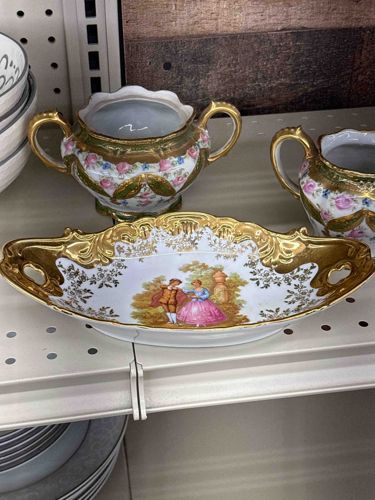
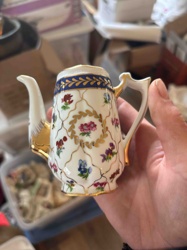
This image showcases a porcelain decorative tray along with a covered sugar bowl, likely part of a larger dessert or tea set. The tray is elongated and boat-shaped with ornate, scrolled handles and edges, all heavily gilded in gold. The central motif on the tray features a romantic Rococo-style scene with two figures dressed in 18th-century attire – a gentleman in brown and gold, and a lady in a pink and blue gown – standing amidst a pastoral landscape with trees and what appears to be a stone column or monument. The background is white porcelain, adorned with intricate gold filigree and floral patterns surrounding the central scene. The sugar bowl, positioned behind the tray, is also crafted from white porcelain with heavy gold gilding on its rim, handles, and base. It features a decorative band of green with pink and blue floral motifs, possibly roses, bordered by gold trim. The handles are ornate and gilded. The overall style suggests a Victorian or Edwardian era aesthetic, drawing heavily on Rococo influences. No specific maker's marks or signatures are visible. The condition appears to be good for both pieces, with some potential wear to the gilding, which is common for items of this age due to handling and cleaning. The craftsmanship indicates a decorative, rather than purely utilitarian, purpose, likely intended for display or serving special occasions. The vivid colors and detailed artwork on both pieces highlight a particular artistic sensibility from their period of manufacture. A creamer or milk jug, matching the sugar bowl, is partially visible to the right, confirming these pieces are part of a coordinated set.
AI Appraisal Report
Upon examining the images provided, this partial porcelain set, consisting of a decorative tray, a covered sugar bowl, and a partially visible creamer, presents a late 19th or early 20th-century Rococo revival style. The pieces are heavily gilded and feature a romantic figural scene on the tray, typical of decorative wares produced in Germany, Austria, or France during the Victorian or Edwardian periods. The overall condition appears good, with the porcelain and painted scenes intact. However, some minor wear to the extensive gilding is evident, which is common for items of this age and use. The value is significantly impacted by the fact that this is an incomplete set and lacks a visible maker's mark. Unmarked, partial sets of this nature are quite common on the secondary market, which limits their rarity and demand among serious collectors who typically seek complete, marked sets from renowned manufacturers like Limoges, Dresden, or Royal Vienna. Current market conditions for such decorative porcelain show a modest demand, with comparable unmarked or lesser-known maker sets selling in the $75 to $125 range at auction and online marketplaces. Higher values are reserved for pieces with verified prestigious marks. A complete authentication was not possible from images alone. A physical, in-person examination is required to inspect for any hairline cracks, restoration, and most importantly, to identify any manufacturer's marks on the underside. Without a confirmed maker's mark, the origin remains speculative, and the appraisal reflects its value as a decorative, but anonymous, antique.