AI estimate as of September 17, 2025 · verify with a professional before acting
AI-Generated · Verify before acting
Everything on this page is generated by AI for informational purposes only. AI can make mistakes — the AI may misidentify items or misattribute them (artist, maker, brand, designer, origin, era). This is not an official valuation and should not be used for insurance, sale, tax, estate, legal, or lending purposes — or any decision requiring a certified appraisal. It is not an authoritative claim about any person, brand, or rights holder — do not share or rely on it as a factual statement about a third party. Always consult qualified professionals before making financial decisions.
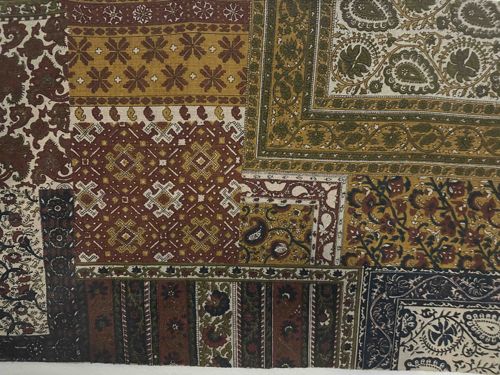
This item is a textile featuring a patchwork design composed of various printed fabric squares and rectangles. The dominant colors are rich earthy tones, including shades of brown, olive green, mustard yellow, and cream, with occasional accents of black and a hint of dusty blue in one section. The patterns are intricate and varied, strongly reminiscent of traditional Indian block prints or paisley motifs.
Several distinct patterns are visible: large sprawling paisley designs in brown and cream, floral-like medallions on a mustard background, geometric interlocking patterns on a reddish-brown field, and border-style patterns featuring scrolling vines and smaller paisleys. The construction appears to be machine-printed rather than hand-blocked, given the uniformity of repeat and color. Each 'patch' is a distinct printed section, suggesting either a fabric designed with a patchwork aesthetic or actual pieces of fabric sewn together, though the seamless appearance leans towards a single print.
There are no visible condition issues such as tears, stains, or fraying from the provided image; the surface appears relatively clean and uniformly colored. The lack of discernible wear suggests it is either new, well-preserved, or a print designed to simulate aged textiles. No manufacturer's marks or signatures are visible. The style suggests a revival of ethnic or bohemian aesthetics, potentially dating from the late 20th century to contemporary production, mimicking much older textile traditions. The craftsmanship appears good for a printed textile, with clear print registration and vibrant colors, indicating a medium to high-quality factory production.
AI Appraisal Report
I have examined the provided image of this patchwork textile with Indian-inspired prints. Based on my visual assessment, the item appears to be in very good, if not excellent, condition, showing no visible signs of tears, stains, or fraying. The colors are vibrant, and print registration is clear, indicating good quality manufacturing. The intricate patterns strongly suggest machine-printed rather than hand-blocked production, given the uniformity. This leads me to believe it is likely a single fabric designed with a patchwork aesthetic, rather than individually sewn pieces.
The style, with its earthy tones and intricate motifs reminiscent of traditional Indian textiles, places it firmly within the ethnic or bohemian aesthetic revival, likely dating from the late 20th century to contemporary production. While appealing, this type of printed textile is not particularly rare. The market for such decorative fabrics is moderate, driven by interior design trends. Comparables would include similar printed fabrics or mass-produced textile art pieces, which generally fetch modest prices.
Factors significantly impacting value include its machine-printed nature and lack of age or historical significance if new. The absence of a manufacturer's mark also precludes attributing it to a specific designer or brand, which could elevate value. Demand is tied to current decor trends rather than intrinsic artistic merit or rarity.
It is crucial to note the limitations of authenticity verification from images alone. A physical examination would be necessary to definitively confirm if it is a single printed fabric or actual sewn patches, assess the fabric composition (e.g., cotton, synthetic blend), and confirm printing technique with greater certainty. Provenance documentation or scientific testing could further authenticate age or origin, particularly if there were claims of it being an antique or a genuine hand-blocked piece. Without these, it is appraised as a decorative, machine-printed textile.