AI identification & appraisal estimate

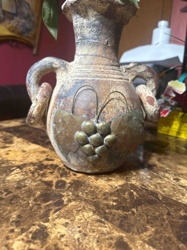
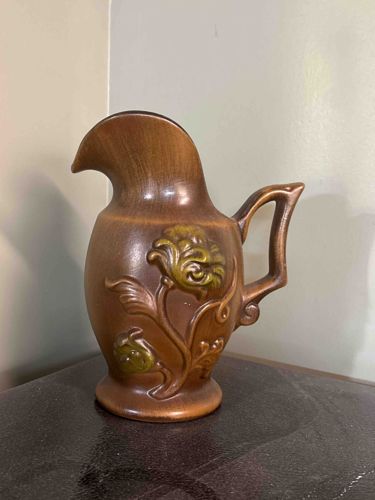
Art Pottery Pitcher with Floral Relief

Submitted photo of Art Pottery Pitcher with Floral Relief
Photo submitted by the user — not generated by AI

AI Estimated Value

Not an official valuation

$120-180

AI estimate as of October 2, 2025 · verify with a professional before acting

AI-Generated · Verify before acting

Everything on this page is generated by AI for informational purposes only. AI can make mistakes — the AI may misidentify items or misattribute them (artist, maker, brand, designer, origin, era). This is not an official valuation and should not be used for insurance, sale, tax, estate, legal, or lending purposes — or any decision requiring a certified appraisal. It is not an authoritative claim about any person, brand, or rights holder — do not share or rely on it as a factual statement about a third party. Always consult qualified professionals before making financial decisions.

Read the full disclaimer

AI Item Analysis

This appears to be a vintage art pottery pitcher, likely from the mid-20th century, characterized by its warm, earthy brown glaze with hints of an iridescent or metallic sheen. The vessel features a gracefully curved neck leading to a prominent, sharply defined pouring spout, reminiscent of certain bird-like or classical forms. The body is bulbous at the bottom, tapering slightly towards the neck, and stands on a recessed circular foot. A sturdy, C-shaped handle is attached to the side, extending from below the rim to the mid-section of the body. The most striking decorative element is the raised, relief-molded floral motif on the front. This design consists of a large, stylized flower with swirling petals and a bud, both rendered in a contrasting olive-green glaze that highlights their sculptural quality against the darker brown background. This two-tone glazing technique adds depth and visual interest. The base color is a rich, variegated brown, suggesting a reactive glaze or one designed to mimic wood grain or natural stone textures. There are no visible chips, cracks, or significant damage, suggesting it is in good vintage condition. The craftsmanship appears to be of good quality, with attention paid to both form and decorative detail. The specific style of the floral relief points towards an Art Deco or Mid-Century Modern aesthetic, popularized by various American and European art potteries. Without a visible maker's mark, the exact origin is unknown, but its characteristics align with collectible art pottery.
AI Appraisal Report

Based on my visual examination of the image, this vintage art pottery pitcher with floral relief appears to be in very good to excellent vintage condition. I see no visible chips, cracks, or significant damage, which is a key factor in its valuation. The two-tone glazing, featuring an earthy brown with an iridescent sheen and contrasting olive-green floral relief, is well executed and adds visual appeal. The craftsmanship, particularly the defined pour spout and robust handle, suggests a quality production. The style of the floral motif aligns with Mid-Century Modern aesthetics, placing its likely origin in the mid-20th century. Market conditions for unsigned vintage art pottery are relatively stable. Comparables would include similar unsigned decorative pitchers or vases from the mid-20th century by reputable though not necessarily famed potteries. Demand for aesthetically pleasing and functional vintage decor remains consistent. While not exceedingly rare, its good condition and attractive design enhance its desirability. Factors impacting value include the excellent condition, appealing design, and decorative utility. However, the most significant limitation is the lack of a visible maker's mark. Without a signature or mark, attributing it to a specific, well-known, or collectible pottery is impossible from an image alone. This significantly limits its upper valuation potential, as signed pieces typically command higher prices. For full authentication and to ascertain a definitive origin or maker, an in-person examination would be crucial to check for hidden marks or specific clay body characteristics. Additionally, provenance documentation, if available, would provide invaluable context. Without these, it remains a charming and well-preserved decorative object rather than a documented piece by a specific artisan or studio.

Keep exploring

More decorative art pottery appraisals

Get your items appraised

Instant AI-powered appraisal estimates from a photo

Browse More Appraisals