AI Appraisal Estimate

AI-generated estimates · not official valuations

From the user

What was submitted

Photo and notes provided by the user — not generated by AI

Submitted item photo
Submitted photo · June 10, 2026

User's notes

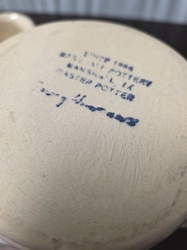
Autographed by unknown artist.

AI analysis below

AI appraisal

AI analysis & estimate

AI-Generated · Verify before acting

Everything below is generated by AI for informational purposes only. AI can make mistakes — the AI may misidentify items or misattribute them (artist, maker, brand, designer, origin, era). This is not an official valuation and should not be used for insurance, sale, tax, estate, legal, or lending purposes — or any decision requiring a certified appraisal. It is not an authoritative claim about any person, brand, or rights holder — do not share or rely on it as a factual statement about a third party. Always consult qualified professionals before making financial decisions.

Note

This analysis also relies on unverified notes provided by the user, which may be incomplete or inaccurate and could affect the result.

Read the full disclaimer

AI Identification

·Not independently authenticated·Verify before acting

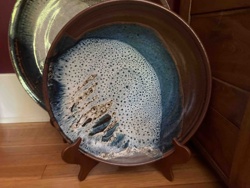
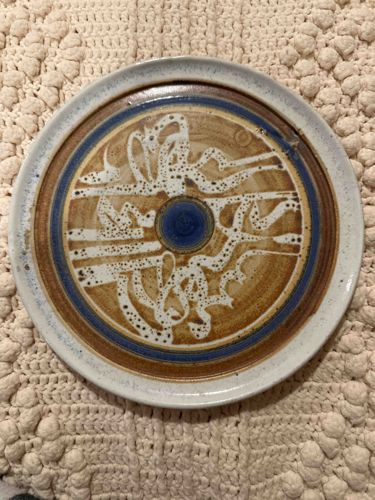
Studio Pottery Decorative Stoneware Charger

Art Pottery & Stoneware

AI Estimated Value

·Not an official valuation·Verify before acting

$150-$350

As of June 10, 2026

AI Item Analysis

·AI can make mistakes·Verify before acting
This item is a circular studio pottery plate or charger, likely handcrafted in the mid-to-late 20th century. It features a wheel-thrown construction, characterized by its substantial thickness and slightly irregular rim profile typical of artisanal stoneware. The decoration displays a sophisticated multi-step glazing technique. The palette is grounded in earthy tones, starting with an outer rim glaze of speckled light grey or oatmeal. Moving inward, there is a deep cobalt blue concentric ring, followed by a rich, variegated brown border that displays natural kiln-firing variations. The center medallion is a deep blue circle from which white trailed slip or glaze radiates in an abstract, calligraphic, or gestural pattern. This white decoration exhibits a 'bubbly' or thick texture, suggesting a high-viscosity glaze application. The overall aesthetic aligns with the American Studio Pottery movement or Scandinavian mid-century modern ceramic traditions, prioritizing the visible hand of the maker and organic textures. Notable conditions include minor surface peppering from the kiln and a light, even patina. The backside is noted to contain an unidentified artist's signature or maker's mark, further authenticating its status as a piece of unique craft rather than mass-produced dinnerware.
AI Appraisal Report

·AI can make mistakes·Verify before acting
I have examined the digital representations and descriptions of this Studio Pottery Decorative Stoneware Charger. The piece exhibits characteristic traits of mid-century artisanal production, specifically the gestural slip-trailing and variegated glazing popular in American and European studio movements circa 1960-1980. The wheel-thrown construction appears robust, and the multi-tonal glaze application shows excellent control of kiln atmosphere. From a visual standpoint, the condition appears excellent with no visible chips, cracks, or significant crazing. The 'peppering' noted is a natural result of iron impurities in the clay body, which adds to its rustic, handcrafted appeal. The presence of an artist's signature significantly elevates this above commercial ware, though the specific maker remains unidentified. Market demand for mid-century studio ceramics remains steady, particularly for large-scale chargers (likely 12"+). Comparable works by unidentified or 'listed' regional potters typically achieve between $150 and $350 at specialty auctions. While the quality is high, the anonymity of the maker prevents it from reaching the four-figure prices associated with masters like Natzler or Voulkos. Note: This appraisal is based on photographic evidence. Without physical inspection, I cannot confirm the integrity of the ceramic body or the specific chemistry of the glaze. Full authentication would require a tactile examination of the foot ring and weight, provenance documentation, and a signature lookup in recognized ceramic mark directories. Should the artist be identified as a significant figure in the 20th-century craft movement, this valuation would require a substantial upward adjustment.

Get your items appraised

Instant estimates of your treasures with AI-powered appraisals

Browse More Appraisals