AI Appraisal Estimate

AI-generated estimates · not official valuations

From the user

What was submitted

Photo and notes provided by the user — not generated by AI

Submitted item photo
Submitted photo · May 23, 2026

User's notes

No additional notes provided.

AI analysis below

AI appraisal

AI analysis & estimate

AI-Generated · Verify before acting

Everything below is generated by AI for informational purposes only. AI can make mistakes — the AI may misidentify items or misattribute them (artist, maker, brand, designer, origin, era). This is not an official valuation and should not be used for insurance, sale, tax, estate, legal, or lending purposes — or any decision requiring a certified appraisal. It is not an authoritative claim about any person, brand, or rights holder — do not share or rely on it as a factual statement about a third party. Always consult qualified professionals before making financial decisions.

Read the full disclaimer

AI Identification

·Not independently authenticated·Verify before acting

Glazed Ceramic Duck Figurine

Decorative Ceramic Figurine

AI Estimated Value

·Not an official valuation·Verify before acting

$40-$70

As of May 23, 2026

AI Item Analysis

·AI can make mistakes·Verify before acting
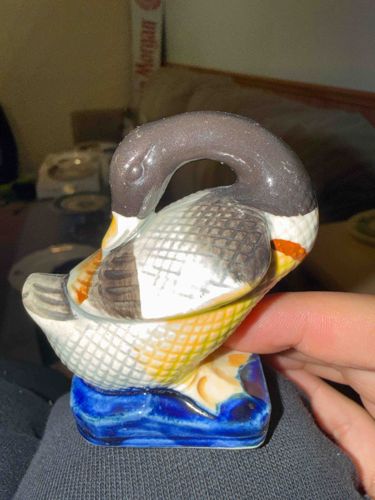
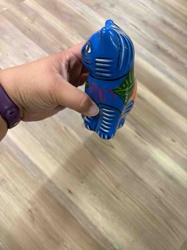
This is a glazed ceramic figurine depicting a duck or waterfowl, possibly a mallard given the coloring, with its head turned back over its body as if preening or sleeping. The figurine is crafted from ceramic material, likely earthenware or porcelain given the glossy finish, and is hand-painted. The color palette includes a dark, shimmering brown or grey for the head and neck, with a lighter grey or white body featuring a textured or scaled pattern, possibly representing feathers, indicated by incised lines or painted detail. There are accents of yellow/gold, black/dark grey, and orange/red on the body and wing area, consistent with a mallard's plumage. The duck rests upon a rectangular base painted in vibrant blues, mimicking water, with some lighter cream/yellow and blue abstract detailing suggesting reflections or flora. The glaze has an overall glossy appearance. The eyes are small, raised dots in black. There are visible specks or imperfections on the dark head, which could be dust accumulation or minor glaze inconsistencies. The overall condition appears good with no obvious chips or cracks visible from the provided angles. The style suggests it could be from the mid-20th century to late 20th century, common for decorative ceramic animal figures. The craftsmanship appears to be of a moderate quality, with hand-painting evident but without exceptional detail that would indicate high-end artisan work. The base itself is a solid, integral part of the sculpture, indicating careful design and production.
AI Appraisal Report

·AI can make mistakes·Verify before acting
I have examined the provided image of this glazed ceramic duck figurine. Overall, the condition appears good, with no obvious chips, cracks, or significant glaze loss visible. The hand-painted details are present, and the colors remain relatively vibrant. The specks on the dark head are likely minor glaze inconsistencies or dust, which would be clearer upon physical inspection. The authenticity as a decorative ceramic piece of its likely era (mid to late 20th century) seems probable based on its style and apparent manufacturing process. Market conditions for decorative ceramic animal figurines like this are generally modest. While charming, these items were mass-produced for home decor. Comparable sales for similar glazed ceramic duck or waterfowl figurines, especially those without a known identifiable artist or major manufacturer, typically fall within a modest range. There is a steady but not exceptionally high demand for such vintage animal collectibles, driven by niche collectors or those seeking nostalgic decorative accents. Rarity is not a significant factor here; similar pieces are commonly found. Factors impacting value include its good condition and the pleasing aesthetic of its hand-painted finish. However, the lack of an identifiable maker's mark, artist signature, or provenance limits its potential value. The craftsmanship, while good for a decorative item, doesn't suggest exceptional artistic merit that would command higher prices. Physical examination would allow for a more precise assessment of any wear, crazing, or manufacturing flaws, and could potentially reveal any obscured maker's marks. Without provenance documentation or a known origin, it remains a charming but common decorative ceramic figurine. Scientific testing is not typically applied to items of this type for authentication unless there are specific claims of being an important piece.

Get your items appraised

Instant estimates of your treasures with AI-powered appraisals

Browse More Appraisals