AI estimate as of August 12, 2025 · verify with a professional before acting
AI-Generated · Verify before acting
Everything on this page is generated by AI for informational purposes only. AI can make mistakes — the AI may misidentify items or misattribute them (artist, maker, brand, designer, origin, era). This is not an official valuation and should not be used for insurance, sale, tax, estate, legal, or lending purposes — or any decision requiring a certified appraisal. It is not an authoritative claim about any person, brand, or rights holder — do not share or rely on it as a factual statement about a third party. Always consult qualified professionals before making financial decisions.
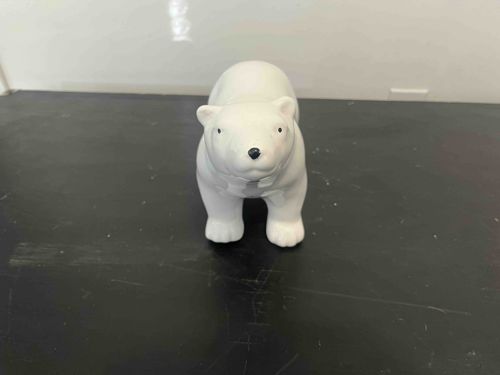
This item is a small, white ceramic figurine depicting a polar bear in a walking or standing posture. The figurine is crafted from smooth, glossy ceramic or porcelain, giving it a bright, reflective finish. Its color is a pure, unblemished white, consistent with the typical depiction of polar bear fur. The bear's eyes are rendered as small, black dots, and its nose is a larger, solid black oval, providing a subtle contrast to the overall white body. The craftsmanship appears to be quite good, with smooth curves and a well-defined, although somewhat stylized, anatomical structure for the bear. There are no readily visible cracks, chips, or major signs of wear on the visible surfaces, suggesting it is in very good to excellent condition. The surface glistens, indicating a well-applied glaze. Given its appearance, it is likely a modern decorative piece, possibly from the mid to late 20th century or early 21st century. There are no discernible manufacturer's marks or signatures visible from the provided image, which might imply it is a mass-produced item rather than a unique artisan piece. Its relatively simple, clean design suggests it could be part of a collection or a standalone decorative accent.
AI Appraisal Report
Upon examining the provided image of the White Ceramic Polar Bear Figurine, I assess its condition as very good to excellent. The smooth, glossy surface shows no visible chips, cracks, or significant wear, indicating meticulous care or recent production. The pure white ceramic with minimalist black features for eyes and nose suggests a modern decorative piece, likely mass-produced. Authenticity, based solely on this image, refers primarily to its material and form; it appears to be genuine ceramic. However, without handling the item, I cannot confirm the specific type of ceramic (porcelain vs. earthenware) or detect subtle imperfections.
Market conditions for such decorative animal figurines are generally stable, with a broad appeal but moderate individual value unless associated with a well-known brand or artist. Comparables include similar ceramic animal sculptures from contemporary manufacturers like Lenox, Goebel, or various unbranded modern decor lines, which typically retail new for $15-$50. In the secondary market, these items often fetch $5-$25, depending on size, detail, and condition.
Demand for generic ceramic animal figurines is consistent but not high-fever; they are not considered rare. The absence of producer marks or signatures limits its value significantly, as it lacks provenance or collectible attribution. This is a primary factor impacting value, relegating it to a decorative household item rather than a collectible art piece. Its value is largely driven by its aesthetic appeal and condition.
Limitations in authenticity verification from images alone are substantial. I cannot confirm the glazes' composition, the figurine's weight, the presence of any subtle base marks, or even the exact dimensions, all of which would influence a precise appraisal. To fully authenticate and assess its value, an in-person examination is crucial to identify manufacturer's marks (often on the base), assess tactile quality, and cross-reference with known production lines. Provenance documentation, though unlikely for such an item, would be ideal for any high-value piece.