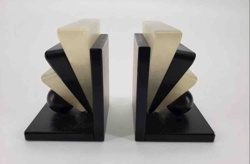
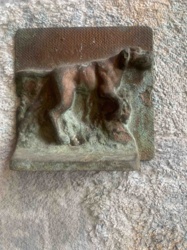
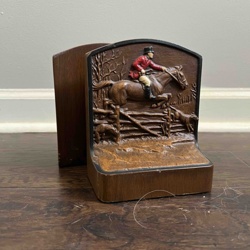
These notes were written by the person who submitted this item. Appraiser.AI has not verified them, and the AI's identification and estimate may rely on them.
AI Estimated Value
Not an official valuation
$150-250
AI estimate as of September 27, 2025 · verify with a professional before acting
AI-Generated · Verify before acting
Everything on this page is generated by AI for informational purposes only. AI can make mistakes — the AI may misidentify items or misattribute them (artist, maker, brand, designer, origin, era). This is not an official valuation and should not be used for insurance, sale, tax, estate, legal, or lending purposes — or any decision requiring a certified appraisal. It is not an authoritative claim about any person, brand, or rights holder — do not share or rely on it as a factual statement about a third party. Always consult qualified professionals before making financial decisions.
This analysis also relies on unverified notes provided by the user, which may be incomplete or inaccurate and could affect the result.
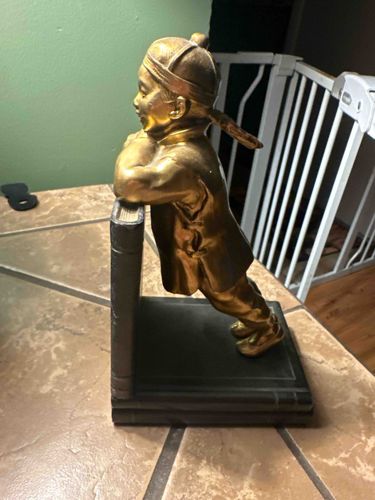
This item is a single bookend, likely part of a pair, featuring a whimsical depiction of a 'Happy Buddha' or 'Chinese Boy' figure in an Art Deco style. The figure is made of metal, likely bronze-plated spelter or pot metal, and finished with a golden-bronze patinated surface, giving it a metallic luster. The boy is rendered with Asian facial features, a topknot, and a long ponytail, suggesting a traditional Chinese aesthetic. He is dressed in what appears to be a traditional tunic or robe. The figure is posed as if leaning over a stack of 'books' that form the base and vertical support of the bookend. His arms are crossed over the top 'book' of the stack, and his body leans forward playfully, with his small feet resting on the bottom 'book.' The 'books' are rectangular forms with molded spines, decorated with horizontal lines to simulate pages and bindings, and are finished in a contrasting dark brown or black color, providing a visual anchor for the golden figure. The overall condition appears good for its age, though some wear to the golden finish is visible, revealing darker areas underneath, indicative of handling and age-related patina. There are no obvious signs of significant damage, repairs, or chips. The design is characteristic of the Art Deco period, roughly 1920s-1940s, known for its stylized figures and geometric forms. The mention of 'Ronson' in the context suggests it may be a product by the Ronson Art Metal Works, a known manufacturer of decorative metalware during that era, indicating a potential for quality craftsmanship and collectibility. The bookend is a decorative and functional item, showcasing a blend of cultural influence and period design.
AI Appraisal Report
Based on my visual examination of the provided image, this Ronson 'Happy Buddha' or 'Chinese Boy' Art Deco bookend appears to be an authentic example of Ronson Art Metal Works production from the 1920s-1940s. The stylized figure, material composition (likely bronze-plated spelter), and contrasting finishes are all characteristic of the period and Ronson's known aesthetic. The 'Happy Buddha' motif was a popular choice for decorative items of this era. I note some wear to the original golden patina, revealing darker underlying metal, which is consistent with age and typical handling. Crucially, there are no visible chips, significant dents, or signs of repair that would substantially detract from its value. The overall integrity and form remain very good.
Market conditions for single bookends, even those by reputable makers like Ronson, are generally lower than for complete pairs. However, the charm and Art Deco appeal of this specific design maintain a healthy demand among collectors of decorative arts and Art Deco memorabilia. While not exceedingly rare, this particular design is less common than some other Ronson bookend subjects, contributing positively to its value. Factors impacting value include its good condition (despite patina loss), the recognizable Ronson attribution (assuming the owner's information is accurate), and its appealing figural design.
Limitations in authenticity verification are inherent when examining images alone. While the visual evidence strongly suggests authenticity, a definitive assessment would require in-person inspection to verify manufacturer marks (if present), the exact metal composition, and the quality of the patination. Furthermore, provenance documentation would solidify the Ronson attribution and historical context. Without physical inspection, I cannot confirm the absence of subtle repairs or internal casting flaws.