AI Appraisal Estimate

AI-generated estimates · not official valuations

From the user

What was submitted

Photo and notes provided by the user — not generated by AI

Submitted item photo
Submitted photo · May 28, 2026

User's notes

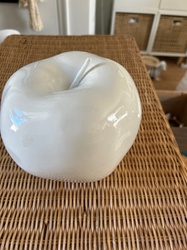
Made in Italy, genuine alabaster

AI analysis below

AI appraisal

AI analysis & estimate

AI-Generated · Verify before acting

Everything below is generated by AI for informational purposes only. AI can make mistakes — the AI may misidentify items or misattribute them (artist, maker, brand, designer, origin, era). This is not an official valuation and should not be used for insurance, sale, tax, estate, legal, or lending purposes — or any decision requiring a certified appraisal. It is not an authoritative claim about any person, brand, or rights holder — do not share or rely on it as a factual statement about a third party. Always consult qualified professionals before making financial decisions.

Note

This analysis also relies on unverified notes provided by the user, which may be incomplete or inaccurate and could affect the result.

Read the full disclaimer

AI Identification

·Not independently authenticated·Verify before acting

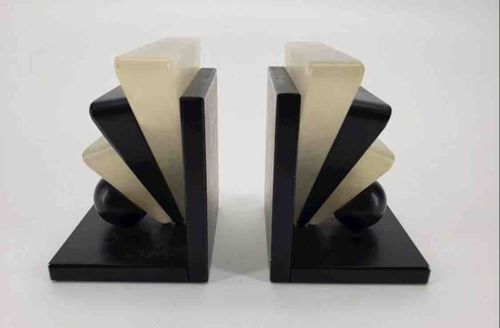
Art Deco Alabaster Bookends

Decorative Arts

AI Estimated Value

·Not an official valuation·Verify before acting

$150 - $250

As of May 28, 2026

AI Item Analysis

·AI can make mistakes·Verify before acting
This is a pair of genuine Italian alabaster bookends, exhibiting a striking Art Deco-inspired design. Each bookend is constructed from a combination of black and cream-colored alabaster. The base and the upright back panel of each bookend are made from polished black alabaster, creating a stark contrast with the lighter elements. Nested within the black components are three fan-like, curved pieces of translucent, creamy-white alabaster, which appear to radiate outwards. These lighter pieces have a soft, almost glowing quality, characteristic of genuine alabaster. A notable feature is the single, spherical black alabaster ball positioned at the base, nestled amongst the fanned pieces, contributing to the geometric yet fluid aesthetic. The overall construction suggests careful craftsmanship, with smooth, well-defined edges and highly polished surfaces on the black alabaster. The translucent nature of the cream alabaster pieces indicates good quality material, likely hand-carved and shaped. No discernible maker's marks or signatures are visible in the provided images. The condition appears to be very good, with no obvious chips, cracks, or significant wear visible, suggesting gentle handling and maintenance. The polished surfaces reflect light well, indicating a preserved finish. Given the design and material, these bookends likely date to the mid-20th century, possibly 1920s-1950s, aligning with the late Art Deco or early Mid-Century Modern transitional period. The 'Made in Italy' context further supports the use of high-quality alabaster, often associated with Italian craftsmanship in decorative objects.
AI Appraisal Report

·AI can make mistakes·Verify before acting
Upon examining the provided images and details, I assess these Art Deco-style bookends to be a fine example of mid-20th century Italian decorative arts. The use of genuine Italian alabaster, combining polished black with creamy, translucent fan-shaped elements, is characteristic of the period and region. The design is a strong representation of the late Art Deco aesthetic, featuring a classic geometric-yet-fluid motif. Their condition appears to be very good, with no visible chips, cracks, or significant damage, which positively impacts their value. The 'Made in Italy' provenance, combined with the quality of the material and craftsmanship, places them in a desirable category for collectors. Market analysis shows that comparable Italian alabaster bookends from this era consistently attract collector interest. While unsigned, the distinctive style and excellent preservation are the primary value drivers. Demand for authentic Art Deco decor remains stable. The rarity is moderate; similar items exist, but pairs in this condition are less common. The lack of a famous maker's mark prevents a top-tier valuation, but their aesthetic appeal ensures strong marketability. It is important to note that this appraisal is based on digital images alone. An in-person examination would be necessary to confirm the material's integrity, check for repairs using black light, and search for faint maker's marks not visible in photos. Full authentication would benefit from scientific material analysis or provenance documentation tracing them to a specific workshop or designer, which could significantly alter their value.

Get your items appraised

Instant estimates of your treasures with AI-powered appraisals

Browse More Appraisals