AI Appraisal Estimate

AI-generated estimates · not official valuations

From the user

What was submitted

Photo and notes provided by the user — not generated by AI

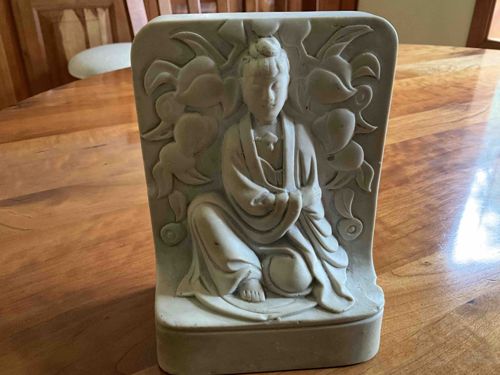
Submitted item photo
Submitted photo · June 12, 2026

User's notes

No additional notes provided.

AI analysis below

AI appraisal

AI analysis & estimate

AI-Generated · Verify before acting

Everything below is generated by AI for informational purposes only. AI can make mistakes — the AI may misidentify items or misattribute them (artist, maker, brand, designer, origin, era). This is not an official valuation and should not be used for insurance, sale, tax, estate, legal, or lending purposes — or any decision requiring a certified appraisal. It is not an authoritative claim about any person, brand, or rights holder — do not share or rely on it as a factual statement about a third party. Always consult qualified professionals before making financial decisions.

Read the full disclaimer

AI Identification

·Not independently authenticated·Verify before acting

East Asian-Style Figural Relief Bookend

Decorative Arts

AI Estimated Value

·Not an official valuation·Verify before acting

$40 - $75

As of June 12, 2026

AI Item Analysis

·AI can make mistakes·Verify before acting
This item is a decorative bookend or sculptural plaque, likely crafted from a cast composite material resembling stone or a heavy resin, presenting a matte, light beige or off-white color. The piece is rectangular with a rounded top and a stable, thicker base, indicating its potential function as a bookend. The primary feature is a relief carving of a figure, likely a deity such as Guanyin or a similar boddhisattva, seated cross-legged in a meditative pose. The figure is richly robed with flowing drapery, and its hands appear to be in a mudra or holding a small, indistinct object. The face features delicate, serene expressions. Surrounding the figure are high-relief botanical motifs, possibly peaches or similar fruit with accompanying foliage, suggesting a theme of longevity, prosperity, or divine connection. The craftsmanship appears to be of good quality, with clear, defined lines in the carving. There are no obvious signs of significant damage such as chips or cracks visible in the provided image; however, the surface shows a uniform, aged patina and some minor discoloration consistent with handling and display over time. There are no discernible maker's marks, signatures, or stamps visible. The style suggests it could be an item from the mid to late 20th century, possibly a reproduction or homage to traditional East Asian sculptural forms. The construction is solid, and its weight would be suitable for holding books upright.
AI Appraisal Report

·AI can make mistakes·Verify before acting
Upon examining the provided image, I assess this East Asian-Style Figural Relief Bookend. Its condition appears good, with no visible chips or cracks. The uniform light beige color and matte finish suggest a cast composite material, likely resin or a similar polymer, rather than natural stone. The minor discoloration observed is consistent with age and typical handling. Based on the stylistic cues, such as the serene Guanyin-like figure and botanical motifs, I believe this is a decorative piece from the mid to late 20th century, likely a mass-produced item or a reproduction designed to evoke traditional East Asian art. The absence of maker's marks or signatures is common for such pieces. Market conditions for decorative composite items of this nature are generally modest. While aesthetically pleasing, they do not possess the rarity or intrinsic value of genuine antique carvings or pieces crafted from precious materials. Comparable items found in secondary markets, such as online auctions or antique malls, typically retail within a similar range, reflecting their decorative rather than historical or artistic significance. Demand is stable but not high; these are often purchased for accent decor. Factors significantly impacting value include the material (lack of natural stone), the probable mass-produced nature, and the lack of identifiable artist or provenance. Without an in-person examination, I cannot definitively confirm the exact material composition or weight. Furthermore, without provenance documentation or physical inspection for subtle details, I cannot rule out the possibility of it being an earlier, higher-quality studio piece, though this is less likely given its apparent uniformity. Scientific testing or a physical examination would be required for precise material identification and a more confident assessment of its age and authenticity beyond what superficial visual cues suggest.

Get your items appraised

Instant estimates of your treasures with AI-powered appraisals

Browse More Appraisals