AI Appraisal Estimate

AI-generated estimates · not official valuations

From the user

What was submitted

Photo and notes provided by the user — not generated by AI

Submitted item photo
Submitted photo · June 10, 2026

User's notes

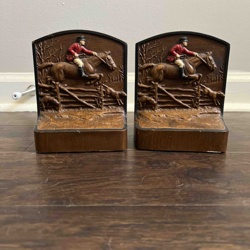
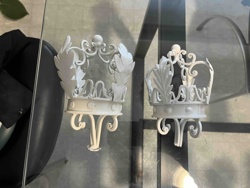
Mid century, bookends

AI analysis below

AI appraisal

AI analysis & estimate

AI-Generated · Verify before acting

Everything below is generated by AI for informational purposes only. AI can make mistakes — the AI may misidentify items or misattribute them (artist, maker, brand, designer, origin, era). This is not an official valuation and should not be used for insurance, sale, tax, estate, legal, or lending purposes — or any decision requiring a certified appraisal. It is not an authoritative claim about any person, brand, or rights holder — do not share or rely on it as a factual statement about a third party. Always consult qualified professionals before making financial decisions.

Note

This analysis also relies on unverified notes provided by the user, which may be incomplete or inaccurate and could affect the result.

Read the full disclaimer

AI Identification

·Not independently authenticated·Verify before acting

Mid-Century Modern Green Stone Mayan/Olmec Style Bookends

Decorative Arts/Home Decor

AI Estimated Value

·Not an official valuation·Verify before acting

$150 - $250

As of June 10, 2026

AI Item Analysis

·AI can make mistakes·Verify before acting
This is a pair of carved stone bookends, likely crafted from a variety of serpentine or jade due to their distinctive mottled green and yellowish-green coloration. Each bookend depicts a stylized anthropomorphic figure, resembling ancient Mesoamerican or Pre-Columbian art often associated with cultures like the Olmec or Mayan. The figures are rectangular and blocky in general form, with simplified facial features that include incised lines for eyes, a prominent nose, and a small mouth. They appear to be seated or kneeling, with hands or arms resting across their lower body, indicated by simplified, relief-carved sections. The carving is somewhat abstract, focusing on geometric shapes and minimal detail, which is characteristic of certain ancient stone carving traditions. The stone exhibits natural variations in color and translucency, with darker veins and lighter cloudy areas, indicative of natural stone rather than a synthetic material. The surface appears to be polished, giving it a subtle sheen. There are no obvious signs of significant damage like chips or cracks visible in the provided image, but the inherent variations in the stone’s color could sometimes be mistaken for wear. The craftsmanship appears solid and uniform between the two pieces, suggesting they were produced as a matching set. Given the 'Mid century' context, these could be interpretations of ancient designs created during that period. Their design lends itself well to their function as bookends, providing a stable, weighty base.
AI Appraisal Report

·AI can make mistakes·Verify before acting
Upon examination of the provided image and description, these mid-century modern bookends present a compelling aesthetic inspired by Pre-Columbian Mesoamerican art, specifically the Olmec or Mayan styles. The material appears to be a type of green stone, possibly serpentine or a form of onyx, consistent with decorative items produced in Mexico during the mid-20th century. The carving is stylized and blocky, capturing the essence of the ancient artistic traditions it emulates. The condition appears to be very good, with no visible chips or major cracks, and the polished surface retains a pleasing sheen. The market for mid-century decorative arts remains strong, with a particular interest in items that blend modernist sensibilities with tribal or ancient motifs. Similar stone bookends from this era, often sold as tourist art, typically command prices in the low to mid hundreds. The appeal of these pieces lies in their decorative quality, material weight, and stylistic nod to ancient cultures rather than their archaeological authenticity. A significant factor impacting the value is the material and origin. While the term 'jade' is sometimes used loosely, a definitive identification would require in-person examination. Authentication as genuine Pre-Columbian artifacts is highly improbable given the style and function; they are almost certainly mid-century interpretations. A definitive assessment of the material (e.g., serpentine, onyx, or true jadeite) would require physical testing by a gemologist. However, based on the current market for comparable decorative items, the value is well-established within a specific range.

Get your items appraised

Instant estimates of your treasures with AI-powered appraisals

Browse More Appraisals