AI estimate as of October 3, 2026 · verify with a professional before acting
AI-Generated · Verify before acting
Everything on this page is generated by AI for informational purposes only. AI can make mistakes — the AI may misidentify items or misattribute them (artist, maker, brand, designer, origin, era). This is not an official valuation and should not be used for insurance, sale, tax, estate, legal, or lending purposes — or any decision requiring a certified appraisal. It is not an authoritative claim about any person, brand, or rights holder — do not share or rely on it as a factual statement about a third party. Always consult qualified professionals before making financial decisions.
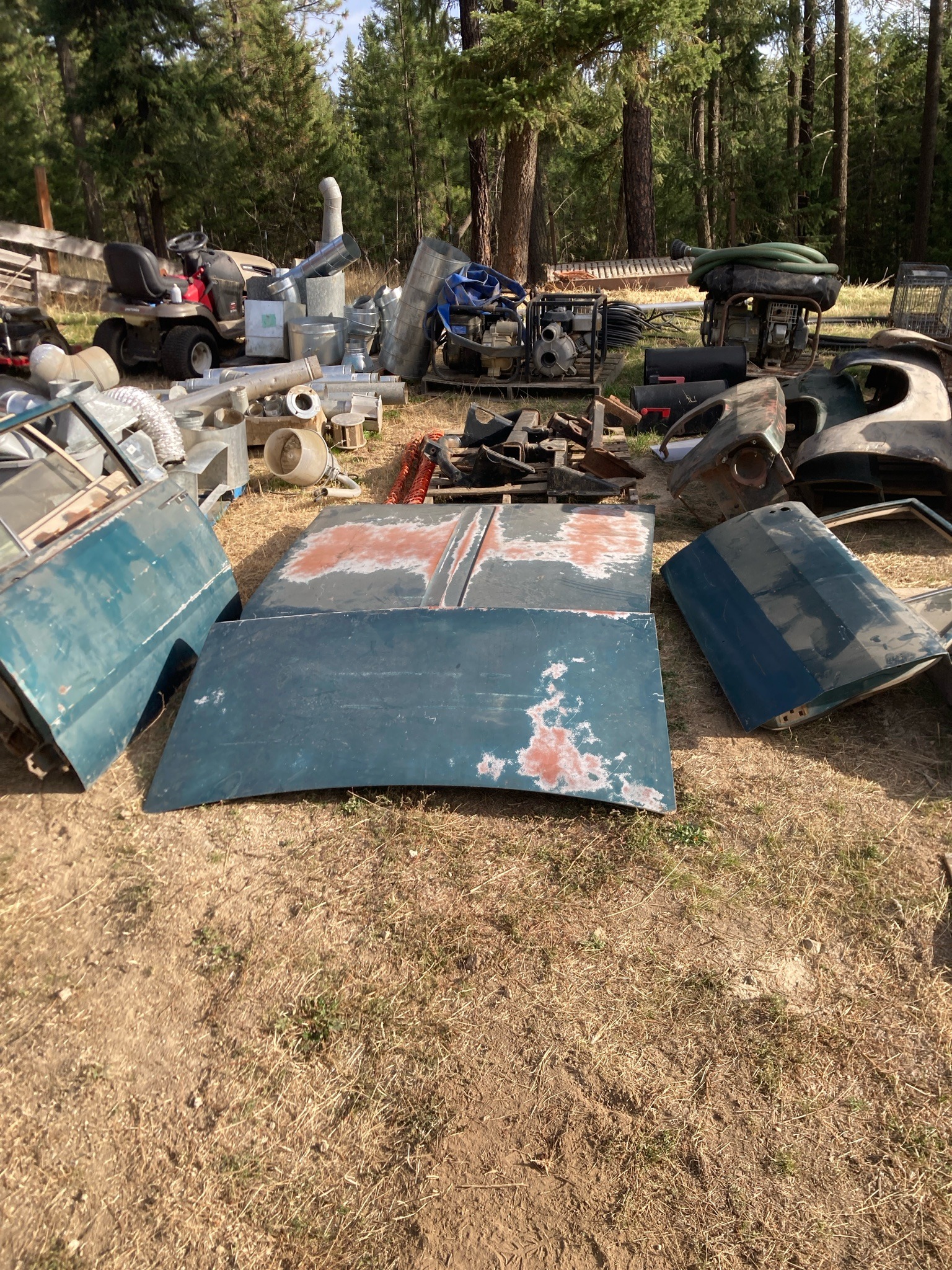
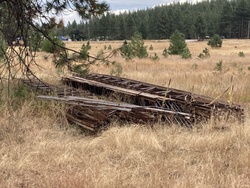
This outdoor salvage area contains a collection of assorted automotive body panels, sheet metal components, and various scrap metal pieces scattered across dry grass and dirt. Prominently featured in the foreground are dark green painted hoods and doors, exhibiting significant surface wear, peeling paint, primer exposure, fading, and localized oxidation consistent with long-term exposure to the elements. Additional surrounding materials include galvanized metal pipes, ducting, vehicle fenders, small mechanical equipment on wooden pallets, and miscellaneous metal debris. There are no clearly visible manufacturer marks, stamps, or legible serial numbers on the primary panels depicted. The overall visual evidence indicates discarded or salvaged automotive restoration parts rather than a finished or functional vehicle assembly. The stylistic appearance of the stamped body panels suggests mid-to-late 20th-century automotive design, though the exact makes, models, and years cannot be verified from the visible physical characteristics alone.
AI Appraisal Report
Based on what I can see in the photograph, the lot consists of an outdoor salvage collection of assorted automotive body panels, sheet metal components, and scrap metal, featuring dark green painted hoods and doors alongside galvanized metal pipes and debris. The stylistic appearance of the stamped body panels suggests mid-to-late 20th-century automotive design, though I cannot verify exact makes, models, or years from the visual characteristics alone. There are no clearly visible manufacturer marks, stamps, or legible serial numbers on the primary panels depicted. I would need physical inspection to confirm material thickness, metal integrity, and whether any hidden stampings exist. The basis for the value estimate reflects general scrap metal commodity values combined with a modest secondary market interest for salvage restoration components. Condition issues include significant surface wear, peeling paint, primer exposure, fading, and localized oxidation consistent with long-term exposure to the elements, which heavily restricts potential automotive restoration utility. General market conditions for mixed automotive scrap and unbranded salvaged sheet metal typically trade primarily by weight or as low-cost raw material for fabrication projects. If these panels turn out to be unbranded reproduction components, generic aftermarket replacements, or simply low-grade scrap rather than usable vintage restoration stock, the value would be strictly limited to local metal recycling scrap rates, likely reducing the estimate to under $100. To fully evaluate and ascertain the precise material composition, usability, and potential salvage value, an in-person examination and physical sorting of the components would be necessary.