AI Appraisal Estimate

AI-generated estimates · not official valuations

From the user

What was submitted

Photo and notes provided by the user — not generated by AI

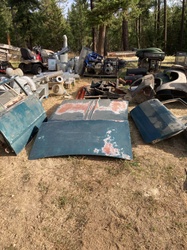
Submitted item photo
Submitted photo · May 28, 2026

User's notes

No additional notes provided.

AI analysis below

AI appraisal

AI analysis & estimate

AI-Generated · Verify before acting

Everything below is generated by AI for informational purposes only. AI can make mistakes — the AI may misidentify items or misattribute them (artist, maker, brand, designer, origin, era). This is not an official valuation and should not be used for insurance, sale, tax, estate, legal, or lending purposes — or any decision requiring a certified appraisal. It is not an authoritative claim about any person, brand, or rights holder — do not share or rely on it as a factual statement about a third party. Always consult qualified professionals before making financial decisions.

Read the full disclaimer

AI Identification

·Not independently authenticated·Verify before acting

Assortment of Salvaged Automotive Drivetrain and Suspension Components

Automotive Parts and Scrap Metal

AI Estimated Value

·Not an official valuation·Verify before acting

$50 - $150

As of May 28, 2026

AI Item Analysis

·AI can make mistakes·Verify before acting
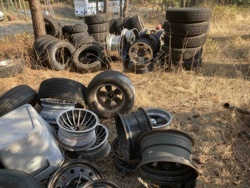
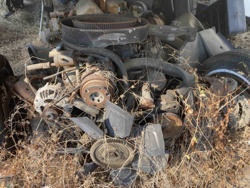
This item consists of a collection of heavily rusted and disused automotive parts, primarily from a vehicle's drivetrain and suspension system. Visible components include a differential housing (likely a rear axle assembly), several leaf springs or control arms, brake drums, and possibly other mounting brackets and hardware. The differential housing appears to be made of cast iron or steel, showing significant surface rust with remnants of what might have been original paint or a protective coating. One visible brake drum is also heavily rusted, with distinct vertical fins on its exterior periphery for heat dissipation, characteristic of older automotive braking systems. The overall color palette is dominated by reddish-brown rust, contrasting with some darker, possibly painted, components and the lighter, oxidized metal of structural beams in the background. The materials are predominantly ferrous metals. The components are in a severe state of disrepair, indicative of long-term outdoor storage or abandonment. There are no clear manufacturer's marks, signatures, or stamps immediately visible due to the heavy corrosion and the angle of the image. The style and condition suggest these parts are from an older vehicle, possibly from the mid to late 20th century. The significant corrosion, accumulation of dirt, and presence of dried vegetation intertwined with the parts indicate they are non-functional and primarily suitable for scrap metal or a rigorous restoration project if specific models can be identified. The craftsmanship, while once functional, is now obscured by deterioration. The collection represents a jumble of discarded automotive components.
AI Appraisal Report

·AI can make mistakes·Verify before acting
Based on my visual examination of the provided image, this assortment of salvaged automotive drivetrain and suspension components is in a severe state of disrepair. The heavy corrosion on the differential housing, brake drums, and other ferrous metal parts confirms long-term exposure to the elements. Authenticity, in terms of specific make or model, cannot be determined from the images alone due to the obliteration of any potential markings by rust and grime. However, the components are clearly authentic automotive parts, likely from a vehicle dating from the mid to late 20th century, given the style of the brake drum and the general construction. Market conditions for such heavily deteriorated parts are extremely limited. They hold no value as functional components and would require extensive, costly restoration, far exceeding their potential value even if a rare application were identified. Comparables would be other piles of scrap metal or parts salvaged for their raw material content. There is no significant demand for these items in their current state for restoration or re-use. Their rarity is low, as discarded automotive parts are common. The primary factor impacting value is their condition, which relegates them almost exclusively to scrap metal value. Limitations in authenticity verification are significant; without in-person inspection and thorough cleaning, identifying any manufacturer's marks or part numbers is impossible. Provenance documentation could potentially link these to a specific vehicle, which might marginally increase their value for a niche restorer, but this is highly speculative. Scientific testing, such as material analysis, would only confirm the ferrous nature of the metals, adding little to the overall appraisal. Therefore, the appraisal reflects the value of these items primarily as scrap metal, with a very minor premium for potential, but unverified, historical interest.

Get your items appraised

Instant estimates of your treasures with AI-powered appraisals

Browse More Appraisals