AI Appraisal Estimate

AI-generated estimates · not official valuations

From the user

What was submitted

Photo and notes provided by the user — not generated by AI

Submitted item photo
Submitted photo · June 17, 2026

User's notes

No additional notes provided.

AI analysis below

AI appraisal

AI analysis & estimate

AI-Generated · Verify before acting

Everything below is generated by AI for informational purposes only. AI can make mistakes — the AI may misidentify items or misattribute them (artist, maker, brand, designer, origin, era). This is not an official valuation and should not be used for insurance, sale, tax, estate, legal, or lending purposes — or any decision requiring a certified appraisal. It is not an authoritative claim about any person, brand, or rights holder — do not share or rely on it as a factual statement about a third party. Always consult qualified professionals before making financial decisions.

Read the full disclaimer

AI Identification

·Not independently authenticated·Verify before acting

Old Whittemore Patent No. 10 Improved Wool Card

Antique Textile Tools & Domestic Implements

AI Estimated Value

·Not an official valuation·Verify before acting

$45.00 - $75.00

As of June 17, 2026

AI Item Analysis

·AI can make mistakes·Verify before acting
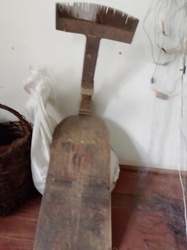
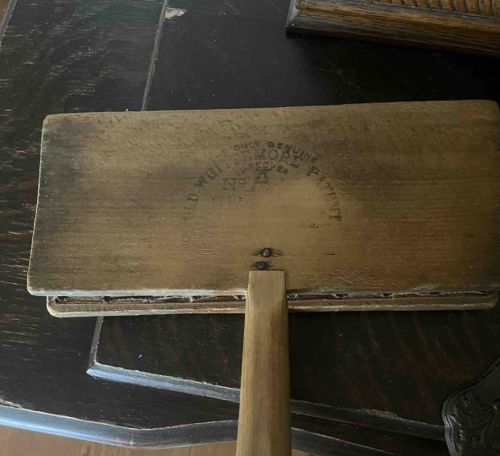
This is a vintage hand wool card, a tool traditionally used in the textile process to disentangle, clean, and intermix fibers to produce a continuous web or sliver suitable for spinning. The item consists of a rectangular wooden paddle, likely made of maple or a similar hardwood, measuring approximately 9 inches in width. It features a long, tapered wooden handle secured to the base with two small metal fasteners. Centered on the back of the paddle is a clear, circular maker's mark or stamp that reads 'ONLY GENUINE / OLD WHITTEMORE PATENT / IMPROVED / NO. 10'. The wood exhibits a warm, aged patina with visible grain and some surface staining consistent with its age and use. The underside, though partially obscured, appears to hold the traditional leather or heavy fabric backing embedded with fine wire teeth, which are essential for carding fibers. Condition-wise, the wood shows minor edge wear and scuffing, but the structure remains sound without apparent cracks or significant repairs. This specific patent design dates back to the mid-to-late 19th century or early 20th century, representing a period of refined American textile tool craftsmanship. The quality is indicative of mass-produced yet durable industrial-age tools designed for heavy domestic and artisanal use.
AI Appraisal Report

·AI can make mistakes·Verify before acting
I have examined the digital representation of the 'Old Whittemore Patent No. 10 Improved Wool Card.' The item displays an authentic aged patina and stencil work consistent with mid-to-late 19th-century American production. The 'Old Whittemore' mark refers to the influential patents of Amos Whittemore, though this specific iteration represents a later, mass-produced 'Improved' version likely manufactured between 1870 and 1910. The wooden paddle maintains structural integrity with a pleasing honey-colored oxidation, and the stencil remains approximately 85-90% legible, which is a key value driver for collectors of domestic implements. While the wood is in good condition, the primary value of a wool card depends heavily on the 'teeth.' From the visual evidence, I cannot fully assess the carding wires or the stability of the leather backing, which are prone to dry rot and oxidation. Currently, the market for primitive textile tools is stable but niche. Comparables for single Whittemore cards in similar condition typically fall in the $40-$80 range, whereas a matched pair in excellent condition can fetch $125 or more. Note that this appraisal is based on image analysis alone. Full authentication would require an in-person inspection to verify the metal composition of the wire teeth and to ensure no modern adhesives were used in repairs. Because these tools were mass-produced by the thousands, rarity is low, but the historical utility and name-brand recognition of Whittemore maintain its desirability for interior designers and textile historians. Verification would also involve checking the reverse side for any hidden cracks or 'teeth loss' not visible in the provided photo.

Get your items appraised

Instant estimates of your treasures with AI-powered appraisals

Browse More Appraisals