Prehistoric Chert Multi-Tool Scraping/Cutting Implement
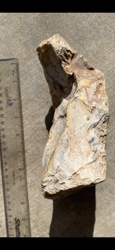
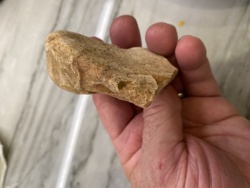
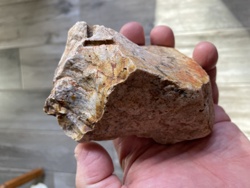
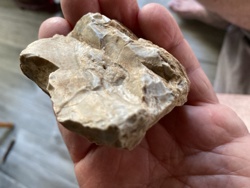
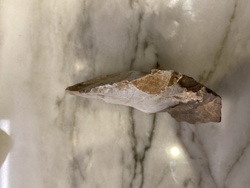
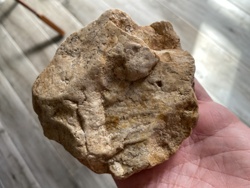
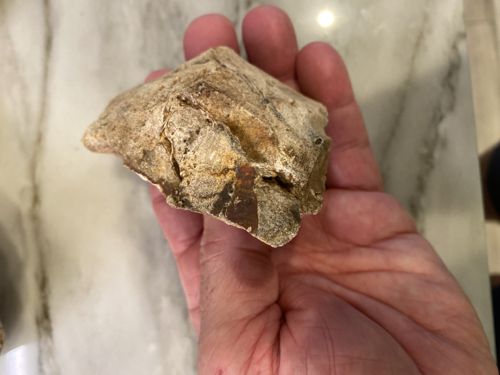
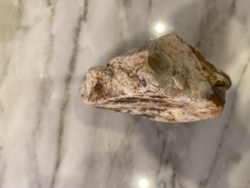
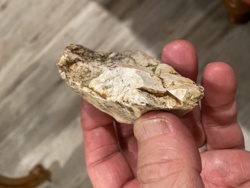
This is a hand-sized prehistoric stone implement, measuring approximately 3 inches by 2.5 inches, discovered in Guthrie, Oklahoma. The artifact is fashioned from a high-silica lithic material, appearing to be a local variety of chert or flint characteristic of the Southern Plains region. Physically, the item exhibits an earthy, tan-to-beige exterior patina with visible mineral inclusions and darker brownish-red iron staining. The construction is a result of intentional percussion flaking, with a prominent dorsal ridge and several negative bulb scars indicating where flakes were removed to create functional edges. The tool features a thick, unworked 'cortex' section likely intended as a ergonomic grip for the palm, while the perimeter shows evidence of secondary retouching to create a steep-angled scraping edge and a potential sharp cutting facet. Condition-wise, the stone displays significant 'desert varnish' or mineral buildup, suggesting it was buried or exposed to the elements for millennia. There are no modern maker's marks, which is consistent with its prehistoric, utilitarian origin. The craftsmanship is robust and pragmatic rather than decorative, typical of tools used for hide scraping or wood processing during the Woodland or late Archaic periods. The heavy patina and the specific fracture patterns confirm it as a genuine lithic artifact rather than a natural geofact.
AI-Generated Appraisal Disclaimer
Estimated Value
$45 - $85
Basic Information
Category
Prehistoric Native American Artifacts
Appraised On
February 18, 2026
Estimated Value
$45 - $85
Additional Details Provided By Owner
User Provided Information
Prehistoric stone multi tool scraper knife tool found in Guthrie, OK measuring 3" x 2.5"
Item Description
This is a hand-sized prehistoric stone implement, measuring approximately 3 inches by 2.5 inches, discovered in Guthrie, Oklahoma. The artifact is fashioned from a high-silica lithic material, appearing to be a local variety of chert or flint characteristic of the Southern Plains region. Physically, the item exhibits an earthy, tan-to-beige exterior patina with visible mineral inclusions and darker brownish-red iron staining. The construction is a result of intentional percussion flaking, with a prominent dorsal ridge and several negative bulb scars indicating where flakes were removed to create functional edges. The tool features a thick, unworked 'cortex' section likely intended as a ergonomic grip for the palm, while the perimeter shows evidence of secondary retouching to create a steep-angled scraping edge and a potential sharp cutting facet. Condition-wise, the stone displays significant 'desert varnish' or mineral buildup, suggesting it was buried or exposed to the elements for millennia. There are no modern maker's marks, which is consistent with its prehistoric, utilitarian origin. The craftsmanship is robust and pragmatic rather than decorative, typical of tools used for hide scraping or wood processing during the Woodland or late Archaic periods. The heavy patina and the specific fracture patterns confirm it as a genuine lithic artifact rather than a natural geofact.
Get Your Items Appraised
Instant estimates of your treasures with AI-powered instant appraisals