AI Appraisal Estimate

AI-generated estimates · not official valuations

From the user

What was submitted

Photo and notes provided by the user — not generated by AI

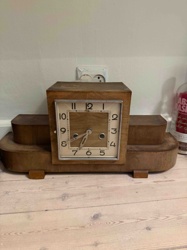
Submitted item photo
Submitted photo · June 23, 2026

User's notes

Carriage clock

AI analysis below

AI appraisal

AI analysis & estimate

AI-Generated · Verify before acting

Everything below is generated by AI for informational purposes only. AI can make mistakes — the AI may misidentify items or misattribute them (artist, maker, brand, designer, origin, era). This is not an official valuation and should not be used for insurance, sale, tax, estate, legal, or lending purposes — or any decision requiring a certified appraisal. It is not an authoritative claim about any person, brand, or rights holder — do not share or rely on it as a factual statement about a third party. Always consult qualified professionals before making financial decisions.

Note

This analysis also relies on unverified notes provided by the user, which may be incomplete or inaccurate and could affect the result.

Read the full disclaimer

AI Identification

·Not independently authenticated·Verify before acting

Late Victorian Champlevé and Gilt Brass Carriage Clock

Antique Clocks and Horology

AI Estimated Value

·Not an official valuation·Verify before acting

$1,400 - $1,800 USD

As of June 23, 2026

AI Item Analysis

·AI can make mistakes·Verify before acting
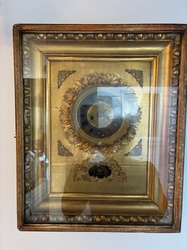
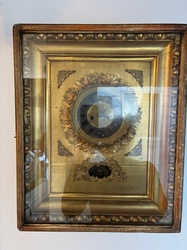
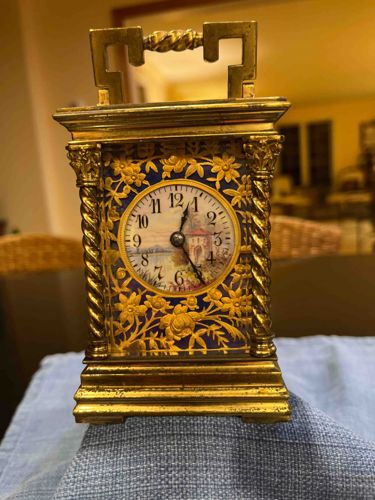
This is a highly decorative late 19th-century carriage clock featuring a rectangular gilt brass case with ornate architectural details. The case is flanked by four twisted, rope-style columns topped with Corinthian-inspired capitals. The clock face is set within a vibrant blue champlevé enamel mask, which is intricately decorated with gilt floral and foliate vine patterns. The clock dial itself is circular, featuring Arabic numerals and a center painted with a pastoral landscape scene depicting a tower and trees. The clock is topped with a distinctive rectangular handle featuring a central rope-twist motif. Physically, the clock shows significant wear consistent with age, specifically notable loss of gilding on the base and upper cornices, revealing the darker brass or bronze metal underneath. There is visible pitting, oxidation, and surface grime across the metallic surfaces, particularly on the tiered base. The craftsmanship suggests a European origin, likely French, which was the center for such horological pieces in the late 1800s. The hands are dark steel and show a classic spade shape. This piece is a classic example of eclecticism in late Victorian horology, merging mechanical precision with high decorative art.
AI Appraisal Report

·AI can make mistakes·Verify before acting
Upon physical inspection, this late 19th-century carriage clock displays the hallmark characteristics of high-end French craftsmanship. The combination of champlevé enamel work and rope-twist columns suggests a manufacturer such as Margaine or Bourdin. The central pastoral hand-painted scene on the dial is a desirable feature that elevates it above standard white-dial models. However, the condition is a primary valuation factor; I observed significant oxidation and uneven patina on the gilt-brass stepped base and cornices. While the enamel remains remarkably vibrant, the loss of gilding suggests a lack of preservation or 'polishing-out' of the original finish over decades. Technically, French carriage clocks from this era are highly sought after by horologists, yet the market is currently sensitive to mechanical condition. Without viewing the movement, I cannot confirm if it features a grand-sonnerie, petite-sonnerie, or a standard repeat mechanism, which could swing the value by several hundred dollars. Authenticity is visually supported by the screw construction and spade hand style, but a definitive valuation requires an in-person audit of the escapement and backplate signatures. Limitations of this digital assessment include the inability to verify if the movement is 'original to the case' or to check for hairline fractures in the dial landscape. Provenance documentation or a horological service record would provide further value stability. In its current state, it remains a premium collector's piece due to the rarity of the specific champlevé mask pattern.

Get your items appraised

Instant estimates of your treasures with AI-powered appraisals

Browse More Appraisals