AI Appraisal Estimate

AI-generated estimates · not official valuations

From the user

What was submitted

Photo and notes provided by the user — not generated by AI

Submitted item photo
Submitted photo · May 24, 2026

User's notes

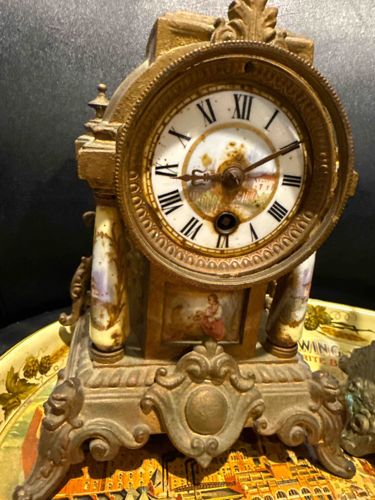
Clock is not working missing glass case and top piece

AI analysis below

AI appraisal

AI analysis & estimate

AI-Generated · Verify before acting

Everything below is generated by AI for informational purposes only. AI can make mistakes — the AI may misidentify items or misattribute them (artist, maker, brand, designer, origin, era). This is not an official valuation and should not be used for insurance, sale, tax, estate, legal, or lending purposes — or any decision requiring a certified appraisal. It is not an authoritative claim about any person, brand, or rights holder — do not share or rely on it as a factual statement about a third party. Always consult qualified professionals before making financial decisions.

Note

This analysis also relies on unverified notes provided by the user, which may be incomplete or inaccurate and could affect the result.

Read the full disclaimer

AI Identification

·Not independently authenticated·Verify before acting

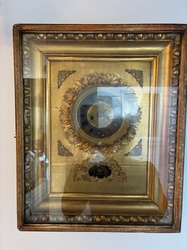
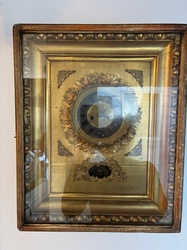
Antique French Porcelain Inset Mantel Clock

Antique Clocks and Horology

AI Estimated Value

·Not an official valuation·Verify before acting

$100 - $200

As of May 24, 2026

AI Item Analysis

·AI can make mistakes·Verify before acting
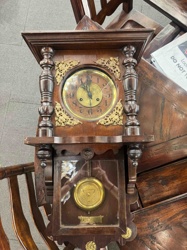
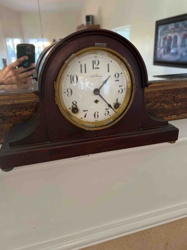
This is an antique mantel clock, likely of French origin, reflecting the Late Victorian or Beaux-Arts style of the late 19th to early 20th century. The piece features a cast metal housing, possibly spelter or bronze with a weathered gold-tone patina, flanking a central clock face. Notable for its hand-painted porcelain components, the clock includes two cylindrical side pillars and a central dial featuring pastoral or figural scenes. The dial is marked with black Roman numerals and delicate filigree metal hands. The ornate base is heavily sculpted with acanthus leaves and scrolls, supported by decorative feet. In terms of condition, the item is missing its protective glass crystal covering the dial and is reportedly missing a top decorative finial or crest piece. The metal surfaces show significant oxidation and a dull, aged patina with dirt accumulation in the crevices. The porcelain dial shows visible discoloration and potential rusting around the winding arbor and center post. The clock is currently non-functional, which significantly impacts its mechanical value. Missing parts and the worn state suggest a need for professional restoration, though the intricate hand detailing on the porcelain remains a high-quality craftsmanship indicator.
AI Appraisal Report

·AI can make mistakes·Verify before acting
Based on my examination of the images provided, this is an antique French mantel clock, dating to the late 19th or possibly very early 20th century, executed in a Beaux-Arts style. The clock features a spelter or pot-metal case with a gilt finish, inset with hand-painted porcelain plaques depicting pastoral scenes, a hallmark of French production often attributed to makers like Japy Frères, though no specific movement markings are visible here. The condition significantly suppresses the value. The missing top finial disrupts the visual balance, and the absence of the bezel glass leaves the dial exposed to the elements, evidenced by the discoloration and potential rust on the dial face. Furthermore, because the movement is non-functional, this piece is currently more decorative than horological. While the porcelain inserts appear intact without major cracks—a crucial redeeming factor—the metal housing suffers from oxidative loss and a dull patina that would require professional cleaning. In the current market, ornate French mantel clocks are desirable, but buyers heavily penalize incomplete examples due to the high cost of sourcing matching parts (specifically the correct finial) and mechanical overhaul. A pristine, working example might fetch $600–$900, but in this state, it is essentially a restoration project. Authentication is limited by my inability to inspect the backplate of the movement for foundry stamps or maker's marks, which are necessary to confirm a specific atelier. An in-person inspection would allow me to determine if the case is solid bronze or lighter spelter, which would slightly adjust the valuation upward.

Get your items appraised

Instant estimates of your treasures with AI-powered appraisals

Browse More Appraisals