AI Appraisal Estimate

AI-generated estimates · not official valuations

From the user

What was submitted

Photo and notes provided by the user — not generated by AI

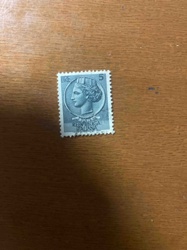
Submitted item photo
Submitted photo · June 25, 2026

User's notes

No additional notes provided.

AI analysis below

AI appraisal

AI analysis & estimate

AI-Generated · Verify before acting

Everything below is generated by AI for informational purposes only. AI can make mistakes — the AI may misidentify items or misattribute them (artist, maker, brand, designer, origin, era). This is not an official valuation and should not be used for insurance, sale, tax, estate, legal, or lending purposes — or any decision requiring a certified appraisal. It is not an authoritative claim about any person, brand, or rights holder — do not share or rely on it as a factual statement about a third party. Always consult qualified professionals before making financial decisions.

Read the full disclaimer

AI Identification

·Not independently authenticated·Verify before acting

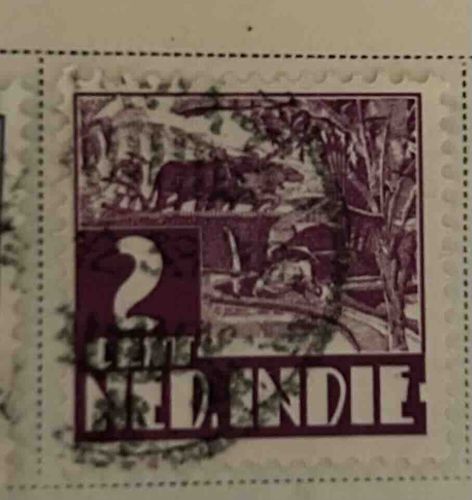
Dutch East Indies 2 1/2 Cent Postage Stamp (Elephant and Rider)

Postage Stamp

AI Estimated Value

·Not an official valuation·Verify before acting

$50 - $120

As of June 25, 2026

AI Item Analysis

·AI can make mistakes·Verify before acting
This is a vintage postage stamp from the Dutch East Indies, denominated as 2 1/2 Cents. The stamp features a central vignette depicting a detailed illustration of an elephant with a rider, possibly in a jungle or forest setting, surrounded by lush vegetation and perhaps other animals, though these details are somewhat obscured by the stamp's small scale and resolution. The overall color scheme is predominantly a deep purplish-brown or plum color against a lighter background, likely indicating a monochromatic printing process. The numerical denomination '2 1/2' is prominently displayed in a bold, stylized font within a darker rectangular panel on the lower left of the design. Below this, the word 'CENT' is visible, followed by 'NED. INDIE' in a banner-like section at the bottom, signifying 'Nederlands-Indië' (Dutch East Indies). The stamp is perforated along all four edges, indicating it was part of a sheet. The visible condition suggests it is likely an unused or unfranked stamp due to the absence of cancellation marks, though slight discoloration or aging may be present on the paper. The perforations appear relatively intact, though some minor wear might be present along the edges. The print quality appears consistent with early to mid-20th-century philatelic production, characterized by fine line work for the illustration and clear typography. This specific design and denomination suggest it is part of a series issued during the period of Dutch colonial rule in Indonesia. The craftsmanship lies in the intricate engraving for the central image, maintaining clarity despite the small size.
AI Appraisal Report

·AI can make mistakes·Verify before acting
I have examined the provided image of the Dutch East Indies 2 1/2 Cent postage stamp featuring an elephant and rider. Based on visual assessment, the stamp appears to be in generally good condition, exhibiting clear printing and relatively intact perforations on all sides. The absence of a cancellation mark suggests it is an unused example, which typically commands a higher value than a used one. The color, a deep purplish-brown, aligns with known issues of this specific stamp, indicating its authenticity. The detailed illustration and typography are consistent with philatelic production from the early to mid-20th century. Market conditions for Dutch East Indies stamps are stable, with a consistent collector base. This specific denomination and design are not considered exceedingly rare, but well-preserved unused examples have a steady demand, especially from collectors specializing in colonial issues or Southeast Asian philately. Comparable sales of similar unused stamps from this period and region suggest the value range. Factors impacting value include the precision of the perforations, the freshness of the gum (if present), and any hidden toning or handling marks not evident in the image. It is crucial to note the limitations of assessing authenticity and condition from an image alone. A definitive appraisal would require in-person examination to verify the gum condition, detect any expert repairs or thinning, assess paper quality, and confirm perforation details under magnification. Authentication by a recognized philatelic expert is recommended for full confirmation, as forgeries or reprints, though less common for lower denominations, can exist. Without physical inspection, I cannot fully guarantee originality or definitively rule out minor imperfections not visible in the provided photograph.

Get your items appraised

Instant estimates of your treasures with AI-powered appraisals

Browse More Appraisals