AI Appraisal Estimate

AI-generated estimates · not official valuations

From the user

What was submitted

Photo and notes provided by the user — not generated by AI

Submitted item photo
Submitted photo · June 19, 2026

User's notes

No additional notes provided.

AI analysis below

AI appraisal

AI analysis & estimate

AI-Generated · Verify before acting

Everything below is generated by AI for informational purposes only. AI can make mistakes — the AI may misidentify items or misattribute them (artist, maker, brand, designer, origin, era). This is not an official valuation and should not be used for insurance, sale, tax, estate, legal, or lending purposes — or any decision requiring a certified appraisal. It is not an authoritative claim about any person, brand, or rights holder — do not share or rely on it as a factual statement about a third party. Always consult qualified professionals before making financial decisions.

Read the full disclaimer

AI Identification

·Not independently authenticated·Verify before acting

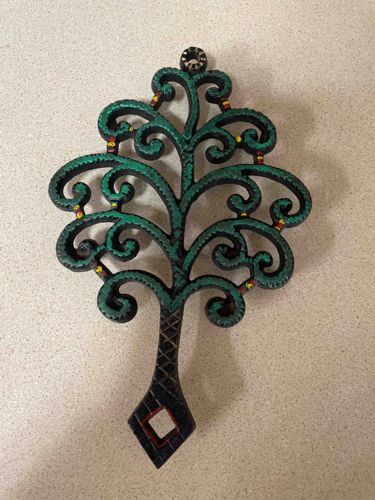
Folk Art Painted Cast Iron Tree-of-Life Trivet

Antique and Vintage Kitchenware / Decorative Arts

AI Estimated Value

·Not an official valuation·Verify before acting

$45.00-$65.00

As of June 19, 2026

AI Item Analysis

·AI can make mistakes·Verify before acting
This item is an ornate cast iron decorative trivet designed in a stylized tree-of-life or scrolling floral motif. The physical construction features a heavy cast metal frame with an openwork filigree design consisting of symmetrical swirls and volutes. The piece is finished with a textured, dark green paint that mimics a verdigris patina, while the base and trunk area show a dark black or deep charcoal finish with an incised diamond/cross-hatch pattern on the handle. A notable feature is the presence of small, colorful hand-painted accents in red and yellow dot-work at the junctions of the scrollwork, adding a folk-art aesthetic characteristic of late 20th-century decorative housewares. The top features a small circular loop, suggesting it could be wall-mounted for display when not in use as a kitchen hot plate. In terms of condition, the item appears well-preserved with some minor paint loss and surface wear consistent with age and light use, though no structural cracks or significant oxidation are visible. There are no clear maker's marks or signatures visible from this angle, though similarly styled cast iron pieces were commonly produced by mid-to-late 20th-century manufacturers such as Wilton or Virginia Metalcrafters. The overall craftsmanship is sturdy, with clean casting lines and a balanced composition.

AI Appraisal Report

·AI can make mistakes·Verify before acting
I have examined the digital representation of this Folk Art Painted Cast Iron Tree-of-Life Trivet. The item displays characteristically clean casting lines and a structured symmetry indicative of high-quality industrial manufacturing from the mid-to-late 20th century. The hand-painted red and yellow accents are consistent with the 'Pennsylvania Dutch' revival style popularized by manufacturers like Wilton or Virginia Metalcrafters during the 1960s and 70s. The condition is excellent, showing only minor surface abrasions and superficial paint loss that suggest light utilitarian use rather than environmental neglect. There is no evidence of the pitting or 'casting flash' often found on modern low-quality reproductions. In the current market for vintage Americana kitchenware, these items remain popular decorative accents, though they are not considered rare. Current auction results for similar hand-painted Tree-of-Life patterns consistently fall within the double-digit range. The absence of a visible foundry mark—such as the 'WM' for Virginia Metalcrafters—slightly limits the upper ceiling of the valuation but does not detract from its aesthetic appeal. It is vital to note that this appraisal is based strictly on visual inspection of the provided images. A definitive authentication would require a physical examination to feel the weight (which confirms the density of the iron), a detailed inspection of the underside for sand-casting marks, and a chemical test of the pigments to ensure the paint and patina are period-accurate and not modern over-paint applied to mask damage. This valuation assumes the piece is an authentic mid-century commemorative item rather than a late-20th-century mass-market import.

Get your items appraised

Instant estimates of your treasures with AI-powered appraisals

Browse More Appraisals