AI identification & appraisal estimate

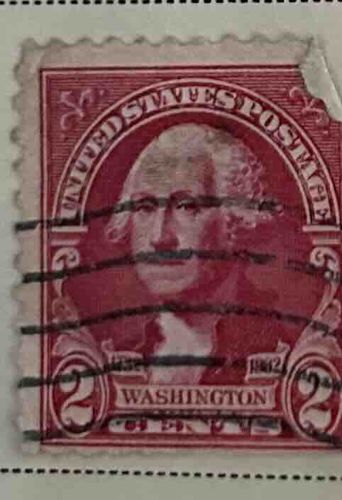
United States 2-Cent Washington Bicentennial Postage Stamp (1932)

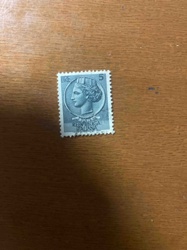
Submitted photo of United States 2-Cent Washington Bicentennial Postage Stamp (1932)
Photo submitted by the user — not generated by AI

AI Estimated Value

Not an official valuation

$0.20 - $0.50

AI estimate as of November 8, 2025 · verify with a professional before acting

AI-Generated · Verify before acting

Everything on this page is generated by AI for informational purposes only. AI can make mistakes — the AI may misidentify items or misattribute them (artist, maker, brand, designer, origin, era). This is not an official valuation and should not be used for insurance, sale, tax, estate, legal, or lending purposes — or any decision requiring a certified appraisal. It is not an authoritative claim about any person, brand, or rights holder — do not share or rely on it as a factual statement about a third party. Always consult qualified professionals before making financial decisions.

Read the full disclaimer

AI Item Analysis

This item is a 2-cent United States postage stamp from the 1932 Washington Bicentennial Issue. The stamp features a central vignette of George Washington's portrait, rendered in a classical style, against a deep red background. The portrait depicts Washington facing forward, with his characteristic powdered wig. Above the portrait, encircling the top edge of the design, the words 'UNITED STATES POSTAGE' are clearly visible in an arched banner. Below the portrait, within a rectangular cartouche, the word 'WASHINGTON' is printed. To the left and right of the 'WASHINGTON' cartouche, the denomination '2' is displayed within ornate oval frames. Additionally, the dates '1732' and '1932' are visible in small text above the 'WASHINGTON' banner, signifying the bicentennial of his birth. The stamp is perforated along all four edges, indicating it was intended to be separated from a sheet. The overall color scheme is a monochrome red, sometimes referred to as carmine or rose red, typical of stamps of this era. The stamp exhibits a postmark, characterized by several dark, horizontal lines traversing the upper portion of the portrait and extending across the stamp, signifying it has been used. There are no obvious tears or significant damage visible, although slight wear or fading commensurate with age and usage might be present. The design elements are well-defined, suggesting good printing quality for its time. The perforations appear relatively clean, without significant tearing or missing teeth, which contributes to the aesthetic integrity of the stamp. The stamp is a standard size for traditional US postage stamps, likely a rectangular form factor.
AI Appraisal Report

I have examined the image of the United States 2-Cent Washington Bicentennial Postage Stamp (Scott #707). This stamp is a common circulating commemorative issue from 1932. The image shows a used stamp, indicated by the postmark. The condition appears to be fair to good, with no obvious damage such as tears or thins readily apparent from the image. The perforations seem intact, which is a positive factor. However, the postmark traverses the central design, which often diminishes eye appeal for collectors, especially compared to a lightly cancelled or uncancelled example. Market conditions for this particular stamp are generally very stable due to its high print run and widespread availability. Comparables for used examples in similar condition typically range from a few cents to under a dollar. The demand for common used examples is low among serious collectors, though it remains a popular item for beginner collectors or those filling spaces in basic albums. No significant rarity considerations apply to this specific issue in used condition. Factors impacting value include its used state, the heavy postmark, and its common availability. Had it been an unused (mint) stamp with original gum, the value could be slightly higher, but still modest. Mint never-hinged examples command a premium, but that is clearly not the case here. It is important to note the limitations of authenticity verification from images alone. While this stamp is very common and counterfeiting is rare for items of such low value, a physical examination would allow me to assess the paper type, gum (if present), precise perforation count, and confirm the absence of subtle flaws like thins or repairs that are not visible in an image. Provenance documentation is typically not relevant or necessary for such a common and inexpensive item. Detailed scientific testing would only be considered for high-value rarities, which this stamp is not.

Keep exploring

More postage stamp appraisals

Get your items appraised

Instant AI-powered appraisal estimates from a photo

Browse More Appraisals