AI estimate as of October 8, 2025 · verify with a professional before acting
AI-Generated · Verify before acting
Everything on this page is generated by AI for informational purposes only. AI can make mistakes — the AI may misidentify items or misattribute them (artist, maker, brand, designer, origin, era). This is not an official valuation and should not be used for insurance, sale, tax, estate, legal, or lending purposes — or any decision requiring a certified appraisal. It is not an authoritative claim about any person, brand, or rights holder — do not share or rely on it as a factual statement about a third party. Always consult qualified professionals before making financial decisions.
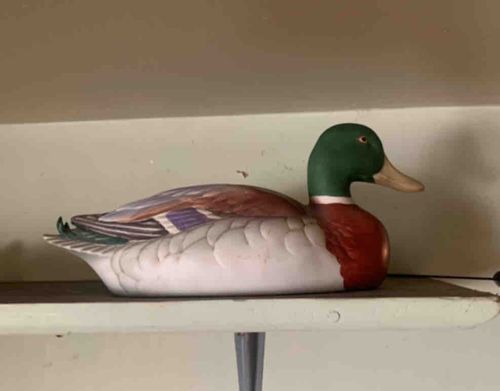
This item is a decorative representation of a male Mallard duck, likely intended as a decoy or a static figurine. Its physical characteristics feature a lifelike posture, simulating a duck at rest or floating on water, with a flat bottom for stability. The materials appear to be wood, given the typical construction of such items, though it could also be a composite or carved cork. It is painted in the characteristic colors of a Mallard drake: a vibrant iridescent green head, a white neck ring, a reddish-brown chest, and a grayish-white body. The wings display intricate feather detailing with shades of gray, brown, and a distinctive purple speculum band bordered by white, though the full extent of the speculum is not entirely visible. The beak is realistically colored in a muted yellowish-brown tone, and the eyes are small, dark, and set naturally. The craftsmanship suggests a hand-painted finish, with varying levels of detail given to the feather textures. There are no overt manufacturer's marks or signatures visible from the provided image. The item appears to be in good condition overall, with no immediately obvious signs of significant damage like cracks or chips, though minor wear or subtle patina consistent with age and handling might be present upon closer inspection. The paintwork shows a slight sheen, possibly indicating a protective clear coat. Based on typical decorative styles, it could range from a mid-20th century piece to a more contemporary craft item. The quality indicators point to a well-executed piece, with attention to natural coloration and form, making it suitable for display.
AI Appraisal Report
Upon visual examination of the provided image, I assess this Mallard Drake Duck Decoy/Figurine as being in good overall condition. There are no immediately apparent chips, cracks, or significant paint loss which would severely diminish its aesthetic appeal or value. The paintwork appears vibrant and the details well-preserved, suggesting either careful handling or a more recent manufacturing date. Authenticity, in terms of its purpose as a decorative item rather than a working decoy for hunting, is clear from the flat stable base and likely material choice (wood or composite). Without a physical inspection, however, I cannot definitively determine the exact material (wood, cork, or resin) or the specific age of the item. While the craftsmanship suggests a hand-painted finish and attention to detail in coloration, indicating a quality decorative piece, the absence of artist signatures or manufacturer marks limits specific provenance. Market conditions for decorative duck decoys and figurines are generally steady for well-executed pieces. Comparable items from known carvers or vintage pieces in excellent condition can fetch higher prices, but generic decorative pieces tend to fall within a moderate range. Demand for such items is consistent among collectors of waterfowl art and those seeking rustic or naturalistic home decor. Rarity is difficult to ascertain without knowing the maker or origin; without a signature, it's likely part of a broader production, making it less rare than a unique, artist-signed carving. The primary factors impacting its value are its good condition, realistic detailing, and vibrant coloring. Limitations in authenticity verification from images alone include confirming the manufacturing origin, the exact type of wood or material used, the presence of any subtle repairs, or the exact age. A physical examination would allow me to inspect for tool marks characteristic of hand carving versus machine shaping, assess paint layers for originality and any overpainting, and potentially locate any hidden marks or labels. Provenance documentation, such as purchase receipts or historical ownership, would significantly enhance its value by establishing its origin and potential artistic lineage.