AI estimate as of September 29, 2025 · verify with a professional before acting
AI-Generated · Verify before acting
Everything on this page is generated by AI for informational purposes only. AI can make mistakes — the AI may misidentify items or misattribute them (artist, maker, brand, designer, origin, era). This is not an official valuation and should not be used for insurance, sale, tax, estate, legal, or lending purposes — or any decision requiring a certified appraisal. It is not an authoritative claim about any person, brand, or rights holder — do not share or rely on it as a factual statement about a third party. Always consult qualified professionals before making financial decisions.
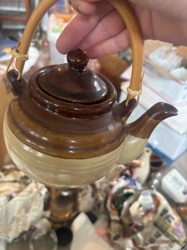
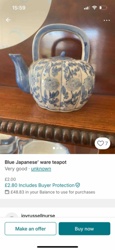
This appears to be a ceramic teapot or a lidded serving vessel, designed to mimic the appearance of bamboo. The body of the item is cylindrical with horizontal ribbed banding, simulating bamboo segments, and is finished in a warm, variegated brown and golden-yellow glaze that creates a rustic, aged effect. The top, which serves as a lid, is slightly domed and features a 'basketweave' or 'herringbone' pattern molded into the ceramic, also glazed to match the body. A short, stout spout protrudes from one side, also styled with vertical fluting to resemble a bamboo shoot or a bundled collection of smaller shoots. The handle is partially visible on the opposite side, suggesting a loop or C-shaped design, seamlessly integrated into the body. The overall color palette is earthy and autumnal, with darker brown tones settling in the recesses and lighter, more golden hues on the raised surfaces. There are small, raised decorative elements on the body, possibly depicting flora or fauna, although the resolution makes precise identification difficult. The style suggests an Asian influence, likely mid-20th century or earlier, aiming for a naturalistic or 'chinoiserie' aesthetic. Visible condition appears good, with no obvious chips or cracks, but the intentionally distressed glaze gives it a worn, antique feel. The craftsmanship, particularly the detailed molding of the bamboo segments and basketweave lid, indicates a degree of artistry and attention to detail. This piece would function both as a实用 item and a decorative accent.
AI Appraisal Report
I've examined the provided image of this Bamboo-Motif Ceramic Teapot or Server. Authenticity, based purely on visual inspection, points to a mid-20th century or possibly late-19th century piece with a strong Asian-inspired, likely 'chinoiserie,' aesthetic. The detailed molding of the bamboo segments, the basketweave lid, and the earth-toned, variegated glaze suggest a well-executed decorative item. The intentional distressed glaze gives it an antique feel, which aligns with its probable age. Condition appears good; I don't observe any overt chips, cracks, or repairs from the image, but the aged appearance could mask minor imperfections. The small, raised decorative elements are intriguing and could signify a particular maker or region if identifiable.
Market conditions for such decorative ceramic servers with an Asian influence are steadily niche. Comparables would include other naturalistic or themed teapots and servers from the same period, often found in estate sales or specialized antique shops. Demand is moderate, driven by collectors of decorative ceramics, Asian art enthusiasts, or those seeking unique interior decor accents. It is not exceptionally rare, but the craftsmanship elevates it above common items. Factors impacting value positively include its appealing aesthetics, good apparent condition, and detailed execution.
It is crucial to note the limitations of image-based appraisal. A full authentication would require in-person examination to verify material composition, assess weight, and thoroughly check for hairline cracks, chips, restorations, or manufacturer marks not visible in the image. Provenance documentation, if available, would significantly enhance its value and confirm its history. Without physical inspection, precise dating and definitive attribution to a specific maker or region remain speculative.