AI Appraisal Estimate

AI-generated estimates · not official valuations

From the user

What was submitted

Photo and notes provided by the user — not generated by AI

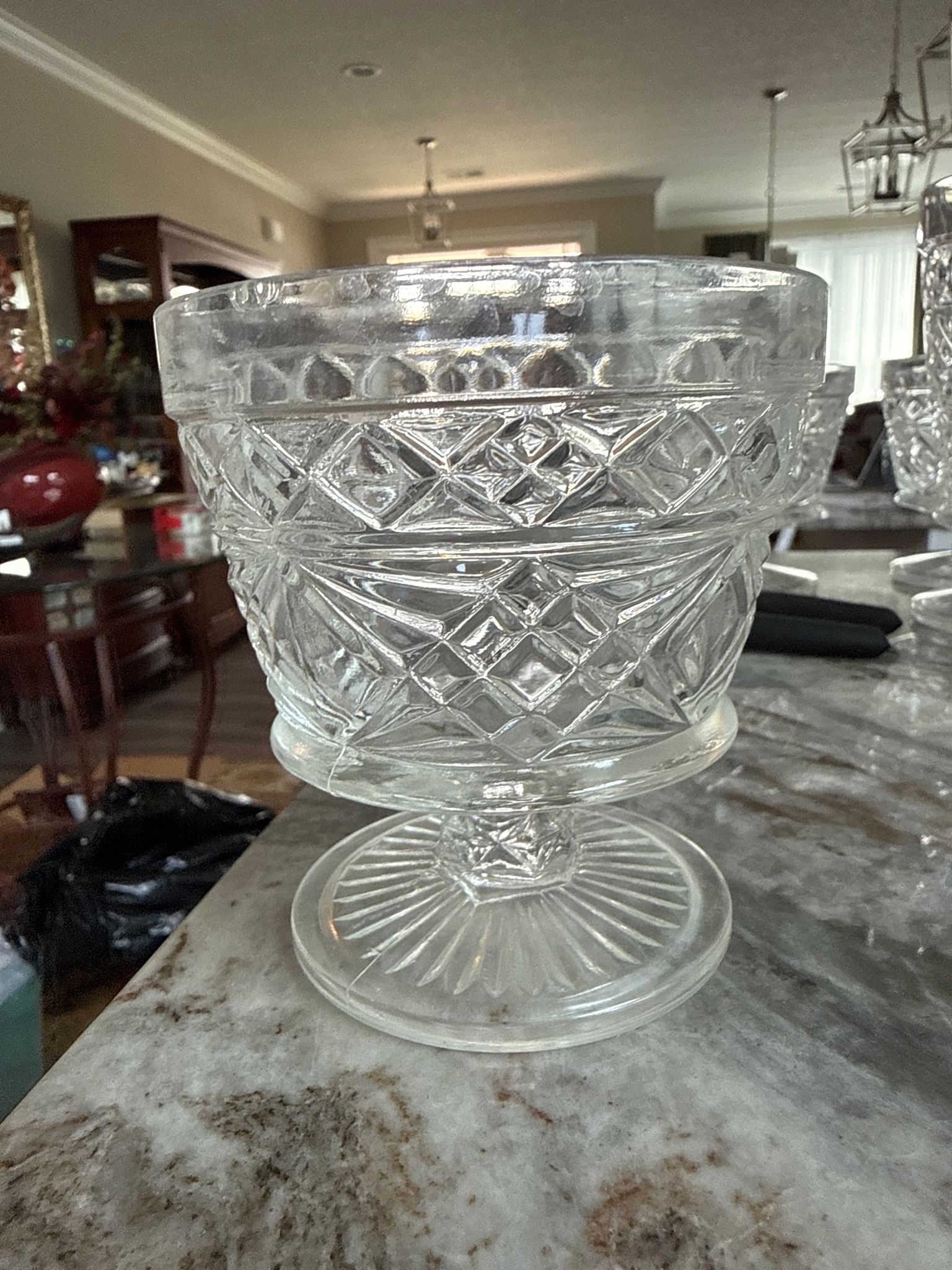
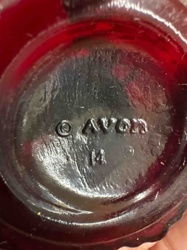
Submitted item photo
Submitted photo · June 15, 2026

User's notes

No additional notes provided.

AI analysis below

AI appraisal

AI analysis & estimate

AI-Generated · Verify before acting

Everything below is generated by AI for informational purposes only. AI can make mistakes — the AI may misidentify items or misattribute them (artist, maker, brand, designer, origin, era). This is not an official valuation and should not be used for insurance, sale, tax, estate, legal, or lending purposes — or any decision requiring a certified appraisal. It is not an authoritative claim about any person, brand, or rights holder — do not share or rely on it as a factual statement about a third party. Always consult qualified professionals before making financial decisions.

Read the full disclaimer

AI Identification

·Not independently authenticated·Verify before acting

Early American Pressed Glass (EAPG) Footed Punch Bowl or Compote

Vintage Glassware / Collectibles

AI Estimated Value

·Not an official valuation·Verify before acting

$15.00-$25.00

As of June 15, 2026

AI Item Analysis

·AI can make mistakes·Verify before acting
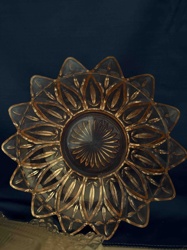
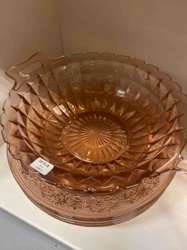
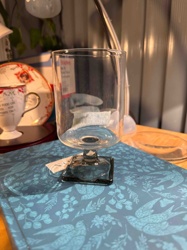
This is a vintage footed bowl, likely a punch bowl or large compote, crafted from heavy pressed clear glass. The piece features a complex geometric pattern typical of the Early American Pressed Glass (EAPG) style, specifically a 'Diamond Point' or 'Crosshatch' variation. The design consists of a wide band of deep-cut X-patterns creating raised diamonds around the central body, sits atop a short waisted stem with a starburst-molded knop. The circular footed base is decorated with a matching radial sunburst or fluted pattern extending to the rim. Measuring approximately 8-10 inches in diameter, the bowl is constructed from thick soda-lime glass, which exhibits a slight gray-green tint in the thicker sections and base. Visible condition issues include a significant hairline crack or fracture running through the bottom of the bowl and extending into the stem assembly, which severely impacts its structural integrity and value. There are also visible mold seam lines consistent with the manufacturing process of the late 19th to early 20th century. While no specific maker's mark is visible in the provided image, the style is reminiscent of patterns produced by companies such as Imperial Glass or Fostoria during the Depression Era. The craftsmanship shows typical production-line qualities of the period, including some air bubbles and 'straw marks' in the glass surface.
AI Appraisal Report

·AI can make mistakes·Verify before acting
Upon visual examination of this Early American Pressed Glass (EAPG) footed bowl, I have identified it as a mass-produced piece likely dating from the late 19th to early 20th century. While the 'Diamond Point' pattern is a classic EAPG motif that typically enjoys moderate interest among collectors of Victorian-era tablewares, this specific specimen suffers from a catastrophic condition issue. The presence of a significant hairline fracture extending through the bowl's basin and into the stem assembly creates a permanent loss of structural integrity. In the market for antique glassware, condition is the primary driver of value; a 'sick' or cracked piece of common pressed glass generally loses 80-90% of its potential market value. Comparable examples in mint condition typically fetch between $85 and $125 at specialized auctions. However, due to the fracture, this item's utility is limited to decorative display only, as it can no longer safely hold liquids or withstand temperature changes. My assessment is based on the visible mold seams, soda-lime glass tint, and manufacturing artifacts like straw marks, which suggest authenticity for the period. However, a definitive attribution to a specific maker like Imperial or Fostoria is difficult without a signature or catalog match. For full authentication, an in-person examination under UV light to check for fluorescence (indicating chemical composition) and a tactile inspection of the crack depth would be required. Given the current damage, the item holds nominal value primarily as a 'study piece' for the pattern.

Get your items appraised

Instant estimates of your treasures with AI-powered appraisals

Browse More Appraisals