AI Appraisal Estimate

AI-generated estimates · not official valuations

From the user

What was submitted

Photo and notes provided by the user — not generated by AI

Submitted item photo
Submitted photo · June 27, 2026

User's notes

No additional notes provided.

AI analysis below

AI appraisal

AI analysis & estimate

AI-Generated · Verify before acting

Everything below is generated by AI for informational purposes only. AI can make mistakes — the AI may misidentify items or misattribute them (artist, maker, brand, designer, origin, era). This is not an official valuation and should not be used for insurance, sale, tax, estate, legal, or lending purposes — or any decision requiring a certified appraisal. It is not an authoritative claim about any person, brand, or rights holder — do not share or rely on it as a factual statement about a third party. Always consult qualified professionals before making financial decisions.

Read the full disclaimer

AI Identification

·Not independently authenticated·Verify before acting

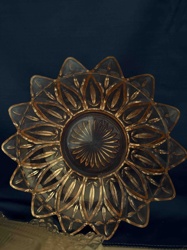
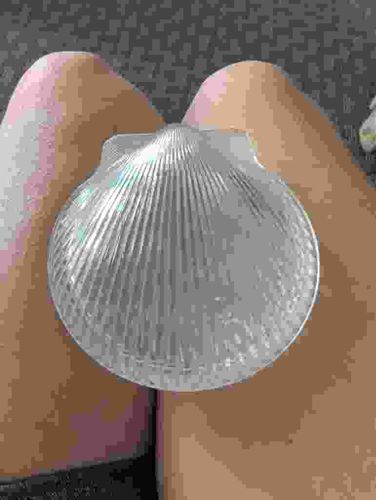
Pressed Glass Scallop Shell Dish

Vintage Glassware / Collectibles

AI Estimated Value

·Not an official valuation·Verify before acting

$10.00 - $18.00

As of June 27, 2026

AI Item Analysis

·AI can make mistakes·Verify before acting
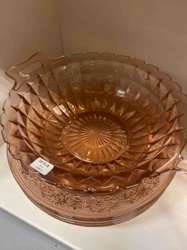
This item is a decorative dish or bowl shaped like a Pecten (scallop) shell, likely made of translucent pressed glass. It features a fan-like structure with prominent radial ribs that converge at the hinge or 'umbone.' The dish exhibits small 'ears' at the top, consistent with the morphology of a scallop. Its construction suggests a mid-20th-century aesthetic, common in American or European glassware from the 1940s to the 1960s. The material is clear but has a slightly frosted or textured appearance due to the molded pattern on the underside. Physically, the item appears to be roughly 4 to 6 inches in diameter based on its scale relative to the person holding it. The edges appear smooth, indicating good quality control during the manufacturing process. There are no immediate visible cracks or large chips, although some minor surface abrasions or 'flea bites' may exist along the rim typical of used vintage glass. No maker's marks are visible in this orientation, but such pieces were frequently produced by companies like Federal Glass, Anchor Hocking, or Fenton. The craftsmanship is standard for mass-produced decorative table glass of that era, designed for serving individual desserts, seafood hors d'oeuvres, or used as a trinket dish.
AI Appraisal Report

·AI can make mistakes·Verify before acting
Based on my visual examination of this pressed glass scallop shell dish, I identify it as a mid-20th-century utilitarian decorative piece, likely produced by a major American glass manufacturer such as Federal Glass or Anchor Hocking. The dish exhibits the characteristic radial ribbing and 'ears' of a Pecten shell. The translucency and textured underside are typical of mass-produced soda-lime glass from the 1940s–1960s. The condition appears to be 'Very Good' vintage state, showing no visible structural cracks or significant chipping, though minor 'flea bites' common to the era's production methods are assumed along the rim. The market for this specific type of glassware is currently saturated; these pieces were produced in the millions to be sold in sets or as promotional items. While charming and functional as a trinket or individual serving dish, it lacks the rarity or 'signed' branding (such as Steuben or Lalique) that drives high-end auction prices. Current market demand is driven primarily by 'grandmillennial' decor trends and collectors of vintage kitchenware. Factors limiting the value include the lack of a visible maker's mark and the sheer volume of comparable items available on secondary platforms like Etsy or eBay. This appraisal is based solely on digital imagery. For a definitive authentication, an in-person inspection is required to check for specific pontil marks or signatures on the base. Furthermore, a UV light test would be necessary to determine if the glass contains manganese or other additives that would help narrow the manufacturing date and specific factory origin. Provenance documentation, such as the original packaging or a bill of sale, would be required to increase the valuation beyond standard market rates.

Related Tags

Explore similar items and categories

Get your items appraised

Instant estimates of your treasures with AI-powered appraisals

Browse More Appraisals