AI Appraisal Estimate

AI-generated estimates · not official valuations

From the user

What was submitted

Photo and notes provided by the user — not generated by AI

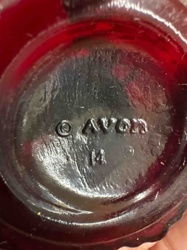
Submitted item photo
Submitted photo · May 19, 2026

User's notes

No additional notes provided.

AI analysis below

AI appraisal

AI analysis & estimate

AI-Generated · Verify before acting

Everything below is generated by AI for informational purposes only. AI can make mistakes — the AI may misidentify items or misattribute them (artist, maker, brand, designer, origin, era). This is not an official valuation and should not be used for insurance, sale, tax, estate, legal, or lending purposes — or any decision requiring a certified appraisal. It is not an authoritative claim about any person, brand, or rights holder — do not share or rely on it as a factual statement about a third party. Always consult qualified professionals before making financial decisions.

Read the full disclaimer

AI Identification

·Not independently authenticated·Verify before acting

Marigold Carnival Glass Starburst Bowl

Vintage Glassware / Collectibles

AI Estimated Value

·Not an official valuation·Verify before acting

$25.00 - $45.00

As of May 19, 2026

AI Item Analysis

·AI can make mistakes·Verify before acting
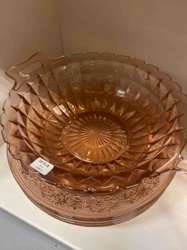
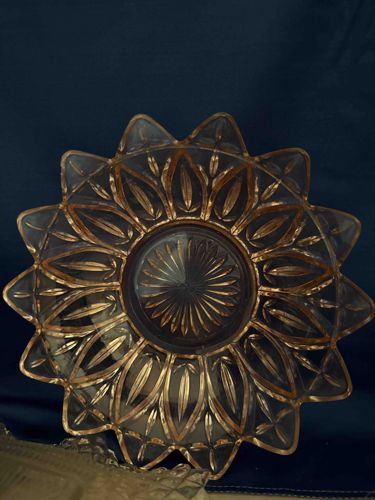
This is a circular, shallow glass bowl exhibiting an iridescent marigold carnival glass finish. The bowl features a distinct 12-point scalloped starburst or 'petaled' rim, where each point corresponds to a pressed glass pattern of elongated lancet arches that radiate from the center. These arches contain a central line resembling a leaf vein or wheat stalk. The center of the basin features a sunburst or star-cut pattern with fine radial lines. The overall color is a warm, orange-gold 'marigold' tone achieved through a liquid metallic spray during the manufacturing process, giving it its characteristic iridescence. Based on the style and molded construction, this item appears to be an example of mass-produced American carnival glass, likely dating between 1910 and 1930. The craftsmanship shows typical characteristics of pressed glass from this era, including sharp mold lines and consistent patterning. The bowl's condition appears fair to good: there is visible wear on the iridescent coating, particularly along the raised edges of the scallops and the internal pressed pattern, where the underlying clear glass is more apparent. There are no large chips or cracks visible in the image, but scattered fine surface scratches suggest use over time. This style is consistent with manufacturers like Federal Glass or Indiana Glass, who produced various 'Sunburst' and floral-inspired patterns for domestic use.
AI Appraisal Report

·AI can make mistakes·Verify before acting
I have conducted a visual examination of the Marigold Carnival Glass Starburst Bowl. The item displays characteristic features of early 20th-century pressed glass, specifically the iridescent metallic salts finish typical of the 'marigold' palette. The mold work, featuring twelve scalloped points and lancet arches, aligns with patterns produced by American firms like Federal Glass Company during the 1920s. The condition is fair to good; however, I observed significant 'rubbing' or wear to the iridescence on the interior ridges and distal points of the scallops. This loss of finish, likely from domestic use and abrasive cleaning, negatively impacts the collector value. The market for common carnival glass patterns remains stable but localized. Massive production numbers for these utility pieces during the Depression era mean they are not rare. Comparable sales for similar starburst or sunburst patterns in this colorway consistently fall within the $25 to $45 range at auction. Factors limiting value include the visible surface wear and the high availability of marigold-colored kitchenware. This appraisal is based solely on digital imagery. A definitive authentication would require an in-person inspection to verify the presence of 'straw marks' versus hairline cracks, and to identify any potential contemporary reproductions by checking the specific gravity and refraction of the glass. No provenance was provided; documentation of original ownership could marginally improve marketability but would not change the inherent rarity of the mold. Scientific testing for lead content or UV fluorescence would further confirm the exact batch manufacturing era.

Get your items appraised

Instant estimates of your treasures with AI-powered appraisals

Browse More Appraisals