AI Appraisal Estimate

AI-generated estimates · not official valuations

From the user

What was submitted

Photo and notes provided by the user — not generated by AI

Submitted item photo
Submitted photo · May 28, 2026

User's notes

No additional notes provided.

AI analysis below

AI appraisal

AI analysis & estimate

AI-Generated · Verify before acting

Everything below is generated by AI for informational purposes only. AI can make mistakes — the AI may misidentify items or misattribute them (artist, maker, brand, designer, origin, era). This is not an official valuation and should not be used for insurance, sale, tax, estate, legal, or lending purposes — or any decision requiring a certified appraisal. It is not an authoritative claim about any person, brand, or rights holder — do not share or rely on it as a factual statement about a third party. Always consult qualified professionals before making financial decisions.

Read the full disclaimer

AI Identification

·Not independently authenticated·Verify before acting

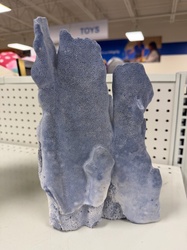
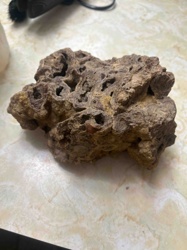
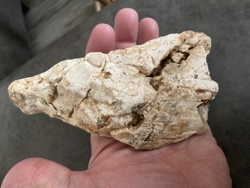
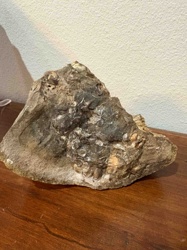
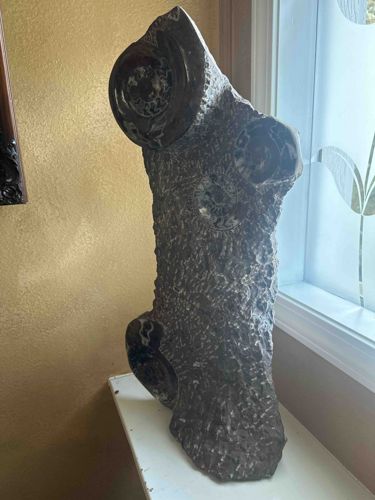
Multi-Specimen Moroccan Ammonite and Goniatite Fossil Slab

Paleontological Specimens / Natural History Decor

AI Estimated Value

·Not an official valuation·Verify before acting

$450 - $650

As of May 28, 2026

AI Item Analysis

·AI can make mistakes·Verify before acting
This is a large, pedestal-style vertical fossil slab featuring multiple polished ammonite and goniatite specimens embedded within a natural dark limestone matrix. The piece stands approximately 18 to 24 inches tall and displays a dramatic contrast between the rough, tactile texture of the hand-chipped matrix and the smooth, high-gloss finish of the fossilized cephalopods. The specimens exhibit characteristic spiral chambering, with mineralization that has replaced organic matter with dark calcite and white aragonite, highlighting the intricate suture patterns. At least four distinct fossil inclusions are visible, varying in size and orientation. The matrix itself is a dense, charcoal-grey to black sedimentary rock, likely sourced from the Devonian-era deposits of the Erfoud region in Morocco, dating back approximately 350 to 400 million years. This work represents a combination of natural history and lapidary art, as the fossils have been carefully excavated and polished in situ to create a three-dimensional sculptural display. The condition appears stable with the structural integrity of the stone intact, showing typical minor peripheral chipping along the rough-hewn edges which is consistent with the hand-tooling process. There are no signs of catastrophic fractures or modern synthetic fills, suggesting a high-quality natural specimen suitable for interior design or a private collection.
AI Appraisal Report

·AI can make mistakes·Verify before acting
I have virtually examined this multi-specimen fossil slab, which features several Devonian-era Cephalopoda (Ammonitida and Goniatitida) from the Erfoud region of Morocco. The specimen displays excellent contrast between the dark limestone matrix and the polished, mineralized chambers. The prep-work appears competent, utilizing the 'in situ' aesthetic popular in high-end natural history decor. From a visual standpoint, the mineralization is consistent with dark calcite and white aragonite replacements typical of these deposits. The condition appears stable with minor peripheral chipping that does not detract from the central fossil quality. The market for Moroccan fossils is robust but well-supplied; while these are 350-400 million years old, they are commercially abundant. The value is driven primarily by its size, sculptural presence, and the quality of the finish rather than extreme rarity. Similar vertical 'pedestal' displays currently command retail prices between $400 and $700 depending on the specific specimen density. A significant limitation of this digital examination is the inability to detect 'composite' preparation. In the Moroccan fossil trade, it is common for genuine fossils to be glued into a new matrix or for resin to be used to fill voids. I cannot definitively verify structural density or the absence of synthetic stabilizers through images alone. A full physical authentication would require a UV light test to detect hidden adhesives/fills, a weight-density check, and a tactile search for modern tool marks beneath the polish. Provenance documentation from the original quarry or an export permit from Morocco would further enhance the item's valuation and chain of custody.

Get your items appraised

Instant estimates of your treasures with AI-powered appraisals

Browse More Appraisals