AI identification & appraisal estimate

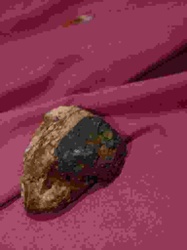
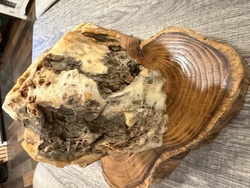
Fossilized Coral Specimen

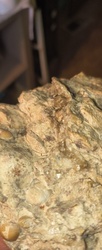
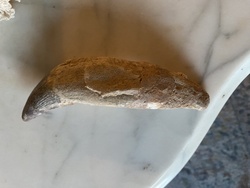
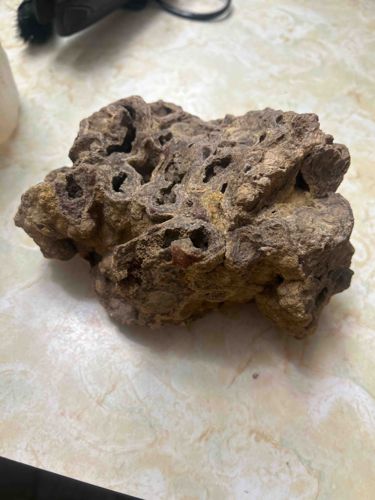
Submitted photo of Fossilized Coral Specimen
Photo submitted by the user — not generated by AI

User's notes

Fossilized coral

These notes were written by the person who submitted this item. Appraiser.AI has not verified them, and the AI's identification and estimate may rely on them.

AI Estimated Value

Not an official valuation

$40-65

AI estimate as of November 2, 2025 · verify with a professional before acting

AI-Generated · Verify before acting

Everything on this page is generated by AI for informational purposes only. AI can make mistakes — the AI may misidentify items or misattribute them (artist, maker, brand, designer, origin, era). This is not an official valuation and should not be used for insurance, sale, tax, estate, legal, or lending purposes — or any decision requiring a certified appraisal. It is not an authoritative claim about any person, brand, or rights holder — do not share or rely on it as a factual statement about a third party. Always consult qualified professionals before making financial decisions.

This analysis also relies on unverified notes provided by the user, which may be incomplete or inaccurate and could affect the result.

Read the full disclaimer

AI Item Analysis

This item is a natural, unpolished specimen of fossilized coral, likely a type of brain coral given its convoluted and intricate surface structure. The piece is irregularly shaped, appearing roughly loaf-like with dimensions suggesting it could be held in two hands. Its primary coloration is a muted, earthy brown that varies in intensity, with lighter sandy-brown hues in some recessed areas and deeper reddish-brown tones where the mineral composition might differ or due to natural staining. The most striking physical characteristic is its highly porous and cavernous surface, featuring numerous irregularly shaped holes and channels, typical of ancient coral skeletons. These openings range in size from small pinholes to larger, more elongated voids, showcasing the internal structure of the original organism. The edges of these formations are rounded and smoothed by natural processes, indicating significant weathering or erosion. There are no visible signs of recent damage, repairs, or man-made alterations; the item appears to be in its natural state, exhibiting a well-developed patination consistent with its geological age. No artificial markings, signatures, or stamps are discernible, confirming its natural origin. The quality indicators for such a specimen include the preservation of the coral structure and the absence of significant breakage or fragmentation. Its unique aspect lies in the organic patterns and natural formations, making it an interesting decorative piece, a geological specimen, or a prop for terrariums/aquariums (if verified safe). Its estimated age would be prehistoric, given the fossilized nature.
AI Appraisal Report

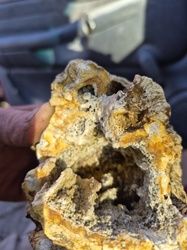
Upon examining the provided images and description, this item is identified as a natural specimen of fossilized coral, likely a type of brain coral. The visual characteristics, such as the earthy brown coloration, porous and cavernous structure, and weathering patterns, are consistent with authentic fossilized coral. The specimen appears to be in its natural, unaltered state, showing good preservation of the original coral structure without significant recent breakage. Its condition is stable and representative of its kind. The market for common fossilized coral specimens like this one is primarily driven by decorative, educational, or hobbyist interest rather than high-end scientific or collector demand. Comparable, unpolished specimens of this size and type are widely available and typically sell in a very accessible price range. While this piece possesses an interesting organic and sculptural quality, it does not present features of exceptional rarity, unique preservation, or a scientifically significant type that would elevate its value substantially. The primary factor influencing its value is its commonality. The demand is steady but not highly competitive. A definitive valuation is limited by the inability to physically inspect the specimen. An in-person examination would be required to confirm its exact mineral composition, specific gravity, and structural integrity. Furthermore, full authentication and provenance determination would necessitate geological testing to confirm its age and origin, although this is generally not cost-effective for a specimen at this value level.

Keep exploring

More fossil/mineral specimen appraisals

Get your items appraised

Instant AI-powered appraisal estimates from a photo

Browse More Appraisals