AI Appraisal Estimate

AI-generated estimates · not official valuations

From the user

What was submitted

Photo and notes provided by the user — not generated by AI

Submitted item photo
Submitted photo · June 23, 2026

User's notes

Metal clock

AI analysis below

AI appraisal

AI analysis & estimate

AI-Generated · Verify before acting

Everything below is generated by AI for informational purposes only. AI can make mistakes — the AI may misidentify items or misattribute them (artist, maker, brand, designer, origin, era). This is not an official valuation and should not be used for insurance, sale, tax, estate, legal, or lending purposes — or any decision requiring a certified appraisal. It is not an authoritative claim about any person, brand, or rights holder — do not share or rely on it as a factual statement about a third party. Always consult qualified professionals before making financial decisions.

Note

This analysis also relies on unverified notes provided by the user, which may be incomplete or inaccurate and could affect the result.

Read the full disclaimer

AI Identification

·Not independently authenticated·Verify before acting

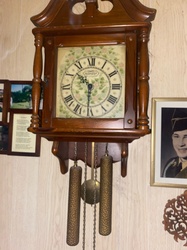
Ansonia Rococo Style Spelter Mantel Clock

Horology / Antique Clocks

AI Estimated Value

·Not an official valuation·Verify before acting

$250 - $400

As of June 23, 2026

AI Item Analysis

·AI can make mistakes·Verify before acting
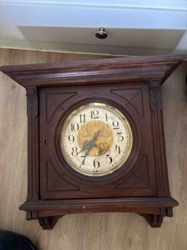
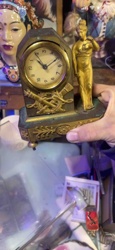
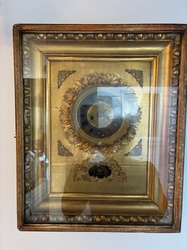
This is a significant late 19th-century American mantel clock manufactured by the Ansonia Clock Company of New York. The case is constructed from cast spelter (white metal) with an original gilded finish that has developed a substantial aged patina, showing prominent green oxidation (verdigris) and surface grime across the ornate scrollwork and acanthus leaf motifs. The design is in the heavy Rococo Revival style, featuring a rectangular body flanked by fluted pilasters and a flared, foliated base with a central rose motif. The clock face is particularly notable, featuring a white porcelain chapter ring with black Roman numerals and a visible escapement (Brocot escapement) at the center, which allows the mechanical operation of the pallet stones to be seen from the front. The Ansonia 'A' trademark is visible on the inner dial. The dial is protected by a hinged brass bezel with a bevelated glass crystal. Condition-wise, while the glass and dial appear intact, the metal housing shows significant environmental wear and loss of gilding. Small text at the bottom of the dial confirms it was manufactured in New York, United States of America, likely dating between 1880 and 1900.

AI Appraisal Report

·AI can make mistakes·Verify before acting
Upon visual examination of the provided images and details, this item appears to be an authentic late 19th-century Ansonia Clock Company Rococo Revival mantel clock, originating from New York, USA, circa 1880-1900. The clock features a spelter (white metal) case with an aged, patinated gilded finish, displaying prominent verdigris and environmental wear. The visible Brocot escapement and porcelain chapter ring with Roman numerals are classic Ansonia features, and the integrated trademark further supports its authenticity. Condition plays a significant role in this appraisal. While the porcelain dial, visible escapement, and beveled glass crystal appear intact, the case exhibits substantial loss of its original gilding, surface grime, and heavy oxidation. It is unknown if the mechanical movement is currently functioning or complete, which heavily influences market value in horology. Market demand for ornate Ansonia mantel clocks remains moderate among antique clock collectors, especially those featuring visible escapements. However, the heavy wear on the spelter case and the lack of a confirmed working movement depress the potential value compared to pristine examples. Comparables in restored or excellent original working condition can fetch $600 to $900, but in its current, visually weathered state, the value is lower. Please note that this appraisal is based solely on photographic evidence and owner-provided details. A definitive authentication and valuation would require an in-person physical examination to assess the integrity and functionality of the mechanical movement, the striking mechanism, and any internal manufacturer markings, as well as to determine if restoration is feasible.

Get your items appraised

Instant estimates of your treasures with AI-powered appraisals

Browse More Appraisals