AI Appraisal Estimate

AI-generated estimates · not official valuations

From the user

What was submitted

Photo and notes provided by the user — not generated by AI

Submitted item photo
Submitted photo · June 10, 2026

User's notes

No additional notes provided.

AI analysis below

AI appraisal

AI analysis & estimate

AI-Generated · Verify before acting

Everything below is generated by AI for informational purposes only. AI can make mistakes — the AI may misidentify items or misattribute them (artist, maker, brand, designer, origin, era). This is not an official valuation and should not be used for insurance, sale, tax, estate, legal, or lending purposes — or any decision requiring a certified appraisal. It is not an authoritative claim about any person, brand, or rights holder — do not share or rely on it as a factual statement about a third party. Always consult qualified professionals before making financial decisions.

Read the full disclaimer

AI Identification

·Not independently authenticated·Verify before acting

Late 19th-early 20th Century Wood Box Mantel Clock

Horology / Antique Clocks

AI Estimated Value

·Not an official valuation·Verify before acting

$150 - $250

As of June 10, 2026

AI Item Analysis

·AI can make mistakes·Verify before acting
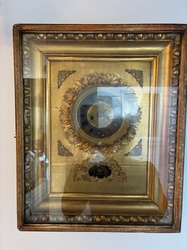
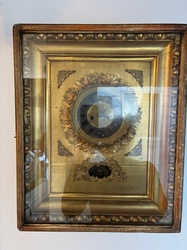
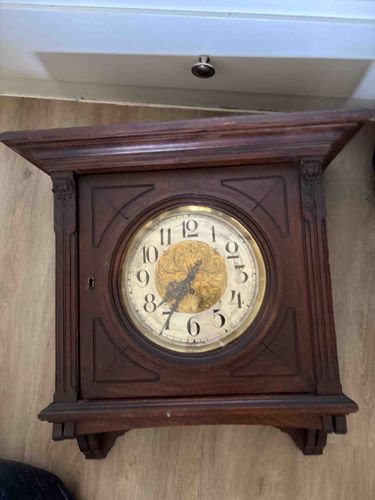
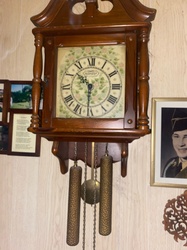
This is a vintage or antique box-style mantel clock, likely of American or European manufacture dating from the late 19th century to the early 20th century. The case is constructed from a dark-stained wood, possibly oak or walnut, featuring a prominent crown molding at the top and a decorative bracket base. The face of the clock is circular with a brass or gilt bezel, showcasing a two-tone dial. The outer chapter ring has printed Arabic numerals in a stylized font, while the center of the dial features an ornate, embossed golden-tone floral or filigree pattern. The hands are black, decorative spade or cathedral style. The wooden case door includes incised geometric line work at the corners and a visible keyhole on the left side, indicating a hinged access point for winding and maintenance. Architecturally, the clock features fluted pilasters on the left and right sides topped with carved floral rosettes, echoing the Eastlake or Neoclassical revival styles. The condition appears to be fair to good for its age, showing visible scuffs and scratches on the wooden finish, particularly along the top edge and base. There is some minor discoloration on the dial, and the wood finish shows expected signs of aging and wear. No specific maker's mark is visible on the exterior, but it follows the design language of major manufacturers from the period like Seth Thomas, Ansonia, or Waterbury.
AI Appraisal Report

·AI can make mistakes·Verify before acting
I have conducted a visual inspection of this mantel clock, which presents as a typical American 'Parlor' or 'Box' clock from approximately 1890–1910. The design elements, specifically the fluted pilasters, floral rosettes, and embossed dial, are characteristic of the Eastlake influence popularized by manufacturers such as Seth Thomas, Ansonia, and Ingraham. The case construction appears to be stained oak or walnut with original incised detailing. Condition-wise, the clock shows significant honest wear. The scuffing on the crown molding and base suggests a 'shabby chic' aesthetic, though serious collectors would view this as a need for professional refinishing. The dial’s ornate center remains crisp, but the outer chapter ring shows fading. While the presence of a keyhole indicates a mechanical movement, it is impossible to determine the internal state—such as the condition of the mainsprings, escapement, or whether it has a striking mechanism—from visual cues alone. Market demand for late 19th-century American clocks has softened recently, as younger collectors favor modern or minimalist styles. Comparables sold at auction for similar mass-produced models range from $100 for non-working units to $350 for fully restored, authenticated pieces. Authenticity limitations: This appraisal is based solely on digital images. A comprehensive valuation would require an in-person inspection of the movement (to check for manufacturer stamps or replacement parts) and the back panel. Full authentication would involve testing the chime/strike function and verifying the provenance or service history. Without seeing the movement, I must classify this as an 'Attributed to' piece rather than a definitively branded manufacturer item.

Get your items appraised

Instant estimates of your treasures with AI-powered appraisals

Browse More Appraisals