Art Nouveau Spelter Mantel Clock with Female Allegorical Figure
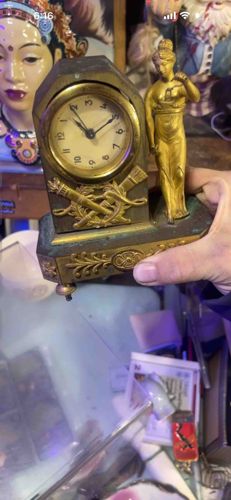
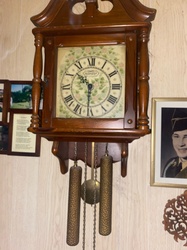
This is a small decorative mantel clock, likely dating from the late 19th or early 20th century, consistent with the Art Nouveau or late Victorian era. The piece is constructed from cast white metal, often referred to as spelter, with a gold-toned or ormolu finish. It features an asymmetrical design where the clock housing sits on the left, and a standing female figure in classical or draped attire is positioned to the right. The clock face is round with Arabic numerals and simple black hands, showing a cream-colored dial that exhibits some foxing and age-related yellowing. Below the dial, there is a decorative relief featuring crossed torches tied with a wreath. The base is rectangular with ormolu-style borders and foliate scrollwork. Condition issues are evident: the metal shows significant wear to the gilding, revealing darker oxidation beneath, particularly on the base where green verdigris is visible. There are signs of structural damage, including a missing or broken foot on the bottom left, causing the piece to tilt. The craftsmanship reflects mass-produced decorative arts of the period, intended for middle-class households.
AI-Generated Appraisal Disclaimer
Estimated Value
$40-80
Basic Information
Category
Horology / Antique Clocks
Appraised On
January 8, 2026
Estimated Value
$40-80
Item Description
This is a small decorative mantel clock, likely dating from the late 19th or early 20th century, consistent with the Art Nouveau or late Victorian era. The piece is constructed from cast white metal, often referred to as spelter, with a gold-toned or ormolu finish. It features an asymmetrical design where the clock housing sits on the left, and a standing female figure in classical or draped attire is positioned to the right. The clock face is round with Arabic numerals and simple black hands, showing a cream-colored dial that exhibits some foxing and age-related yellowing. Below the dial, there is a decorative relief featuring crossed torches tied with a wreath. The base is rectangular with ormolu-style borders and foliate scrollwork. Condition issues are evident: the metal shows significant wear to the gilding, revealing darker oxidation beneath, particularly on the base where green verdigris is visible. There are signs of structural damage, including a missing or broken foot on the bottom left, causing the piece to tilt. The craftsmanship reflects mass-produced decorative arts of the period, intended for middle-class households.
Get Your Items Appraised
Instant estimates of your treasures with AI-powered instant appraisals