AI Appraisal Estimate

AI-generated estimates · not official valuations

From the user

What was submitted

Photo and notes provided by the user — not generated by AI

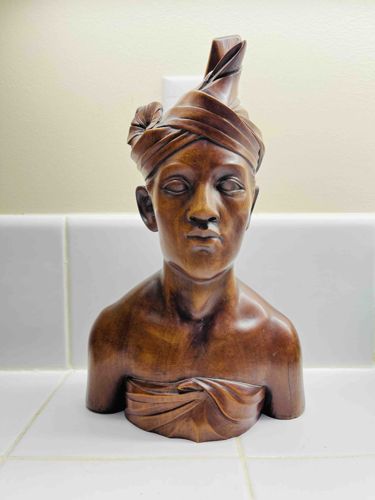
Submitted item photo
Submitted photo · June 3, 2026

User's notes

No additional notes provided.

AI analysis below

AI appraisal

AI analysis & estimate

AI-Generated · Verify before acting

Everything below is generated by AI for informational purposes only. AI can make mistakes — the AI may misidentify items or misattribute them (artist, maker, brand, designer, origin, era). This is not an official valuation and should not be used for insurance, sale, tax, estate, legal, or lending purposes — or any decision requiring a certified appraisal. It is not an authoritative claim about any person, brand, or rights holder — do not share or rely on it as a factual statement about a third party. Always consult qualified professionals before making financial decisions.

Read the full disclaimer

AI Identification

·Not independently authenticated·Verify before acting

Balinese Art Deco Hand-Carved Wooden Bust of a Man

Fine Art / Wood Sculpture

AI Estimated Value

·Not an official valuation·Verify before acting

$450 - $650

As of June 3, 2026

AI Item Analysis

·AI can make mistakes·Verify before acting
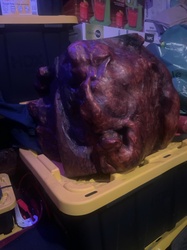
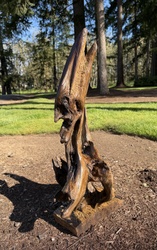
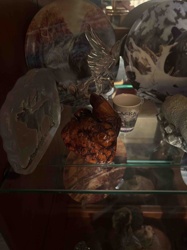
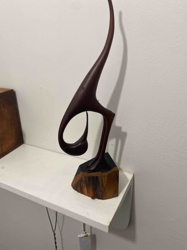
This is a vintage Balinese hand-carved wooden bust, likely crafted from suar or satinwood, representing the Art Deco style popular in Bali during the mid-20th century (circa 1930s-1950s). The sculpture depicts a male figure with stylized features, including elongated facial lines and hooded eyes characteristic of the Pita Maha artistic movement. He wears a traditional 'udeng' or headcloth with an intricate, tall fold, and a 'kamben' (chest wrap) rendered with deep, fluid drapery lines. The wood exhibits a warm, medium-brown tone with a subtle satin luster, highlighting the smooth transition of curves and high-quality polishing. Standing approximately 10 to 12 inches tall, the piece shows excellent craftsmanship in the anatomical symmetry and the delicate carving of the ears and facial expressions. Condition is generally good with a rich natural patina; however, there is a visible vertical age crack running down the left side of the torso (right side from the viewer's perspective), which is typical for tropical hardwoods adjusting to drier climates. No visible maker’s marks are present on the front, though 'Bali' is often inscribed on the underside of such pieces. It represents a transition from traditional religious carving to secular, modern art intended for the global export market.
AI Appraisal Report

·AI can make mistakes·Verify before acting
I have virtually examined this hand-carved Balinese bust, which exhibits the distinctive elongated aesthetic of the Art Deco period (c. 1930s-1950s). The piece demonstrates high-level craftsmanship associated with the Pita Maha movement, particularly in the fluid rendering of the 'udeng' and the sophisticated, serene facial symmetry. The use of suar or satinwood is typical for the era, and the patina suggests a genuine age of at least 60-80 years. Market demand for mid-century Balinese woodcarvings remains steady, though values are heavily dictated by the presence of a known signature (such as Ida Bagus Nyana or I Wayan Ayun). Without a signature, this piece is valued as a high-quality decorative object rather than a 'master' work. The primary detractor is the vertical age crack on the torso. While common in tropical hardwoods transported to temperate climates, it does slightly lower the specimen grade from 'Fine' to 'Good' condition. Comparables for unsigned pieces of this size and quality typically hammer at auction between $400 and $700. The fine detail in the ear lobes and the sharp, clean lines of the drapery provide a value buffer against more common, mass-produced export versions from the later 20th century. Please note: This appraisal is based on photographic evidence only. A physical inspection is required to confirm the density of the wood and to ensure the 'crack' is a natural expansion/contraction issue rather than a structural repair. Full authentication would require provenance documentation or a physical search for a micro-signature often hidden in the base's recesses. I cannot definitively exclude the possibility of a contemporary 'distressed' reproduction from images alone.

Get your items appraised

Instant estimates of your treasures with AI-powered appraisals

Browse More Appraisals