Amethyst and Calcite Mineral Specimen
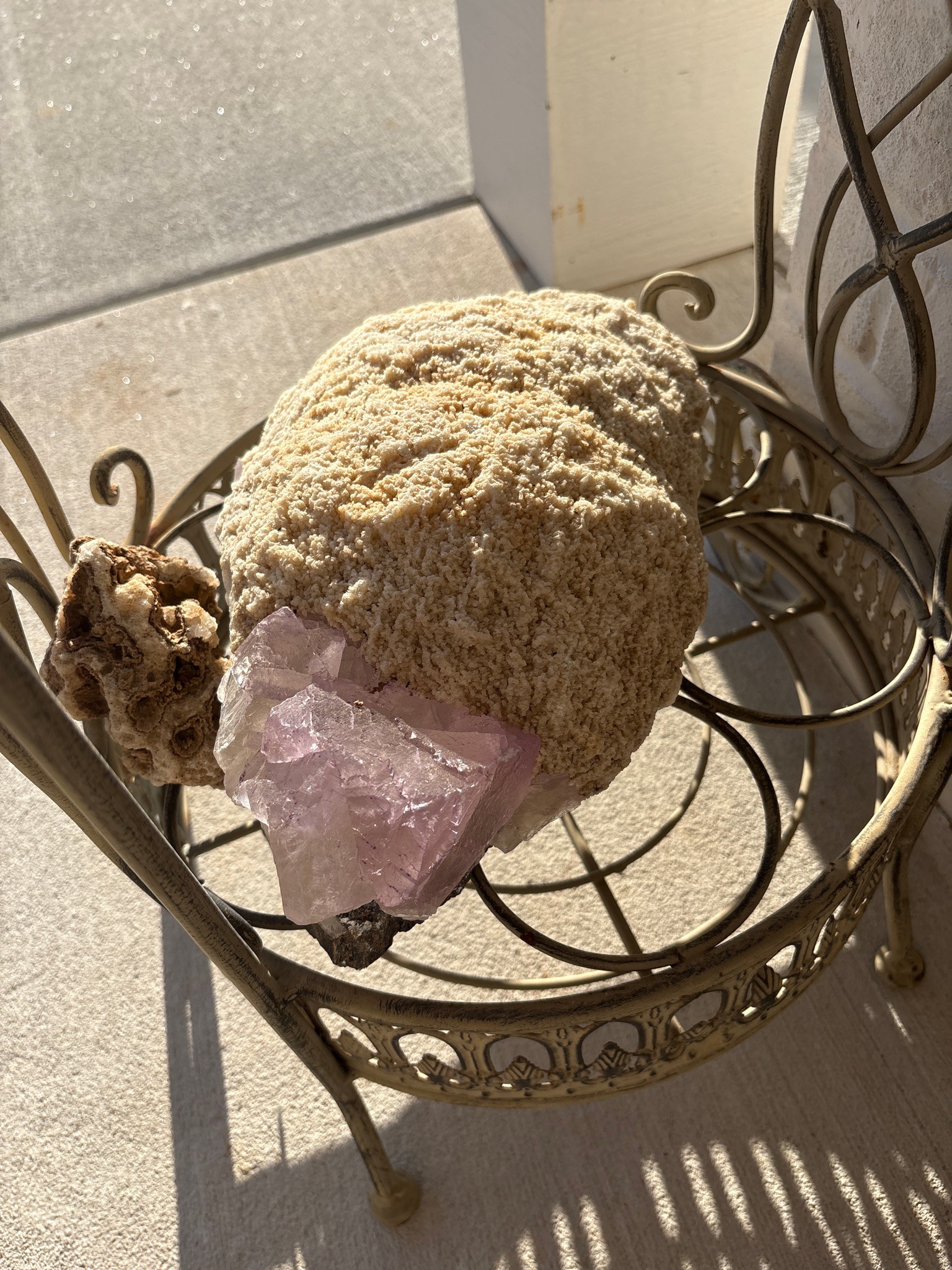
This large-scale mineral specimen features a striking combination of a massive tan-colored druzy calcite or aragonite formation atop a crystalline base of purple amethyst. The primary element is a dense, botryoidal cluster of beige/tan microcrystals that create a textured, brain-like or cauliflower appearance across the top. Recessed beneath this heavy calcification is a prominent cluster of amethyst crystals, characterized by their translucent pale lavender to rosy-pink hue and sharp, angular terminations. The amethyst crystals show significant size and clarity, with some internal fracturing visible, which is common in large natural specimens. A smaller, darker geode-like fragment or host rock is attached to the side, showing a pitted and porous calcified structure. The specimen rests on an ornate, cream-painted wrought iron decorative stand that features scrollwork and pierced metal detailing. The overall condition appears stable, though there is inherent biological/mineral dust within the crevices and some minor chipping at the crystal edges consistent with natural extraction and handling. The combination of styles indicates a contemporary collectors' piece, likely sourced from South America or similar geological regions known for large amethyst geodes.
AI-Generated Appraisal Disclaimer
Estimated Value
$1,200 - $1,850
Basic Information
Category
Minerals & Fossils
Appraised On
May 8, 2026
Estimated Value
$1,200 - $1,850
Item Description
This large-scale mineral specimen features a striking combination of a massive tan-colored druzy calcite or aragonite formation atop a crystalline base of purple amethyst. The primary element is a dense, botryoidal cluster of beige/tan microcrystals that create a textured, brain-like or cauliflower appearance across the top. Recessed beneath this heavy calcification is a prominent cluster of amethyst crystals, characterized by their translucent pale lavender to rosy-pink hue and sharp, angular terminations. The amethyst crystals show significant size and clarity, with some internal fracturing visible, which is common in large natural specimens. A smaller, darker geode-like fragment or host rock is attached to the side, showing a pitted and porous calcified structure. The specimen rests on an ornate, cream-painted wrought iron decorative stand that features scrollwork and pierced metal detailing. The overall condition appears stable, though there is inherent biological/mineral dust within the crevices and some minor chipping at the crystal edges consistent with natural extraction and handling. The combination of styles indicates a contemporary collectors' piece, likely sourced from South America or similar geological regions known for large amethyst geodes.
Related Tags
Get Your Items Appraised
Instant estimates of your treasures with AI-powered instant appraisals