Rough Yellow Calcite Specimen
Minerals and Gemstones

Rough Yellow Calcite Specimen

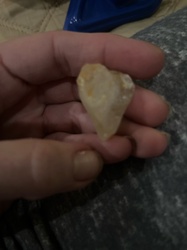
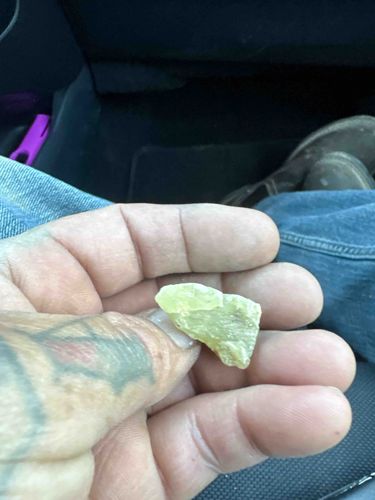
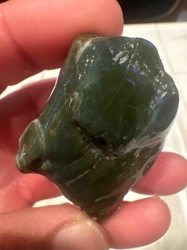
This specimen is a small piece of rough, unpolished yellow calcite. It measures approximately 2 to 3 centimeters in length, fitting easily between two fingers. The mineral exhibits a pale, lemon-yellow to buttery-yellow coloration with a characteristic waxy to vitreous luster. Its structure is semi-translucent, allowing some light to pass through the thinner edges while remaining more opaque in the thicker center. The specimen shows significant conchoidal fracturing and cleavage typical of the calcite mineral group, with sharp, jagged edges and a stepped texture on its surfaces. There is no evidence of professional lapidary work, such as tumbling or faceting; it remains in its natural, field-collected state. Small traces of white matrix or surface dust are visible in the crevices. The overall condition is good for a raw mineral, with minor edge crumbling but no major internal cleaving that would suggest structural instability. In terms of quality, the clarity is average for raw calcite, showing some internal cloudiness. The piece likely originates from common carbonate-rich geological formations and serves as a representative sample of calcium carbonate in its crystalline form.
Estimated Value

$1.00 - $3.00

Basic Information

Category

Minerals and Gemstones

Appraised On

March 12, 2026

Estimated Value

$1.00 - $3.00

Item Description

This specimen is a small piece of rough, unpolished yellow calcite. It measures approximately 2 to 3 centimeters in length, fitting easily between two fingers. The mineral exhibits a pale, lemon-yellow to buttery-yellow coloration with a characteristic waxy to vitreous luster. Its structure is semi-translucent, allowing some light to pass through the thinner edges while remaining more opaque in the thicker center. The specimen shows significant conchoidal fracturing and cleavage typical of the calcite mineral group, with sharp, jagged edges and a stepped texture on its surfaces. There is no evidence of professional lapidary work, such as tumbling or faceting; it remains in its natural, field-collected state. Small traces of white matrix or surface dust are visible in the crevices. The overall condition is good for a raw mineral, with minor edge crumbling but no major internal cleaving that would suggest structural instability. In terms of quality, the clarity is average for raw calcite, showing some internal cloudiness. The piece likely originates from common carbonate-rich geological formations and serves as a representative sample of calcium carbonate in its crystalline form.
Get Your Items Appraised

Instant estimates of your treasures with AI-powered instant appraisals

Browse More Appraisals