Bornite (Peacock Ore)
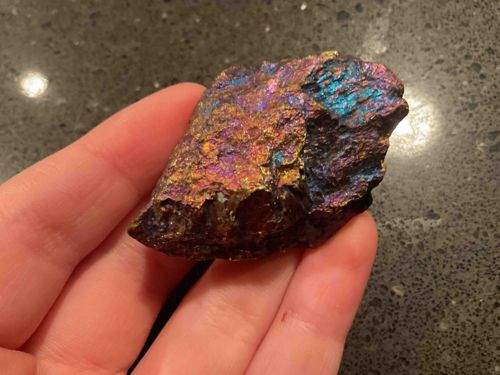
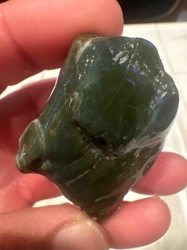
This specimen is an example of Bornite, commonly known as Peacock Ore due to its striking iridescent tarnish. The stone exhibits a rough, natural geological form with a multi-tonal surface featuring vibrant hues of electric blue, purple, magenta, and metallic gold. These colors are the result of the natural oxidation of the copper within the sulfide mineral, creating a thin film interference effect. The specimen appears to be hand-sized, approximately 2 to 3 inches in length, and possesses a sub-metallic luster with an uneven, brittle fracture. On the right side of the piece, deeper indigo and cyan tones dominate, while the left side displays more copper-gold and reddish-purple highlights. There are no man-made markings or signatures, as it is a raw mineral specimen. The condition is characteristic of natural raw ore, showing minor crumbling and sharp ragged edges typical of the mineral's crystalline structure. The underlying base material is a dark, dense copper-iron sulfide. This mineral is commonly found in hydrothermal veins and is a significant ore of copper, though this specific piece is valued as a decorative or educational mineral specimen rather than for industrial smelting.
AI-Generated Appraisal Disclaimer
Estimated Value
$15.00 - $25.00
Basic Information
Category
Minerals and Gemstones
Appraised On
February 26, 2026
Estimated Value
$15.00 - $25.00
Additional Details Provided By Owner
User Provided Information
Peacock stone
Item Description
This specimen is an example of Bornite, commonly known as Peacock Ore due to its striking iridescent tarnish. The stone exhibits a rough, natural geological form with a multi-tonal surface featuring vibrant hues of electric blue, purple, magenta, and metallic gold. These colors are the result of the natural oxidation of the copper within the sulfide mineral, creating a thin film interference effect. The specimen appears to be hand-sized, approximately 2 to 3 inches in length, and possesses a sub-metallic luster with an uneven, brittle fracture. On the right side of the piece, deeper indigo and cyan tones dominate, while the left side displays more copper-gold and reddish-purple highlights. There are no man-made markings or signatures, as it is a raw mineral specimen. The condition is characteristic of natural raw ore, showing minor crumbling and sharp ragged edges typical of the mineral's crystalline structure. The underlying base material is a dark, dense copper-iron sulfide. This mineral is commonly found in hydrothermal veins and is a significant ore of copper, though this specific piece is valued as a decorative or educational mineral specimen rather than for industrial smelting.
Related Tags
Explore similar items and categories:
Get Your Items Appraised
Instant estimates of your treasures with AI-powered instant appraisals